
FRESNO, Calif. – With months still left of winter, California’s major reservoirs are holding about 129 percent of historical water levels for this time of year.
Officials with the state’s Department of Water Resources say that’s welcome news after years of drought, but it doesn’t mean California’s water challenges are completely over.
Reservoir levels are measured against what’s typical for a specific point in the calendar, not against their maximum capacity. Being “above average” means the state has more water available than it usually does in early winter.
That’s all thanks to a series of late December and early January storms.
According to the DWR, the water levels at some of the major reservoirs in central California are all above average. That includes Pine Flat, Millerton, and San Luis reservoirs.
So is being “above average” good? The short answer: yes.
Above average reservoir levels give water managers more flexibility as they head into warmer months and irrigation season, when demand rises and rain typically fades. It also reduces the immediate risk of shortages for farms, cities, and ecosystems.
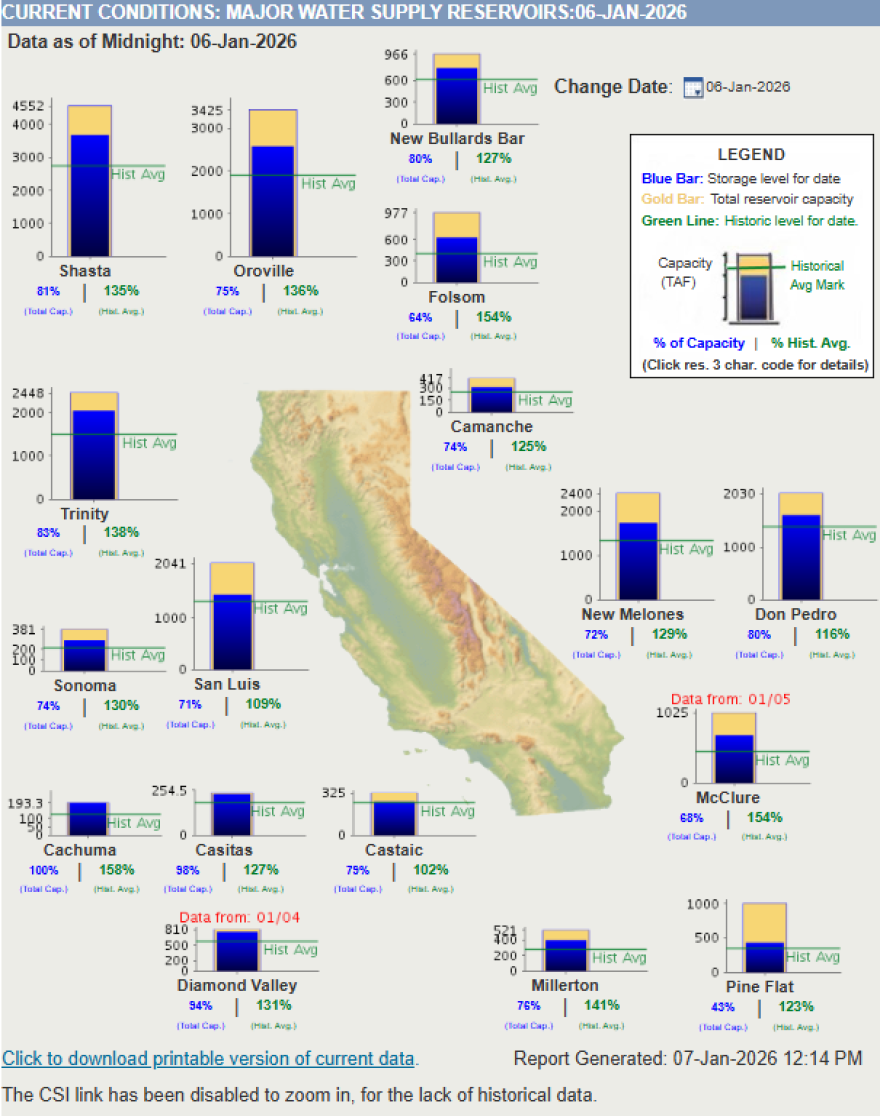
California Department of Water Resources
But water officials caution that California’s climate is highly unpredictable, and one wet stretch doesn’t guarantee long-term security.
Even with strong reservoir numbers, California and much of the Western U.S. is still dealing with the effects of an extreme drought. Drought isn’t defined by one single dry season, but rather a period of many years, according to experts.
Much of the state’s water supply comes from the snowpack in the Sierra Nevada. It slowly melts in the springtime and refills these reservoirs.
This year’s snowpack also brought mixed messages. Snow levels in the Southern Sierra Nevada are about 114 percent of average, which is a positive thing.
However the Northern Sierra Nevada is only sitting at 68 percent of average. Where snow falls is just as important as the amount of snow that falls, state experts say.
With drier weather forecasted in the state for the coming weeks, officials are expecting that snowpack levels will also take a hit.
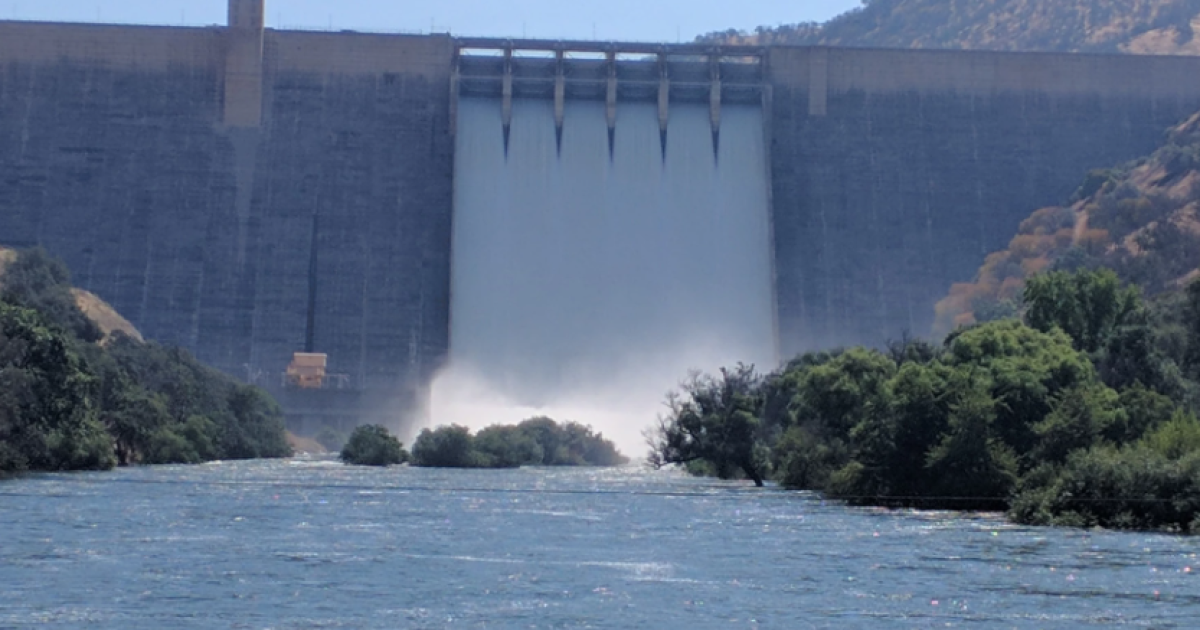
And with current reservoir levels appearing high, it could leave some to wonder why water is released this time of year.
State water officials say reservoirs operate under flood control rules that are set by the United States Army Corps of Engineers.
The rules require operators to leave space in the reservoirs to make room for water runoff from snowmelt and any future storms in the rainy season. Those releases typically happen between mid-September and May.