
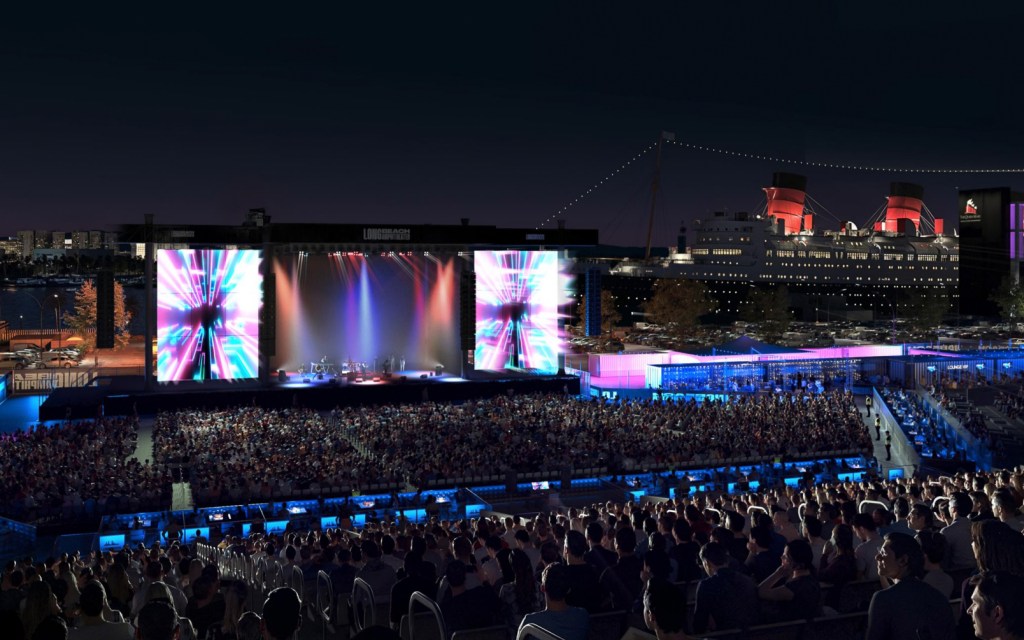
Long Beach has invested more money into its temporary waterfront amphitheater — which is set to break ground this month.
The City Council this week unanimously approved increasing funds by $7.3 million for the Long Beach Amphitheater for site improvements, pre-opening services, and furniture, fixture and equipment costs for the project. City officials said these improvements will help improve guest and artist experiences, and increase the revenue generated by the amphitheater.
The temporary waterfront amphitheater is part of Long Beach’s strategy to diversify its revenue streams, officials said, as the city moves away from its reliance on oil revenue and expands its growing tourism, hospitality, music and entertainment sectors – part of the city’s Grow Long Beach initiative.
“Our revenue is changing in our city,” Mayor Rex Richardson said during the Tuesday, Jan. 6, meeting. “We don’t have oil revenue coming into tidelands the way we used to. We have to be more entrepreneurial as a city. This is one low-hanging fruit revenue opportunity that’s also fun and it supports our small businesses, restaurants, and retailers, whose bottom line hasn’t been what it used to be prior to the pandemic. So, we have to take some shots and some opportunities.”
The city and council took several steps last year to fast-track the project. In April, the City Council approved ASM Global – now Legends Global – to operate the amphitheater for a five-year term and also approved a $14 million budget to support the design, permitting, project management services and site improvements, as well as to buy furniture, fixtures and equipment to develop the amphitheater.
In June, the council approved the purchase of grandstands and seating from InProduction, Inc., including three modular grandstand units, premium box and loge seating, integrated grandstand seating, and track seating. In August, the City Council approved the purchase of the amphitheater’s stage.
As the project progressed through design and preconstruction, however, several factors – including refinements to the site plan, architectural and structural design updates, rising materials and labor costs driven by tariffs and broader economic conditions, and the integration of additional environmental sustainability measures and accommodations for public transit – have increased overall project costs, according to a staff report.
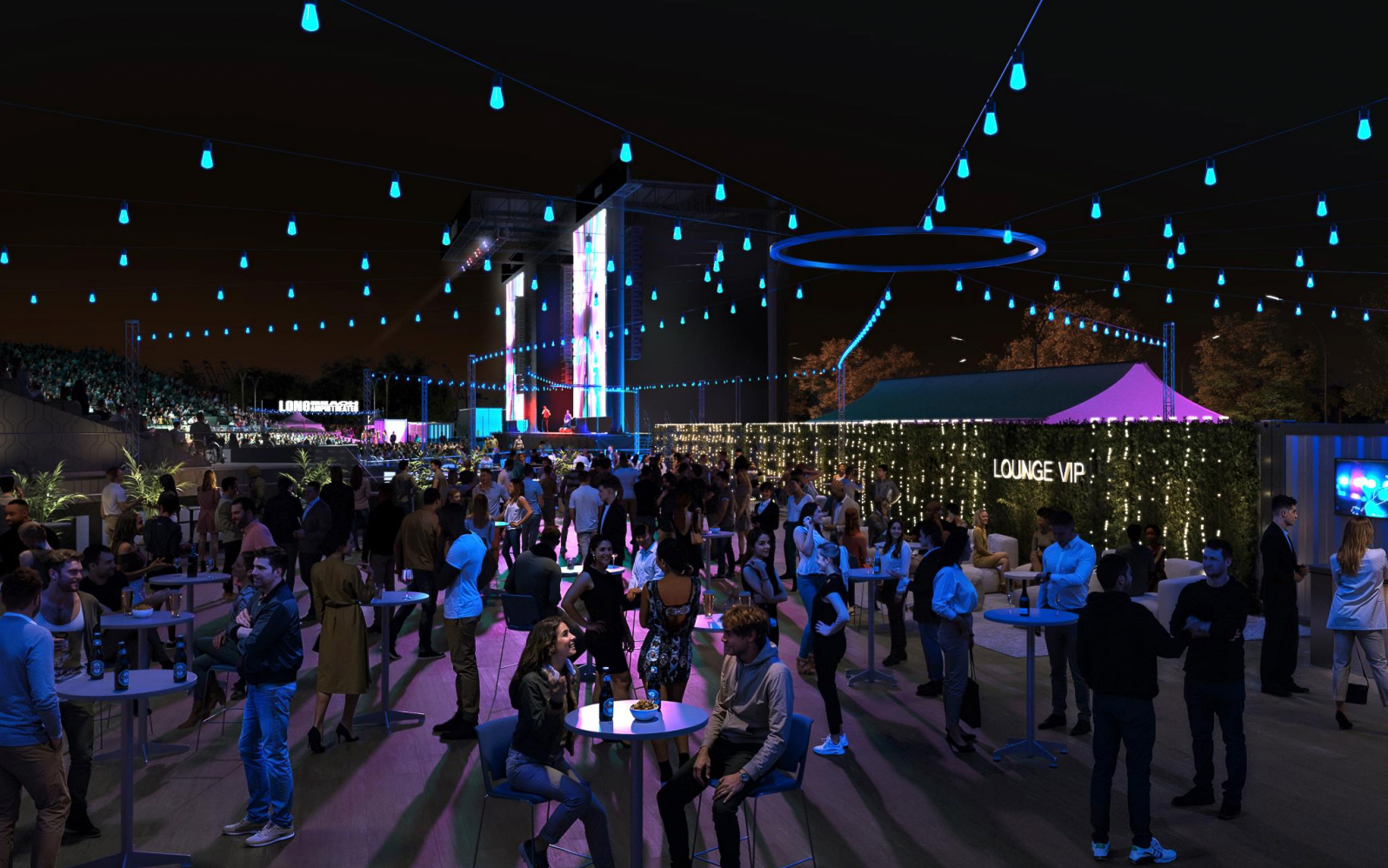
A rendering of the VIP lounge planned for the Long Beach Amphitheater, set to break ground in January 2026. (Photo courtesy of the City of Long Beach)
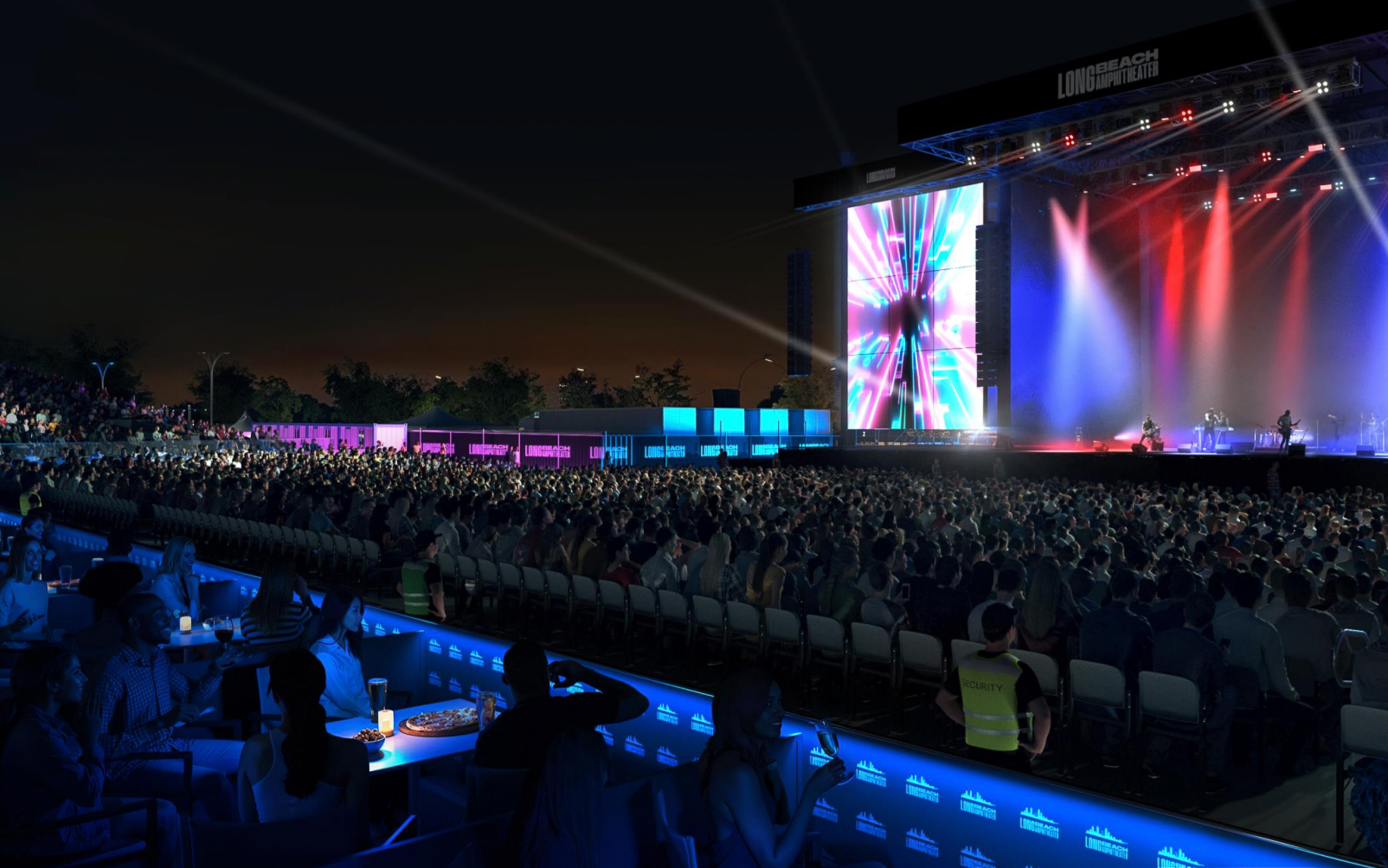
A rendering of the premium seating planned for the Long Beach Amphitheater, set to break ground in January 2026. (Photo courtesy of the City of Long Beach)
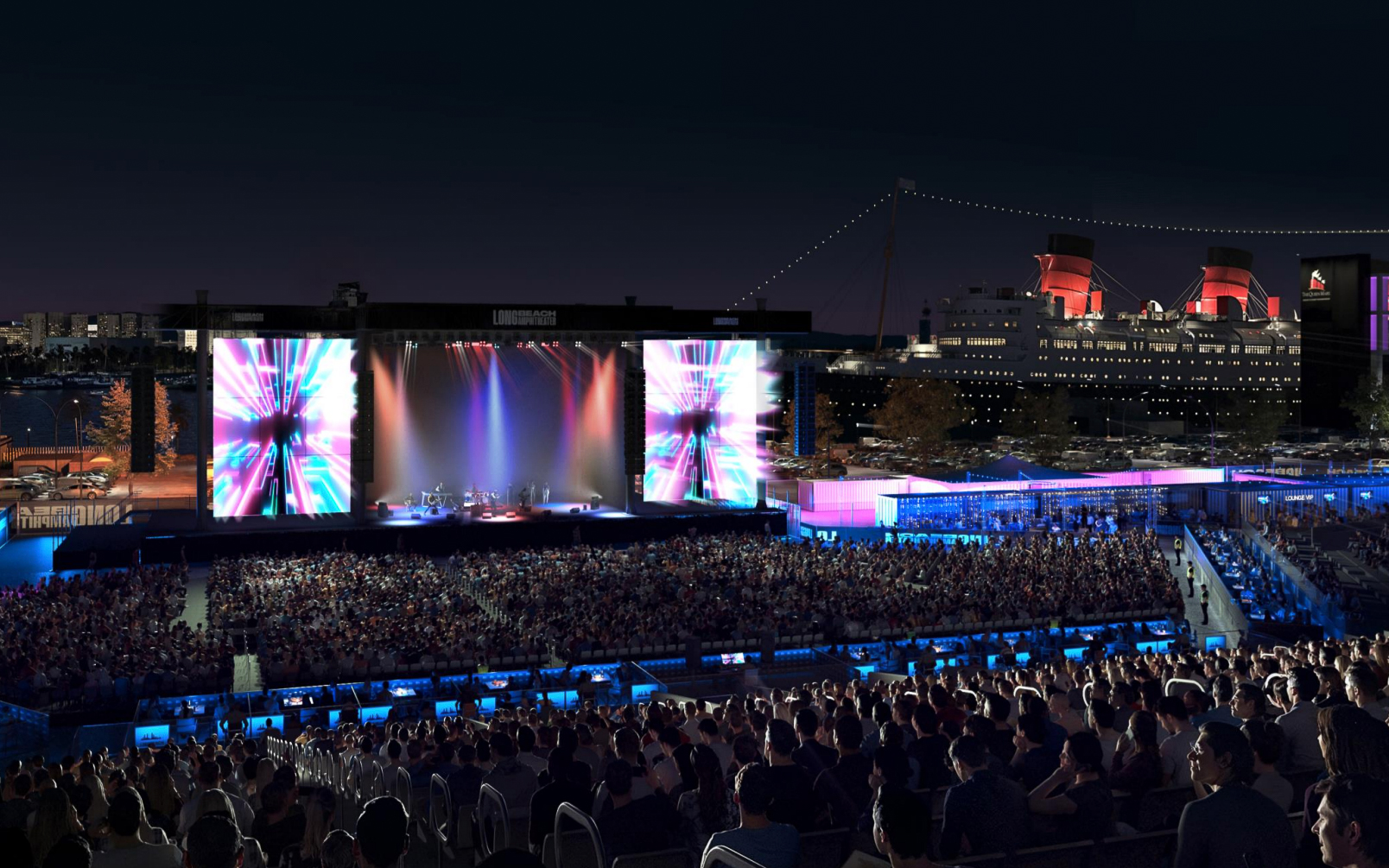
A rendering of the view from the grandstands planned for the Long Beach Amphitheater, set to break ground in January 2026. (Photo courtesy of the City of Long Beach)
Show Caption
1 of 3
A rendering of the VIP lounge planned for the Long Beach Amphitheater, set to break ground in January 2026. (Photo courtesy of the City of Long Beach)
City staffers estimated that an additional $7.3 million was needed to complete and fully outfit the project. Of that amount, about $2.2 million is attributed to increased construction costs, while $4.3 million is needed to support expanded and upgraded furniture, fixtures and equipment purchases, according to the staff report.
“We found that with additional investment into this project, we can actually generate additional revenue,” City Manager Tom Modica said, “and that way, we can maximize the economic impact of this new asset.”
The city has approached the amphitheater project differently compared to other public projects, Modica added. It is meant to pay for itself, he said, by generating revenue to pay back the capital and generating a surplus to help support the tidelands fund – which has started to face a deficit.
Despite the need for additional funding, city staffers anticipate that the increased investment will not limit the city’s ability to fully recover project costs. The amphitheater is projected to generate a net operating profit of $11.9 million by its fifth year, according to the staff report.
“This anticipated increase in revenue growth, though, is contingent on the venue meeting the expectations of guests, promoters and artists,” said Johnny Vallejo, deputy director for the Economic Development and Opportunity Department. “These expectations include elevated food and beverage offerings, premium VIP experiences, and competitive and appropriate artist and promoter accommodations.
“So, even though the current market and economic pressures have driven up costs, a higher quality venue is expected to sustain or even grow market demand and revenue to offset these costs,” Vallejo added, “capturing this revenue potential requires the additional upfront investment to deliver an elevated guest, promoter and artist experience.”
The City Council approved the additional funds for the amphitheater with an 8-0 vote. The approval will allow the city to break ground on the amphitheater this month to start site improvements, such as resurfacing and upgrading existing asphalt areas, installing new storm drain infrastructure to support proper drainage, making upgrades to curbs and sidewalks, and more.
The Long Beach Amphitheater anticipates having a soft opening in the spring and a grand opening by summer, officials said.