
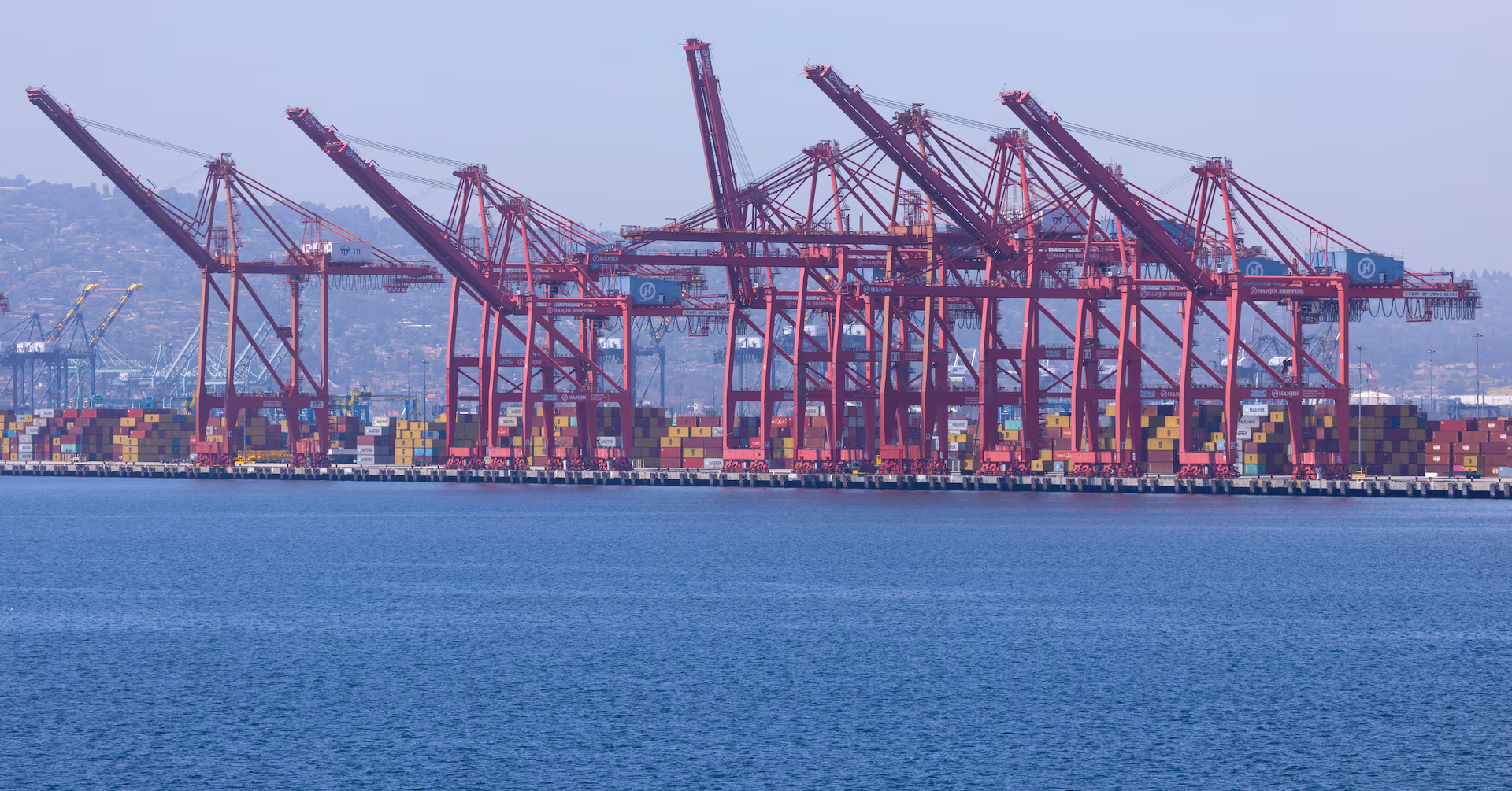
Jan 8 (Reuters) – The U.S. Supreme Court is set to issue rulings on Friday on cases related to the legality of tariffs imposed by President Donald Trump under the International Emergency Economic Powers Act.The administration faces the possibility of having to refund nearly $150 billion paid in tariffs to importers if the court declares that the sweeping duties Trump has imposed under the IEEPA are illegal.
Sign up here.
Major corporations such as Costco (COST.O), opens new tab, Revlon, Ray-Ban eyeglass maker EssilorLuxottica (ESLX.PA), opens new tab, Bumble Bee Foods, Yokohama Tire (5101.T), opens new tab and Kawasaki Motors (7012.T), opens new tab have sued the U.S. government challenging IEEPA-based tariffs and seeking refunds on duties paid.The tariffs invoked under the Emergency act fall into three categories: fentanyl-linked tariffs on China, Mexico and Canada; broad “reciprocal” tariffs aimed at shrinking trade deficits; and punitive levies against countries for non-trade political reasons.
Notably, pharmaceuticals, energy, agricultural commodities, services as well as aircraft and aerospace industries have been largely exempt from U.S. tariffs, protected due to their critical nature, global supply chains and potential impact on public health and international commerce.
Meanwhile, the EU and countries such as the UK, Japan, South Korea, Vietnam and Switzerland have struck tariff-reduction deals with the U.S. in exchange for market access and investment commitments.
Here are some countries and industries exposed to the IEEPA-based tariffs:
Reporting by Pooja Menon and Puyaan Singh in Bengaluru; Editing by Alan Barona
Our Standards: The Thomson Reuters Trust Principles., opens new tab