
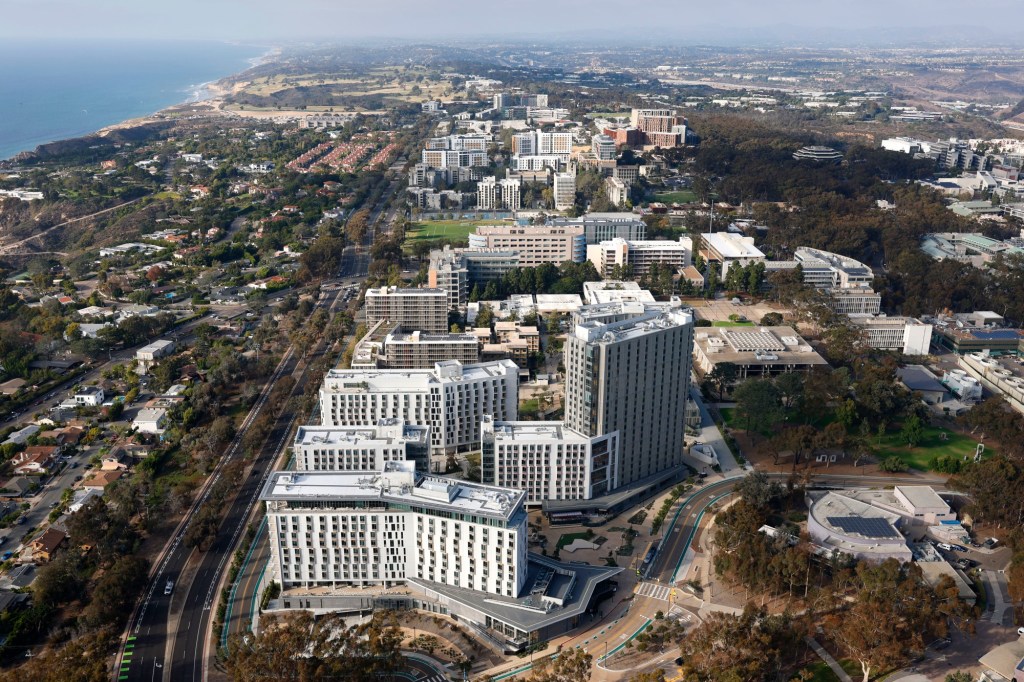
UC San Diego’s enrollment hit a record 45,087 last fall and helped the 10-campus University of California system avoid a significant drop in students while it was struggling with the loss of state and federal money and Pell grants.
The La Jolla school added 831 students, second only to UC Riverside, which gained 1,249. That resulted in a net increase of 1,686 systemwide.
The figure was expected to be much higher. However, financial issues led the Davis, Merced, Irvine, Santa Barbara and San Francisco campuses to tighten enrollment, which collectively dropped by 965. The biggest hit was at Davis, where enrollment fell by 656.
The system’s most popular campus, UCLA, added only 100 students, despite heavy demand globally for admission. Only 269 students were added at UC Berkeley, whose problems also include finding enough housing for students.
The slowdown wasn’t welcomed by many administrators in the UC, which raised systemwide enrollment by nearly 50,000 over the past decade to meet huge and ongoing student demand, especially from California residents.
UCSD has proven to be especially popular. More than 150,000 prospective freshmen and transfer students sought admission last year.
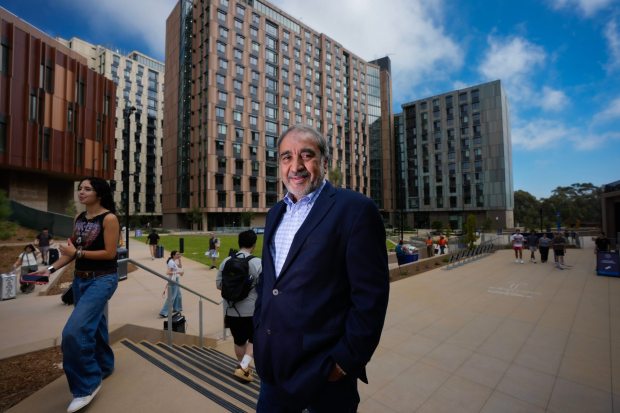 UC San Diego Chancellor Pradeep Khosla stands in front of the newly opened Ridge Walk North Living and Learning Neighborhood on the UC San Diego campus. (Nelvin C. Cepeda / U-T file)
Blessed with lots of open land, UCSD has been waving students through the door over the past decade, increasing enrollment by more than 12,000. The boom has been engineered by the school’s chancellor, Pradeep Khosla, who convinced legislators to provide hundreds of millions of dollars for growth.
Khosla focused sharply on adding housing, which in recent years has taken the form of high-rise towers. In September, the campus opened Ridge Walk North, which houses 2,400 students, many of whom have prime views of the ocean.
This enabled UCSD to increase the number of people in student housing to about 24,500, tying it with UCLA, the largest campus landlord in the country.
When Ridge Walk opened, Khosla told the Union-Tribune he was considering building residential towers that could rise as high as 30 to 40 stories en route to pushing UCSD’s long-term enrollment to 56,000.
Things quickly changed in January when President Donald Trump began to make huge cuts in federal research funding to colleges and universities nationwide. The state also made it clear that it would cut UCSD’s funding by about $50 million to help balance the state budget.
In April, Khosla issued a public statement saying that UCSD could face half a billion dollars in annual budget cuts. By then, he had canceled plans to construct some new research buildings. And he froze plans to begin the first phase of a residential village that would eventually house an unprecedented 6,000 students.
UCSD’s financial problems have eased some as the school, like many others, began to claw back some of the big research grants they had been awarded. But Khosla has not publicly committed to resume plans to add more dorms, even in the face of unrelenting demand for admission by students.
The demand comes as UCSD’s demographic makeup continues to shift.
In 2021, some California lawmakers said UCSD, UCLA and UC Berkeley appeared to be favoring foreign students over California residents when it came to admission because they paid more than twice as much in tuition and fees. At the time, UCSD had a record 8,151 foreign students, the majority of whom were from China. Lawmakers directed the three schools to increase the number of California residents.
UCSD’s international enrollment fell to 7,095 in 2023. But it rebounded to 7,514 in 2025. The spike hasn’t caused an uproar because the percentage of California residents rose by 2.1% over the past five years, while the percentage of foreign students declined by 2.8%.
This shift did cause surprise. The Trump administration made it difficult for many foreign students to obtain the visas they need to study in the U.S. But this didn’t deeply affect the resurgence in foreign enrollment.
The new UC data shows that UCSD’s enrollment among Black students dipped a bit, to 3.4% last year. Black people represent about 6% of California’s population, according to the Public Policy Institute of California.
Hispanic/Latino students represented 22.1% of UCSD enrollment last year, almost 4% higher than it was in 2021. But the numbers are considered to be low; this demographic group makes up nearly 40% of California’s population, the U.S. Census Bureau says.
“These numbers reflect California’s commitment to academic excellence, access, and innovation, values that have made the University of California the world’s greatest research university,” UC President James B. Milliken said in a statement. “The value of a UC degree is abundantly clear. An investment in UC is the best investment in the future of our students, California’s workforce, and the state’s economy.”