
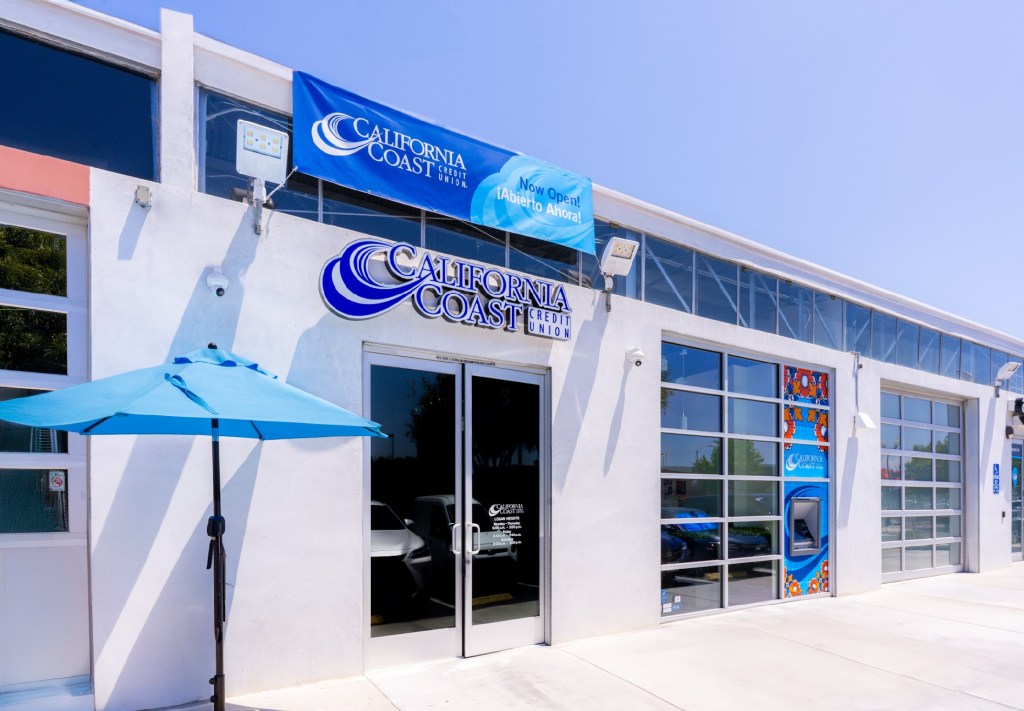
A merger that would join two of San Diego’s oldest banking institutions to create an almost 630,000-member, $13.5 billion credit union is now being litigated in San Diego Superior Court after months of conflict between the two institutions.
In court filings, San Diego County Credit Union said it discovered what it called an alleged “worrisome lack of controls and outright non-compliance” by California Coast Credit Union and filed documents to end the merger, which was announced last year. Cal Coast then filed a lawsuit accusing SDCCU of intentionally derailing the merger without a valid cause. It asked the court to order the merger to go forward and for SDCCU to pay Cal Coast damages and legal costs.
When reached Thursday, Nathan Schmidt, a spokesman for SDCCU, said, “This matter is in litigation and SDCCU’s positions are set out in its court filings.”
Cal Coast spokesman Robert Scheid said the credit union has been in full compliance with its obligations under the merger agreement.
“To ensure clarity in the merger review process and uphold the terms of the merger agreement, Cal Coast has taken legal action that protects the interests of our members, employees, and community partners,” he said Thursday. “What remains unchanged is our steadfast commitment to serving our members and advancing financial well-being across the region.”
According to SDCCU’s December court filing, the parties decided to merge “with limited due diligence” because they were aligned in their missions and presupposed that they were “both engaged in the lawful activities of a credit union.”
SDCCU said in its filing that after the merger agreement was signed, as the entities were being merged, SDCCU learned of several troubling areas regarding how Cal Coast managed certain loans and performed some marketing and other practices.
The complaint also includes a broad allegation of “deficient policies” that SDCCU claimed violated “dozens of federal and state laws, rules, and regulations.”
In November, SDCCU filed a notice to end the merger for cause.
“Cal Coast has substantially and materially breached its representations and warranties contained in the agreement, which breach is not able to be cured,” the notice cited in a court filing read, in part.
Cal Coast, in return, sued SDCCU and alleged a “deliberate campaign to derail the closing of a merger of two credit unions.”
In its complaint, Cal Coast said SDCCU wanted out of the deal and “relies on nothing more than manufactured excuses in an effort to re-trade fundamental terms it accepted during the parties’ negotiations.” But “a deal is a deal.” Part of Cal Coast’s complaint is redacted.
Rather than non-compliance, Cal Coast said SDCCU’s concerns were about “control”: which CEO would lead the combined credit union and how many board seats each would be granted.
Cal Coast said there was a due diligence period of several months before the financial institutions agreed on the merger, but soon, “SDCCU got cold feet about the control it had bargained away.” SDCCU wanted to put its president and CEO as the new entity’s head, whereas Cal Coast’s leader had been named in the merger agreement, the complaint alleges.
Cal Coast said SDCCU hired two accounting firms that performed due diligence ahead of the merger. “These diligence results were consistent with Cal Coast’s stellar supervisory history of excellent regulatory outcomes,” its lawsuit said.
Cal Coast also said an outside consultant drafted recommendations that focused on risk mitigation, and not legal noncompliance. Regarding loan practices, Cal Coast’s complaint said these were reviewed by a third party, which “found no material adverse credit issues.”
Cal Coast agreed to adopt some recommendations made by the consultant. That was not an admission that it had done something wrong, the complaint said.
Its suit asks the judge to require SDCCU to complete the merger.
The merger, announced in April, would join two of California’s oldest financial institutions and their almost 630,000 members. The newly merged credit union would rank fourth in the state, with almost $13.5 billion in assets and more than 1,400 employees.
At the time of the announcement, the two credit unions touted their community focus.
“This merger will unite two financially sound and community-focused credit unions. Our joint strengths position us to better serve our members and expand our community impact,” they said.
A merger that devolves into disputes and a court case is not typical, but it is not “completely out of the ordinary,” either, said Matt Douglas, a corporate attorney with Seltzer Caplan McMahon Vitek who specializes in mergers and acquisitions.
“You certainly hope that this isn’t going to happen and usually this won’t happen, but … it does happen from time to time,” Douglas said.
Often, he added, “it’ll settle along the way.” It could also get thrown out by the court or go to trial, as Cal Coast Credit Union asked in its lawsuit.
For customers of companies in a contentious merger, a legal dispute itself is a concern, Douglas added.
“If these credit unions are engaged in litigation — we cannot speak to specifics, but in general, when a merger between two companies starts to go this route, it can indefinitely throw their operations into uncertainty,” he added. “They have to throw resources at their litigation rather than their regular operations. So we will, for their customers’ sake, hope for a quick and beneficial resolution. It’s never good for operations for any business to have this kind of uncertainty.”
Both credit unions’ branches and online services remain open to customers.