
Retired San Francisco firefighter Ken Jones was diagnosed with cancer last March. On Jan. 7, his insurance provider, Blue Shield of California, refused to pay for his treatment, his family said.
“Blue Shield has decided that my father’s life is not worth paying for,” Jones’ daughter Rachel said at a meeting of the San Francisco Health Service Board Thursday afternoon. In the 17 years Jones worked at the fire department, his daughter said Jones never asked if saving lives was too expensive.
The city is responsible for negotiating its public servants’ health insurance contracts, and the Health Service Board oversees that relationship. Jones’ family and other retired firefighters were there to ask the board to override Blue Shield’s denial.
Among them was Jones’ wife, Helen Horvath. Dr. Matthew Gubens, a veteran oncologist at UCSF, had already sent a written appeal to Blue Shield explaining a new treatment plan he’d created for Jones, she wrote after the meeting. Blue Shield told the family the recommended medications would not be covered because Jones had already received other cancer treatments.
Time is of the essence, Horvath stressed. Jones, 70, has aggressive stage four metastatic lung cancer. A tumor that was once a “pea-sized spot in his neck” has grown to be “egg-sized,” and “every delay matters,” Horvath told the board.
Jones was at a clinic preparing to begin a round of chemotherapy on Wednesday when the family learned that Blue Shield was refusing to pay. Her husband’s doctor was “shocked,” Horvath added.
Behind Horvath, a dozen retired firefighters sat together, looking grim. This is not the first time a San Francisco firefighter has struggled to get their cancer treatment approved, said Fred Sanchez, a former deputy fire chief who is now the president of Protect Our Benefits, a local nonprofit that agitates on behalf of the benefits and pensions of city employees.
Firefighters are more likely to be diagnosed with or die from cancer than the general population. Under California labor law, if a firefighter gets cancer, that cancer is automatically presumed to be linked to their job duties. “There’s a cancer sniper in the fire service,” former fire chief Jeanine Nicholson told the board.
Nicholson was diagnosed with breast cancer over a decade ago, she said. During her treatment, Jones frequently drove her back and forth to medical appointments.
Before the meeting, Nicholson and Sanchez confronted a Blue Shield representative who had come to the meeting. Blue Shield is “trying to prune the tree” of patients with a terminal cancer diagnosis as a cost-saving measure, Nicholson said
Jones’ case was being looked at and had been “escalated,” the representative replied. He apologized for the timing.
Supervisor Matt Dorsey, an appointee to the board, said the city had changed heathcare providers from United Health Care to Blue Shield last year, thinking it would be the better option for city employees. He said the board would launch an inquiry if further incidents suggested that this was not the case.
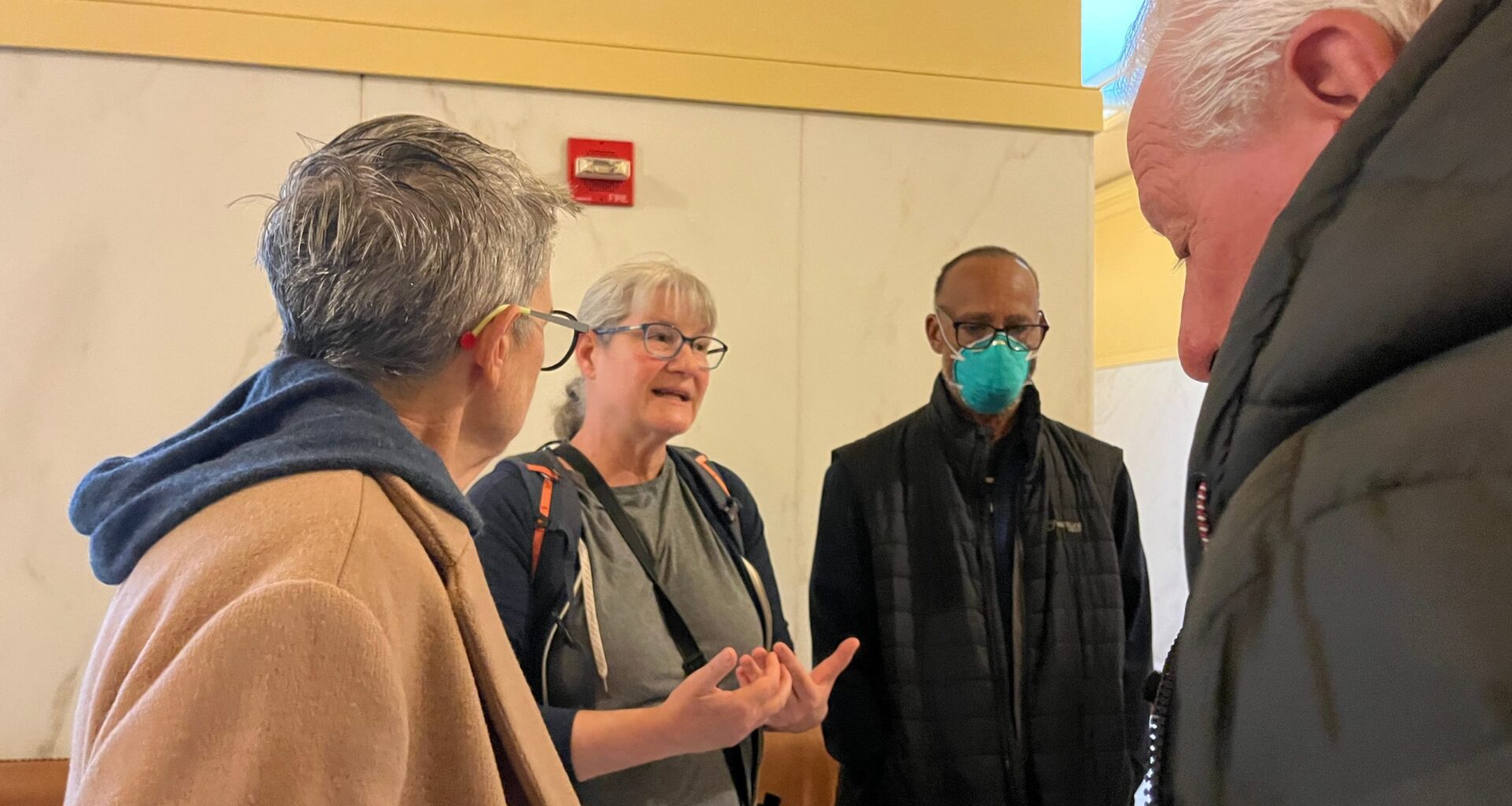
In the hallway after the meeting, there was hugging, and a few tears were shed.
At least, said Heather Buren, a 29-year veteran of the fire department, they have the board to appeal to. “A lot of other people who are denied treatment do not.”
Jones is a “solid man with integrity and kindness,” said Buren. Before he retired, Jones worked in the department’s Stress Unit,helping to get colleagues connected to mental health support. Fellow firefighters felt they could talk to him about everything, from fires to movies to trauma, Buren said.
Indeed, an hour before the board meeting, Jones sat beside a friend on a wooden bench in the hallway and asked how they were doing.