
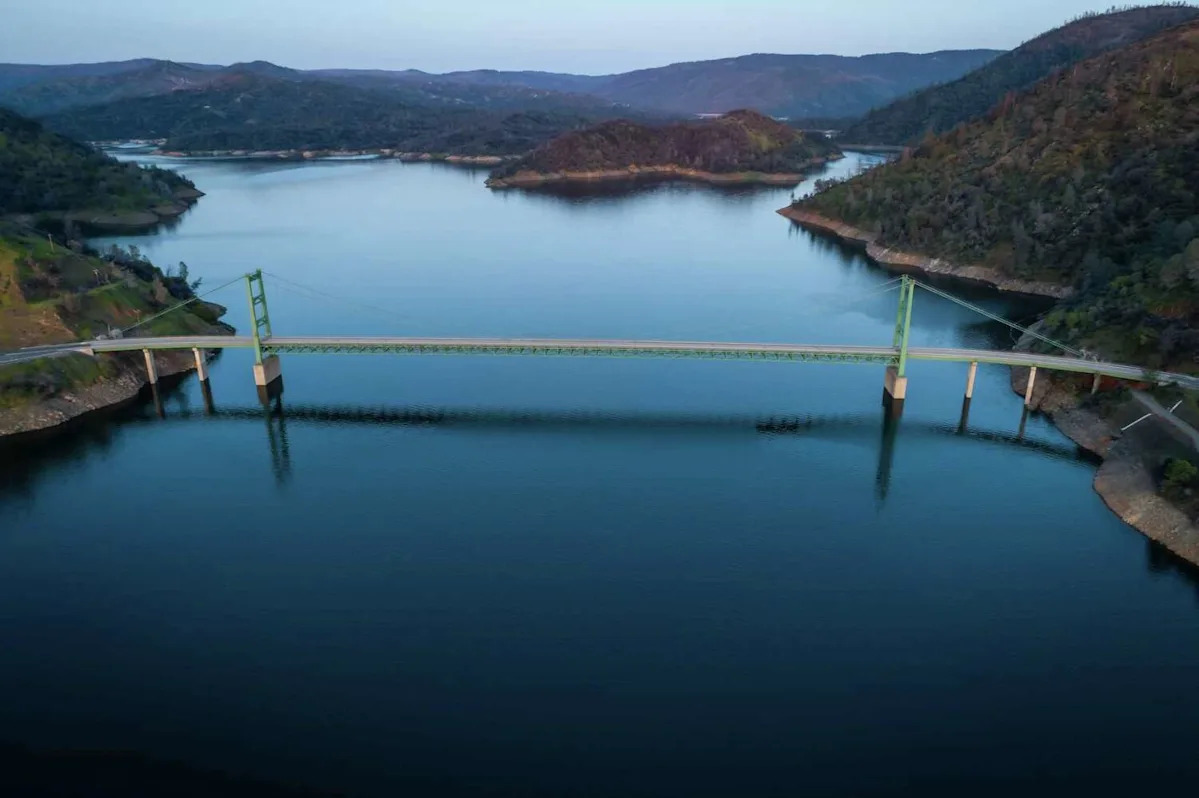
California has no drought or abnormally dry conditions for the first time in 25 years, according to new data from the U.S. Drought Monitor.
The abundance of moisture from recent storms was enough to improve drought indicators across the state, said Brian Fuchs, a climatologist with the National Drought Mitigation Center at the University of Nebraska, by email.
Fuchs was lead author for the latest U.S. Drought Monitor map. In this map, California was the only state in the country entirely free of dry conditions.
The U.S. Drought Monitor uses information like precipitation, temperature and soil moisture, as well as input from local experts and reports, to assess drought across the country, with the worst classification being “exceptional drought.” The authors also identify locations that are “abnormally dry” and could be entering or recovering from drought.
The last time that none of California was classified as being in drought or abnormally dry was in December 2000. Since then, Californians have endured big swings between extremely wet and extremely dry conditions. That includes severe, multiyear droughts that affected the entire state.
{ “__type”: “devHubFreeformEmbed”, “__id”: “Datawrapper”, “__fallbackImage”: “https://datawrapper.dwcdn.net/z8k9d/mobile.png”, “__data”: { “datawrapper_id”: “z8k9d” } }
The current water year, which began on Oct. 1, 2025, has “started positively with a series of periodic storms that have landed us in above average conditions for the last three months,” said state climatologist Michael Anderson with the California Department of Water Resources, by email.
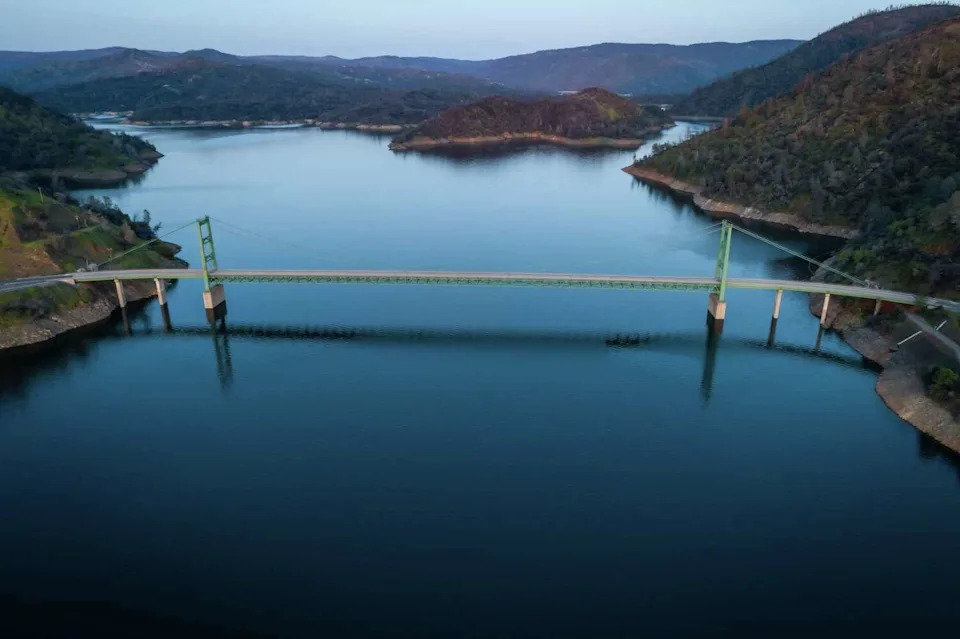
The Bidwell Bar Bridge at Lake Oroville which is filled to 100% capacity and discharging water to allow for incoming snowmelt from the Feather River in Oroville, Calif., on Thursday, April 13, 2023. Historic snowfall in parts of California have left the state with more water than it’s used to, recharging aquifers, overflowing streams and resuscitating areas once bereft of water. (Carlos Avila Gonzalez/S.F. Chronicle)
There were downsides: Recent downpours flooded roadways across the state and caused debris flows in Southern California. “These extreme events can drop so much precipitation in a short amount of time, they can (sometimes create) more hazards through flooding than benefits,” Anderson said.
The December and January storms have been good news for the state’s major reservoirs, which were at 130% of average for this time of year, as of Friday.
They also greatly boosted California’s snowpack, though it remains below average across the state, at 89% of normal for this time of year, as of Friday. Parts of far northeastern California continue to experience snow drought, according to an update Thursday by the National Integrated Drought Information System.
Forecasters expect California to experience a dry spell for at least the next week. This could potentially bring changes in future U.S. Drought Monitor maps.
“Just like how it was not a single week or single event that brought an end to the dryness, it would need to be a culmination of dryness,” Fuchs said. “We will continue to monitor conditions and make changes as needed, week by week.”
This article originally published at California reaches weather milestone for the first time in 25 years.