
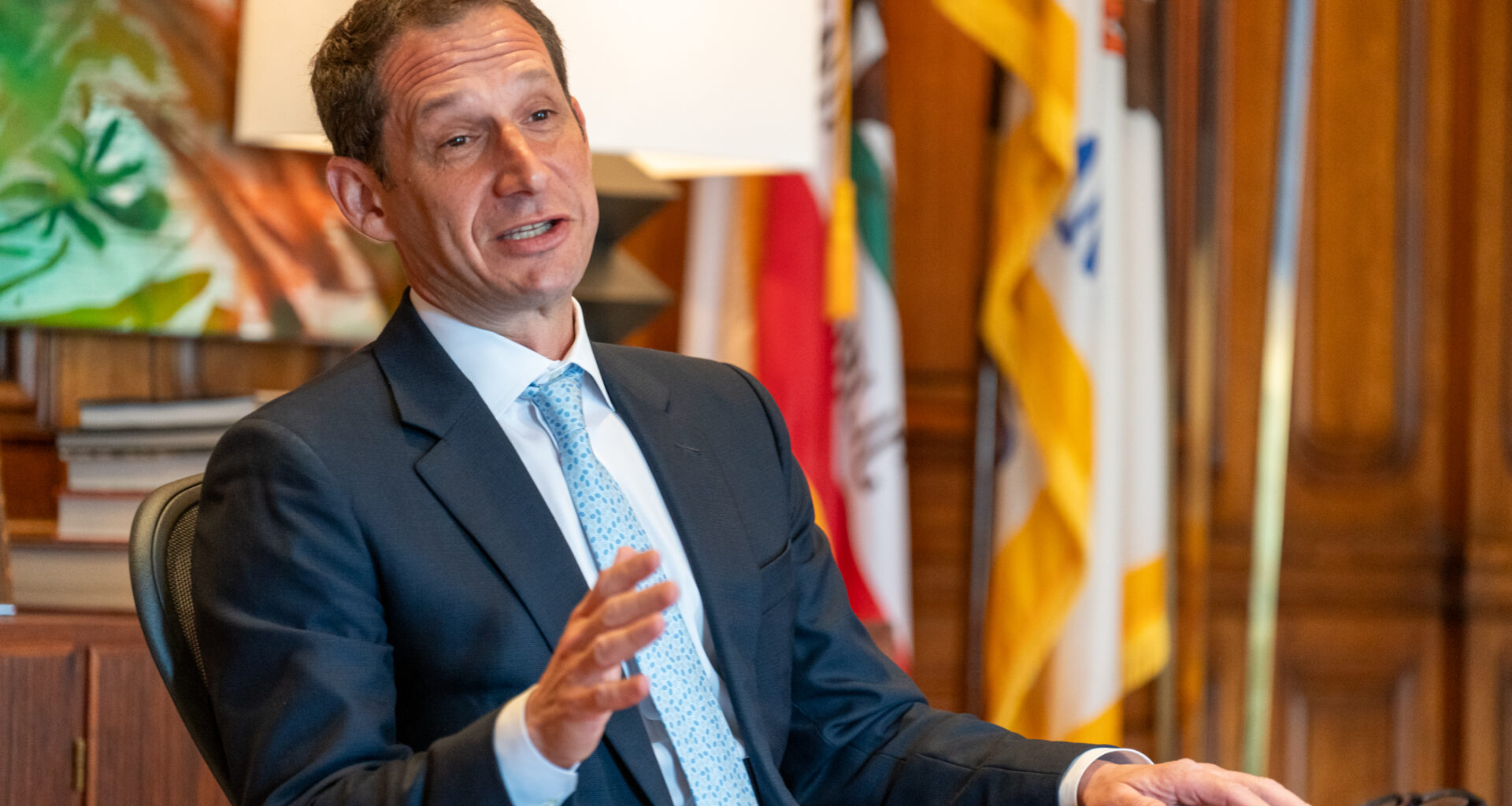
Over the course of the prior year, non-political, non-journalist San Franciscans have reached out to me with grave concerns about Mayor Daniel Lurie. They are, in short, alarmed by his caffeine intake.
The general public has no idea how much coffee Mayor London Breed drank. For all we know, her predecessor Mayor Ed Lee started each morning by wading into a kiddie pool full of macchiato. That’s because neither of these mayors had their staff post even a fraction of what Lurie’s team has to social media. Lurie, on the other hand, is seemingly perusing all the cafes in the Yellow Pages, A to Z, and taking his Instagram followers with him. Improving San Francisco’s curb appeal and business climate, it turns out, is thirsty work.
“People didn’t know we existed before they came,” Umit Sener, the proprietor of Gyro King, told the Bay Area Reporter. But then Lurie and his entourage visited the City Hall adjacent restaurant and the mayor posted about it on his Instagram feed.
“Now they come and say, ‘We saw you.’ We have new customers. Some businesses come to me and say, ‘How did you do that? We want to do that too.’”
A photograph of the mayor’s visit to Gyro King now graces the restaurant’s wall.
This all feels an awful lot like a microcosm of Lurie’s first year in office. Gyro King is the Turkish place across from the Main Library. People may not have known it by name, but diners dropped in with enough regularity — including your humble narrator on quite a few occasions — for the place to stay in business for decades and decades under Sener’s family.
But Lurie visits once, and he’s the one credited with putting a generational family business on the map. He’s the one with a picture on the wall.
And here’s the thing: People like it. Other businesses want the same. Sener feels his life has improved. He’s not alone.
Daniel Lurie is positive, optimistic and ever-present. Many people — political, journalistic and caffeinated — underestimated how important this is. Me included. We can dismiss the mayor’s relentless and extremely online boosterism as a little too glib in the face of the very real problems the city and its residents are facing . But this critique is also more simple than the situation warrants. People are watching. They like what they see. And they feel better about this city. The perception of San Francisco has improved in a way that could lead to tangible change.
The mayoral candidates who made a practice of echoing dishonest propaganda about the city having been “destroyed” by criminals and drug-users have been relegated to private life and unelected positions in the city’s political septic tank.
Lurie, who didn’t do this, is mayor. And he has his picture on the wall of Gyro King.
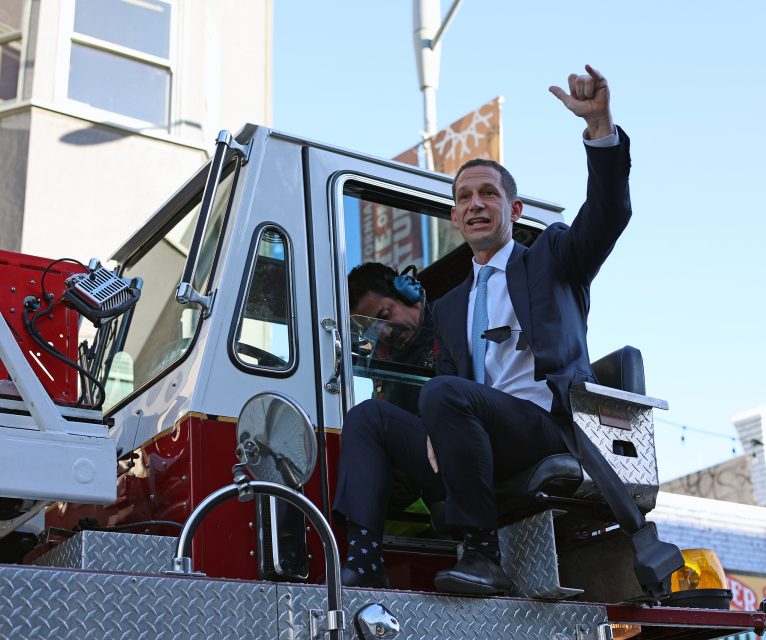 On a Nov. 8, 2024 victory lap in the Mission, Mayor-Elect Daniel Lurie hitches a ride. Photo by Abigail Vân Neely
San Francisco remains a city with issues. Reports of its death were greatly exaggerated, but reports of its rebirth depend heavily on where you choose to look and what you choose to see.
Mayor Daniel Lurie’s ability to make San Franciscans feel good about San Francisco and counter the lazy and counterfactual doom loop narrative is important. So, you would think, is what Lurie’s administration is doing with the actual work of governance. On the campaign trail, Lurie promised that “an unprecedented level of change and accountability” would be coming.
With that in mind, we asked the mayor’s office for a brief list of tangible moves Lurie has made to improve the city in the last year. This is what we received:
Opening a 16-bed stabilization center at 822 Geary, where street teams, police and EMS vehicles can drop off homeless people in crisis 24/7 to get medical care — instead of taking them to jail or a hospital emergency room.
Adding 500 beds (mostly for recovery/treatment) to the city’s shelter system.
Reconfiguring the neighborhood street teams model for homeless outreach;
Launching PermitSF to simplify the city’s byzantine permitting process and doing away with onerous requirements for things like restaurants putting seating outside.
Streamlining the process for recruiting and hiring new police officers, resulting in the first net increase in SFPD ranks in seven years;
Drafting and passing the mayor’s plan to upzone the city’s western and northern neighborhoods.
While these are all arguably good things, if you look closer, this is a curious list. To wit:
The stabilization center on Geary was bought and planned under Mayor London Breed.
Doing away with dumb permitting requirements so places like the Glen Park Cafe can have sidewalk seating is an unmitigated good, but it ain’t exactly the Norman Conquest. Moving to untangle the Gordian knot of permitting is also good, but the rollout of PermitSF was marred by mayoral deputy Ned Segal unilaterally awarding a $5.9 million contract over the objections of frontline staff and despite far less costly alternative bidders. So let’s call that one a work in progress. Data from the Department of Building Inspection shows that the median number of days to issue an in-house permit dropped from 243 in 2024 to 168 in 2025. But the biggest factor in that change seems be AB 1114, a state law that, as of Jan. 1, 2025, mandated quicker approval times and prevented approved permits from being appealed.
To the mayor’s list of tangible successes, your humble narrator would add two tangible examples of crisis averted.
Whatever the mayor did or did not do to prevent trigger-happy federal goons from being unleashed on city streets is much appreciated.
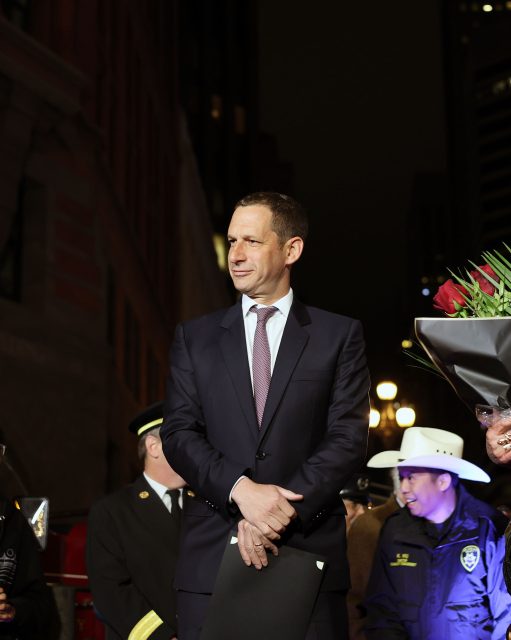 “It is a new day, San Francisco,” Mayor Daniel Lurie tells the pre-dawn crowd at the 1906 earthquake event. Photo on April 18, 2025 by Abigail Van Neely.
It remains to be seen how this citywide era of good feelings holds up once we hit the 2026-2027 and 2027-2028 budget process. This year’s figures to be far bloodier and more excruciating than last year’s, in part because of decisions that were put off last year. Our revenue shortfall has not yet been solved.
San Francisco’s revenue cratered during the pandemic because its downtown was, by and large, dominated by a sliver of the economy — tech. City office space is now dominated by a sliver of a sliver — AI. This, too, could work out poorly. We should’ve figured that San Francisco was in a vulnerable position, eggs in basket-wise, when every downtown worker was wearing the same puffy vest.
Labor negotiations during times of budgetary privation are a test for any mayor. Lurie will also need to sweet-talk voters into approving a revenue measure to forestall a transit meltdown (both municipally and regionally). This, too, figures to be an effort. The mayor’s 31-person group tasked with building a better city charter is scheduled to wrap up in March, and then the work will begin persuading voters to actually approve the thing in November. That’s a fast turnaround for major charter reform: You can listen to podcasts in double time, but doing government is harder.
Daniel Lurie is positive, optimistic and ever-present. That won’t be enough to solve all the problems looming ahead. But even a mastery of government would be insufficient if he were negative, pessimistic and absentee. Lurie won’t always be the mayor but, who knows: He may yet be our once and future Gyro King.