
By Steven Bradford, Special for CalMatters

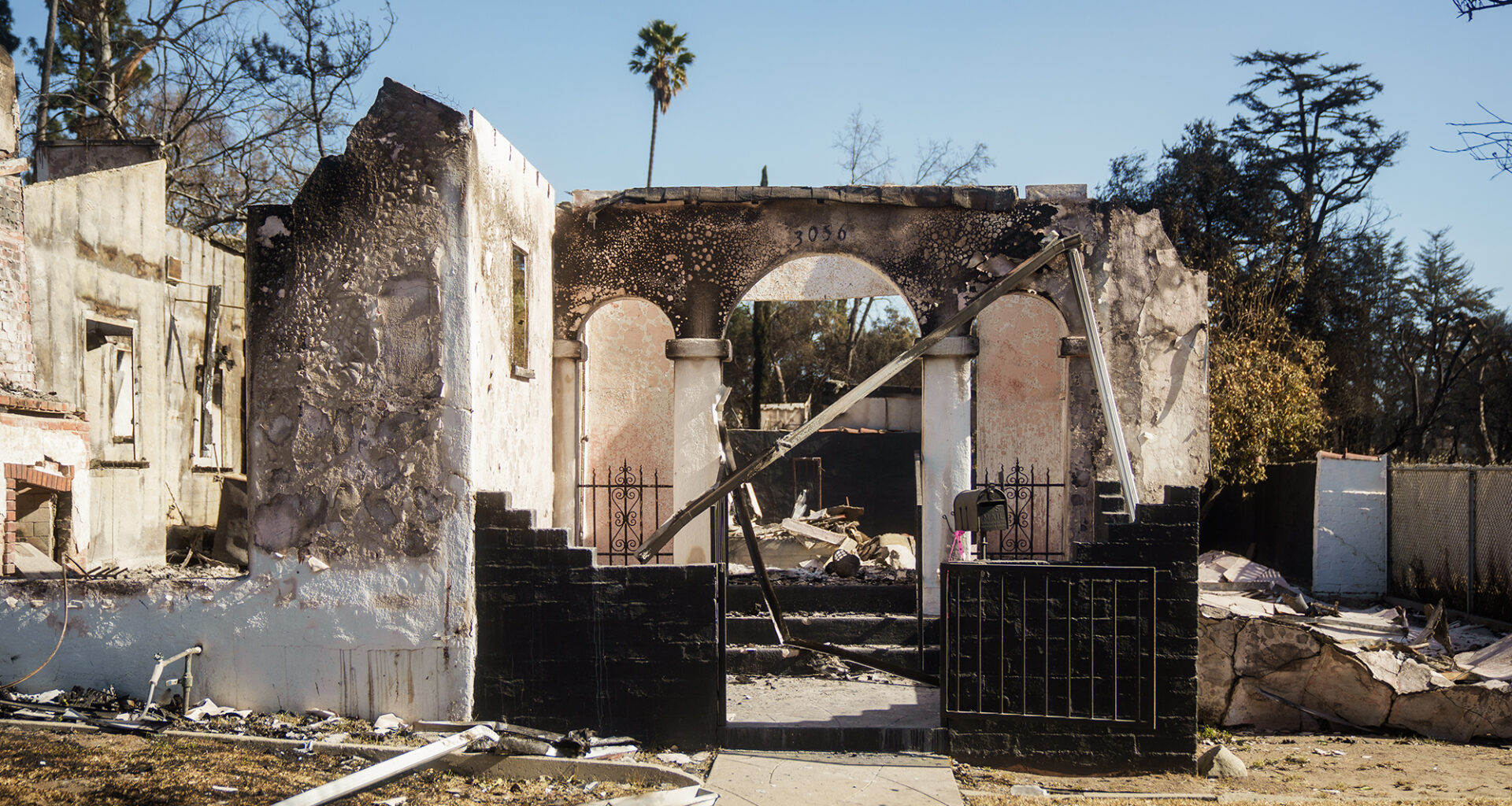
The remains of a house that was severely damaged by the Eaton Fire in Altadena, on Jan. 20, 2025. Photo by Jules Hotz for CalMatters
This commentary was originally published by CalMatters. Sign up for their newsletters.
Guest Commentary written by
With the first anniversary of the devastating Southern California wildfires approaching, CalMatters asked candidates for the 2026 state Insurance Commissioner race to share thoughts on what the state can do to help victims and stabilize insurers. This is the fourth response. Read the other candidate responses here, here and here.
Growing up in Gardena, we would sit around the dinner table and my father would share stories about the importance of life insurance. You see, my father, Booker, sold life insurance. I understood from an early age, watching and listening to him, the value of insurance for life, household and automobile.
I can remember Sundays after church being with my father and watching him help folks understand the importance of purchasing appropriate insurance and of not missing a premium payment to keep the policy in force.
It is this consumer-based background that I’ll bring to the office of the Insurance Commissioner — a lifelong appreciation of the importance of insurance.
How can California keep home insurers and coverage in the state?
I am reminded of Al Gore’s book, “An Inconvenient Truth.” He emphasized that while we have policies that can address climate change, the political will to change lags. Gore also was correct when he described the science as an “inconvenient truth.” We cannot have it both ways — either climate change is real and we must deal with it responsibly, or not.
I am not going to sugarcoat this — insurance rates are an issue in play because reality is in play. I promise that any rate impacts will be based on science, reality and the long-term best interests of Californians. California can incentivize home insurers to increase market capacity by continuing to implement a sustainable insurance strategy.
We can be faster and more efficient when reviewing rate filings by increasing the rate review team, eliminating non-productive administrative hurdles not mandated by Proposition 103 and concentrating on eliminating the uncertainty and friction inherent in the current regulation-based rate and form application process.
We must create a fast path, or a flex band, for rate increases or decreases below a certain threshold (for example, 5%). And it is only common sense that we deregulate commercial rates because commercial policyholders are sophisticated purchasers with sophisticated brokers and risk managers and other tools at their disposal.
How can California prevent insurers from price gouging?
To create the best options for consumers, we must have a vibrant insurance market with competition. As Commissioner, I will ensure that consumers have options – this means a competitive market with multiple insurers competing for business.
As Insurance Commissioner I will ensure that insurers are not taking advantage of consumers but receive the rate review process necessary to keep their capital in California. I will modernize and adequately staff the department’s rate regulation bureau to examine insurers that attempt to charge excessive rates.
I plan to enhance consumer education.
Despite all the disruptions in recent years, prices in California are about even with the national average and much lower than in East Coast natural disaster zones. When considering the high cost of homes and rebuilding, one can plausibly argue that California property insurance rates are currently appropriate compared to other disaster-risk places in our country.
How should California stabilize the FAIR Plan?
The current over-reliance on the FAIR Plan is not sustainable. We must begin a process to depopulate the number of policies in the FAIR Plan. I believe this will best be done by a fully functional, competitive insurance market.
I support the implementation of Assembly Bill 226, which will allow for the issuance of bonds to finance the costs of claims, to increase the liquidity and claims-paying capacity of the FAIR Plan, to refund bonds previously issued for that purpose and reduce the reliance on expensive reinsurance.
We did this 25 years ago when faced with a workers’ compensation meltdown. Assemblymember Lisa Calderon’s bill can do it again with respect to the property insurance crisis we now face.
I want to evaluate including the FAIR Plan in the California Insurance Guarantee Association, as a means to more efficiently spread risk among all of the parties that are benefitted by — and burdened by — the realities of the California market.
In summary, reinvigorating our insurance market will not occur overnight, because the problems and issues did not materialize overnight. It will take time and the will power to make difficult decisions. I have that ability and am willing to make those difficult choices.
But let’s keep in mind, California insurance consumers still pay less than East Coastal hurricane zone rate payers. The California insurance market has not collapsed the way it has in Florida, where major insurers — not just the low-market-share companies — have abandoned the state.
All we have to do is look at the Florida insurance market to learn what not to do.
We have an opportunity to fix our market here. We just must be honest, smart and reasonable.
The candidate guest commentaries are being published in the order in which they were received.
This article was originally published on CalMatters and was republished under the Creative Commons Attribution-NonCommercial-NoDerivatives license.