

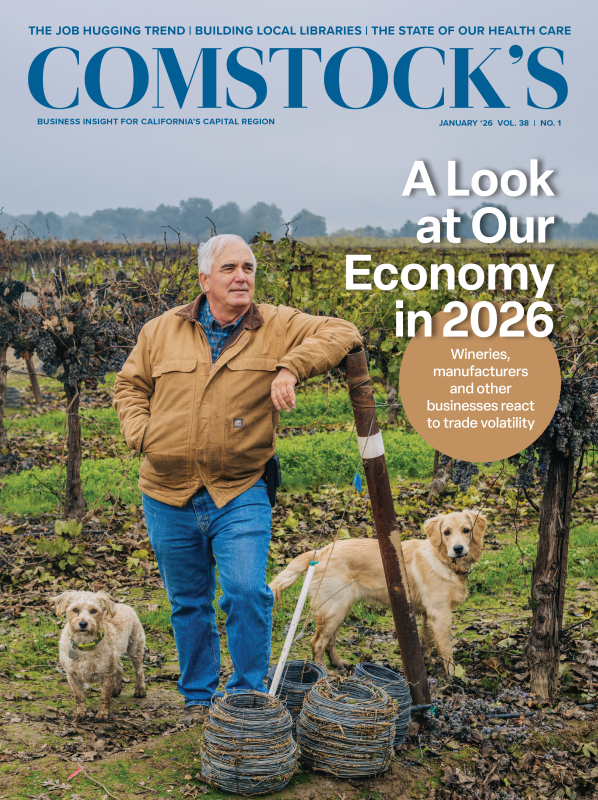
This story is part of our January 2026 issue. To read the print version, click here.
The region’s health systems are facing challenges around
Sacramento’s sudden population boom and aging demographics, while
trying to navigate a supply of physicians that isn’t keeping up
with patient demand. There are also other big challenges on the
horizon. This month, Comstock’s talks to four local health
leaders about some of the most pressing questions our readers
have.
Rachael McKinney
President, Sutter Health Greater Sacramento Division
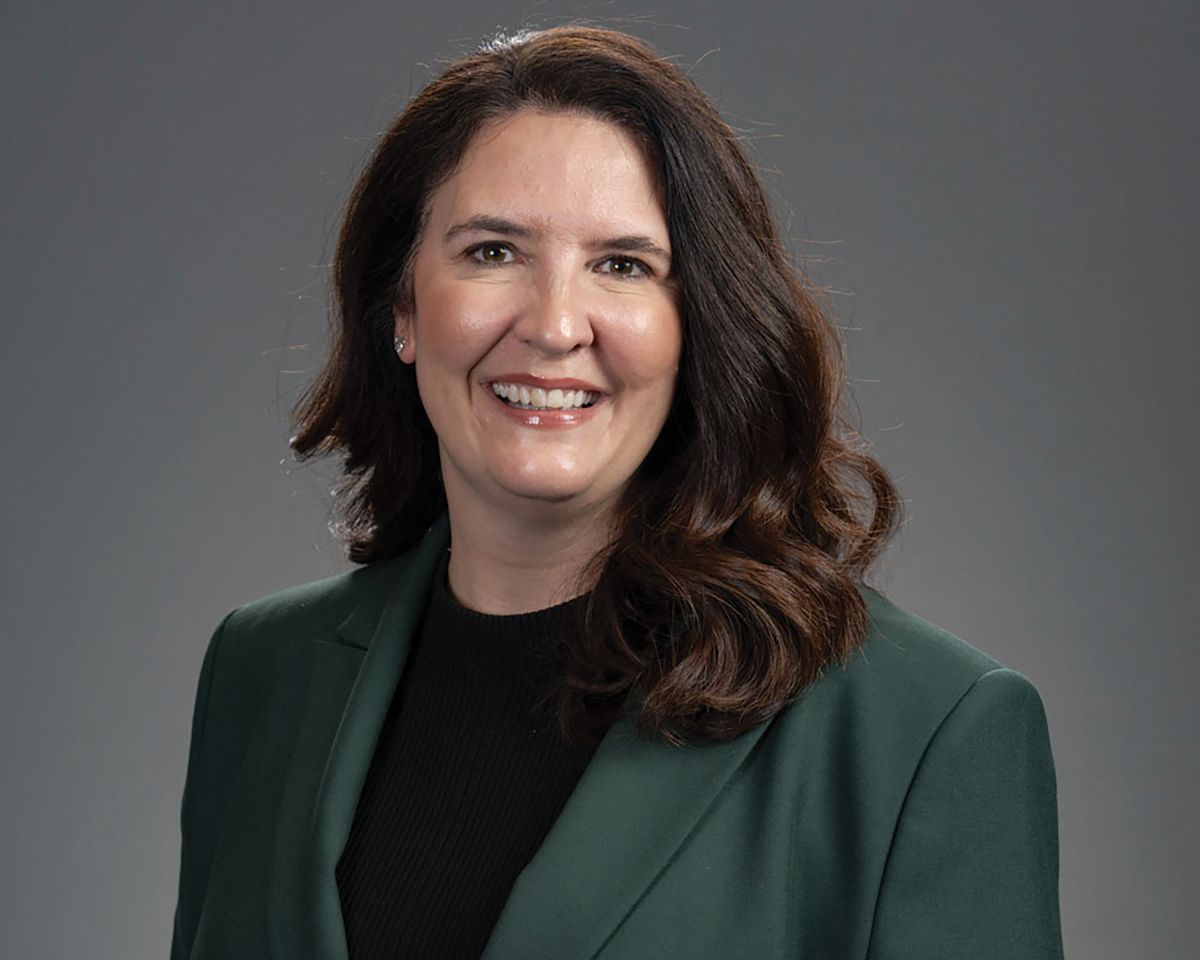
A veteran of Sutter Health leadership since 2004, Rachael
McKinney rose through the ranks of the nonprofit health
provider’s administration, bolstering cancer center operations,
expanding vital oncology programs and later overseeing growth in
Sutter’s offerings in neuroscience. In January of 2022, as
pandemic protocols were still in effect, McKinney was promoted to
CEO of Sutter Medical Center, Sacramento. The following June, she
was elevated to president of Sutter’s Greater Sacramento
Division, overseeing care for a nine-county radius.
Comstock’s: What is Sutter Health’s strategy to
improve how quickly patients are being seen?
There’s a significant shortage of health care workers in the
United States, so we’re starting upstream by investing heavily in
graduate medical education and training our own future
physicians. Here in the greater Sacramento region, Sutter is
committed to growing our graduate medical education by about four
times what it currently is, doing that by 2030, which will mean
we have more than 200 residents and fellows training in our
facilities.
Related: The Beat Goes On:
Sacramento-area medical centers get high marks for their heart
care
We’ve also invested heavily in growing our existing workforce
through recruitment in partnership with our medical group. We’ve
actually brought more than 400 new physicians to Sutter since
2023, bringing our total up to 2,400 physicians caring for Sutter
patients in the region. We’re also expanding graduate medical
education in order to feed that pipeline, and really investing in
programs to train high school students and preceptorships and
nursing students through partnerships. …
We’ve also improved primary care access for new patients, cutting
the wait time down by more than a week since the beginning of
this year alone. A lot of that is due to the recruitment of new
physicians, but we’re also optimizing technology.
Comstock’s: Does Sutter Health have any ability to
mitigate the costs of prescription drugs to its
patients?
As a not-for-profit health system, we obviously absorb a lot of
the rising costs in health care, and government reimbursement is
shrinking while the costs of pharmaceuticals and medical devices
continue to go up. … While we take steps every day to help make
health care more affordable, we’ve really focused on offering
financial counseling and assistance for patients to reduce
prescription drug costs, connecting them to any available
discounts that the pharmaceutical industries might be offering.
But the reality is that high drug prices remain a significant
challenge for patients, for us and for the industry as a whole.
We need to continue to pull the levers that we can as an industry
to help drive those costs down.
Comstock’s: What health stories should local
reporters be paying more attention to?
McKinney: When a patient comes to the hospital in an ambulance,
if the hospital is full because it has no beds to admit more
patients, those patients that are already in the emergency
departments, who need to go up to a (regular hospital) bed, have
to wait where they are. That impacts the ambulances coming in. It
impacts where ambulances go.
Sometimes there’s a belief that the reason for this problem is
isolated to the emergency department. You’ve got to look at the
whole health care continuum to understand that something like
wait times, or ambulance drop off times, are all kind of
interconnected: They create this complex super problem that
everybody is working really hard to address. …
I think shedding more light on the different parts and pieces of
the health care delivery system could help the public understand
why it’s important to seek care in the best place at the best
time, as well as consider the things that we can all do as a
community to help keep people healthy in a better way.
Dr. Jay Robinson III
Senior Vice President and Area Manager, Kaiser Permanente
Sacramento and South Sacramento

Dr. Jay Robinson III has spent more than 30 years working to
create healthy communities. After proving himself at hospital
leadership in Memphis, Chicago and the Department of Veterans
Affairs, Robinson was recruited in 2022 to be a top executive for
Kaiser Permanente’s Sacramento operations. He currently oversees
health care for more than 580,000 members, including a Level II
Trauma Center and Advanced Neuroscience Center.
Comstock’s: What is Kaiser’s strategy to improve how
quickly patients are being seen?
We’ve really enhanced our digital front door, creating ways to
connect with a provider virtually or by phone — or even emails —
and that’s something that a certain segment of patients really do
like. We also have come up with different modalities of
treatment, establishing things like advanced care at home, which
is essentially a hospital-at-home initiative where patients who
may have typically been admitted to the hospital before can now
be treated for a condition where they live. In that situation, we
set up monitoring equipment and our teams virtually interact with
the patients. …
Related: Parkinson’s
Is on the Rise in the Sacramento Valley. Dancing and Boxing Can
Help
We also have ambulatory treatment centers that we’ve leaned into
over the past year, so if there is something a patient needs like
antibiotics or some type of infusion, we’re able to treat them in
that setting and avoid them having to go to the hospital. We’re
expanding our overall footprint, whether by adding a hospital in
Sacramento’s Downtown Railyards or by expanding by 135 beds at a
tower in Roseville, not to mention adding medical hubs in Folsom
and Natomas.
Comstock’s: Does Kaiser have any ability to mitigate
the costs of prescription drugs to its patients?
One thing that we do have is scale. We are a large enterprise,
which affords us some ability to manage costs. The types of drugs
we use are regulated by what’s called our regional pharmacy and
therapeutics committee, and that’s populated by physicians and
pharmacists who make decisions on the kinds of drugs we’re
getting. But we do try, as appropriate, to substitute with
generic drugs. … I think we have some of the best pharmacists in
the business, and they make really good decisions about the types
of drugs we need to use to get the best outcomes for our
patients.
Comstock’s: What health stories should local
reporters be paying more attention to?
How we’re developing ways for people to age-in-place, if you
will, and give them options other than going to a hospital or
nursing home. We are leaning into a number of different
initiatives around that, including the partnership with Habitat
Health for our PACE (Program of All-Inclusive Care for the
Elderly) clinic that just recently opened on Howe Avenue. It’s a
beautiful building with a really neat program that allows
eligible older patients to drop in every day to get access to
everything from a gym and rehabilitation therapy, to a host of
services around nutrition and primary care.
Rob Marchuk
President, Physician Enterprise, Dignity Health Sacramento

A journeyman leader with Dignity Health, Rob Marchuk was part of
the drive to greatly expand its ambulatory services, advanced
procedural services and surgical services, particularly in Folsom
and Rancho Cordova. A senior health executive, Marchuk is focused
on addressing how population growth in the region is straining
health resources.
Comstock’s: What is Dignity Health’s strategy to
improve how quickly patients are being seen?
Marchuk: We know there’s not going to be enough physicians coming
out of training in the next ten years. So, we’re working hard on
recruiting and trying to figure out different models for
residents coming out of school. We’re also starting our own
residency program within Dignity Health. That’s a case where we
train our own physicians and engage them once they’re done. We’re
creating different care models as well. Our primary express care
model that we’ve opened in Roseville and Elk Grove is a perfect
example: It’s a low-acuity, easy access, in-your-neighborhood
primary care type of clinic with extended hours, 12 hours a day,
open weekends.
Related: How
Sacramento Health Systems Are Reinventing Care
Comstock’s: Does Dignity have any ability to mitigate
the costs of prescription drugs to its patients?
Marchuk: It’s one of the highest expenses within our health care
system as we look at how we take care of our patients inside the
hospitals. I think one thing we do is work with our patients and
make them educated consumers of medications, and walk them
through the benefits and risks of certain kinds. I think the
second thing we do is really work hard on the generic brands and
bio-similars that are coming up, if they’re more cost effective
for a patient and have the same outcome and results.
Comstock’s: What health stories should local
reporters be paying more attention to?
Marchuk: There’s a lot of really great patient stories out there
— a lot of life-saving care that we were able to deliver. I
think, a lot of times, health care systems and hospitals get kind
of a bad rap for the cost and access. Focusing on the good
stories and great patient outcomes — and the lives that we save —
could make for compelling stories.
Jonathan Russell
Chief Ambulatory Officer, Marshall Medical Center

Jonathan Russell was born in Placerville’s Marshall Hospital and
grew up in the El Dorado County community that it primarily
serves. For the last 20 years, Russell has worked to make sure
that Marshall Medical Center is evolving as a mainstay for health
care in the semirural county it oversees. Russell feels there’s a
special camaraderie and sense of local purpose that makes
Marshall a unique provider.
Comstock’s: What is Marshall’s strategy to improve
how quickly patients are being seen?
The physician shortage, particularly around the family medicine
specialty, is a nationwide issue. It’s becoming very, very
difficult to recruit family medicine physicians. One of our
strategies there is to utilize our physicians as efficiently as
possible, as well as lean heavily on our mid-level staff and
nurse practitioners and medical assistants to find ways to
deliver group-based medicine, so that we can see the most
patients possible with the resources available. …
Related: Marshall
Medical Center CEO Discusses Health Care for Rural Residents
We’ve got virtual care. We’ve got nurse triage going through some
of the communication between patients and physicians; and all of
that is trying to off-load as much time as possible so that the
physicians and mid-level providers can be there for the patients.
Comstock’s: Does Marshall have any ability to
mitigate the costs of prescription drugs to its
patients?
Yes and no. We do participate in a very complicated government
program that has the ultimate attempt to decrease the drug costs
at the patient level, and it does do that. So we’re highly
engaged in that program. But that entire program I’d say is on
thin ice and has been for some time, from a government support
standpoint. …
We opened a specialty pharmacy a couple of years ago. It’s very
similar to a retail pharmacy with the exception that it has a
very limited formulary, so there’s only certain drug types; but
most of those drugs tend to be very expensive and hard to get —
the kind that sometimes patients will pursue out of country. And
even outside of that, if patients have an inability to pay, we
have a mechanism to get them the drugs that they need on either a
sliding scale or a free-of-charge basis.
Comstock’s: What health stories should local
reporters be paying more attention to?
The fragility of health care. I think the public generally views,
especially hospitals and health systems, as these money-making
machines that are just flush with cash and have no financial
challenges. That’s 100 percent not true. And I’d say
especially urban and rural health organizations are far more
fragile and at-risk than they were years ago. The evidence of
that is the hospital in Glenn County that just closed a few
months ago.
–
Stay up to date on business in the Capital Region:
Subscribe to the Comstock’s newsletter
today.