
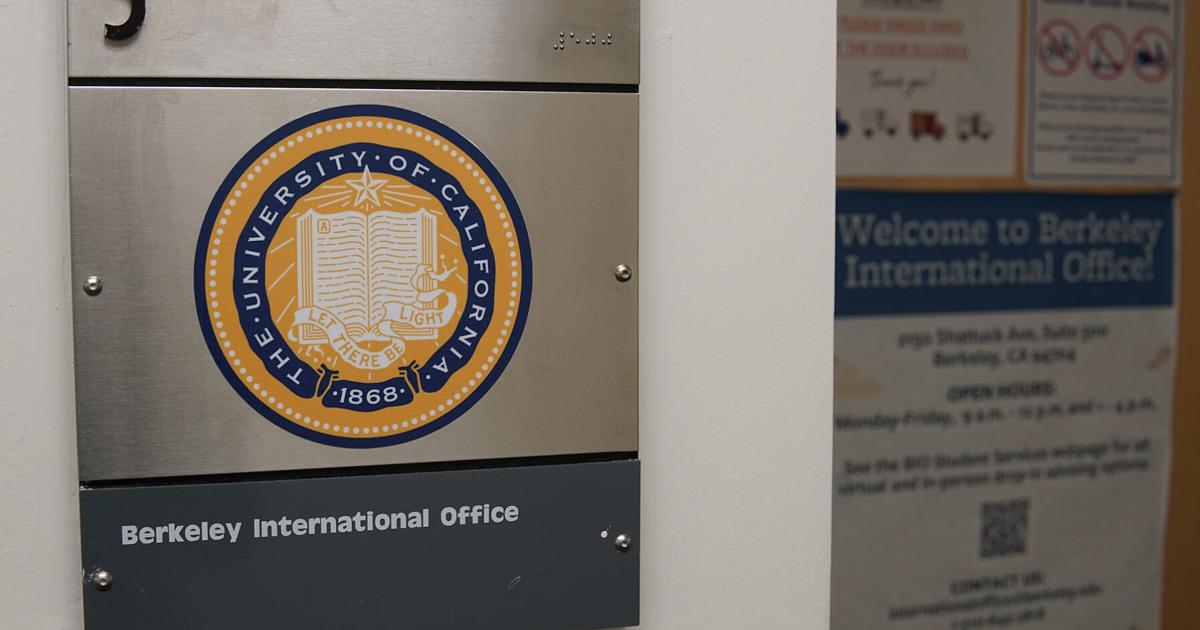
A $705,000 annual allocation to the Berkeley International Office, or BIO, made under the direction of former Chancellor Carol Christ in 2020, is set to expire with the close of fiscal year 2026.
The BIO is responsible for providing guidance and paperwork for international students, researchers and employees who are navigating a landscape impacted by shifting federal policy.
To support BIO’s services, the allocation to the office began drawing funds from Berkeley’s Student Services Fee, or SSF, revenues in 2021.In the 2024-25 actual year, SSF revenues totaled almost $50 million, according to a November 2025 SSF report.
According to campus spokesperson Adam Ratliff, BIO leadership met with the Campus Advisory Committee on Student Services and Fees, or CACSSF — which advises the chancellor on SSF spending — Nov. 21, 2025, to discuss recommending that Chancellor Rich Lyons make the allocation permanent.
The committee did not immediately agree to do so; instead, it directed BIO leadership to present their case directly to central campus administration.It is not the first time CACSSF has expressed hesitance around the allocation of SSF to BIO.
“CACSSF members believe that programs BIO offers are a combination of core instructional and co-curricular supplemental services, and that SSF funds should not be used to fund BIO,” wrote the CACSSF chairs, including Vice Chancellor for Student Affairs Stephen Sutton, in a letter to Christ in June 2021.
According to Ratliff, international student programs fall under “core campus functions,” unlike many of the supplemental services that SSF traditionally provides. According to guidance from the Office of the Chief Financial Officer, SSF fees should not be used to fund international student programs. However, budgetary challenges can loosen this restriction.
According to campus spokesperson Janet Gilmore, Christ’s decision to use SSF funds was made under the budgetary constraints of the COVID-19 pandemic. Campus leadership has not yet moved to continue the funding, describing its status as “pending.”
“Campus leadership is committed to ensuring that BIO has the necessary resources to fulfill its mission,” Gilmore said in an email. “BIO is still in the process of evaluating all funding options including a continuation of the student services fee allocation.”
That has left some international students, who account for roughly 16% of students on campus, and campus groups concerned about how they will access the office’s services, such as providing essential documentation, such as I-20 identification forms needed to obtain an F-1 visa, the type of visa most international students fall under.
Without that visa, international students cannot enter or reside in the country.
On Nov. 12, 2025, the ASUC Senate passed a resolution, sponsored by Senator Rayne Xue, that urged the CACSSF to make the $705,000 allocation permanent. The resolution, which follows a similar June 2024 resolution from Senator Helena Wu, suggests that each of its advisers is responsible for nearly 1,000 students.
Both resolutions suggest that the expiration of the allocation could result in five advisers losing their jobs.
“It feels deeply discouraging,” said Linlin Wang, a Chinese international sophomore, in an email. “The support structures for international students already feel thin, and reducing funding would make those protections even weaker.”
Wang said the office’s regular reminders of upcoming deadlines or new regulations were helpful, but that in an emergency, the BIO fell short.She described having her passport held at a visa application center in another country and contacting the BIO, which provides guidance in emergency situations.
She claimed she could not get in contact with the center.
However, for Alejandro Sanchez, a campus alumnus who graduated with a master’s in electrical engineering and computer sciences in 2025, the BIO has proven helpful, albeit strained.
Sanchez has remained in the United States through Optional Practical Training, or OPT, a program through which international students can extend their visa to gain work experience relevant to their degree. The BIO is also responsible for providing graduates enrolled in OPT with paperwork.
“These are some of the most helpful people on campus,” he said. “You should want more advisers. They’re very overworked.”
Sanchez and Wang, as well as the ASUC in Xue’s resolution, all mentioned the uncertainty surrounding immigration policy faced by international students under President Donald Trump’s second administration.
The past year has seen increased vetting and surveillance of international students, travel bans from certain countries, pauses in visa interviews, considerations to end OPT and restrict students to four years to complete a degree, attempts to deport international students for protesting and the sudden revocation and subsequent reinstatement of student visas, including those of 23 campus students and recent graduates.
“If the very office that is supposed to help students stay compliant and safe is losing resources, it sends a bleak message,” Wang said. “Institutional support is shrinking right when the landscape is getting more complex.”