
San Francisco is making sweeping changes to how it counts the number of homeless people on its streets.
The all-important but controversial Point-in-Time Count, mandated every other year by the federal Department of Housing and Urban Development, has long steered homeless policy and resources in San Francisco, despite wide consensus among critics that it undercounts the population.
The city previously argued for preserving its ad-hoc methodology — which involved volunteers working alongside city employees to conduct a headcount of people who appeared to be homeless — because it made for a consistent data set, allowing for officials to gauge change over time. In 2024, after The Standard reported that the process was dysfunctional and chaotic, the city conducted a partial recount.
For this year’s count, set for Jan. 29, the Department of Homelessness and Supportive Housing is changing the process significantly.
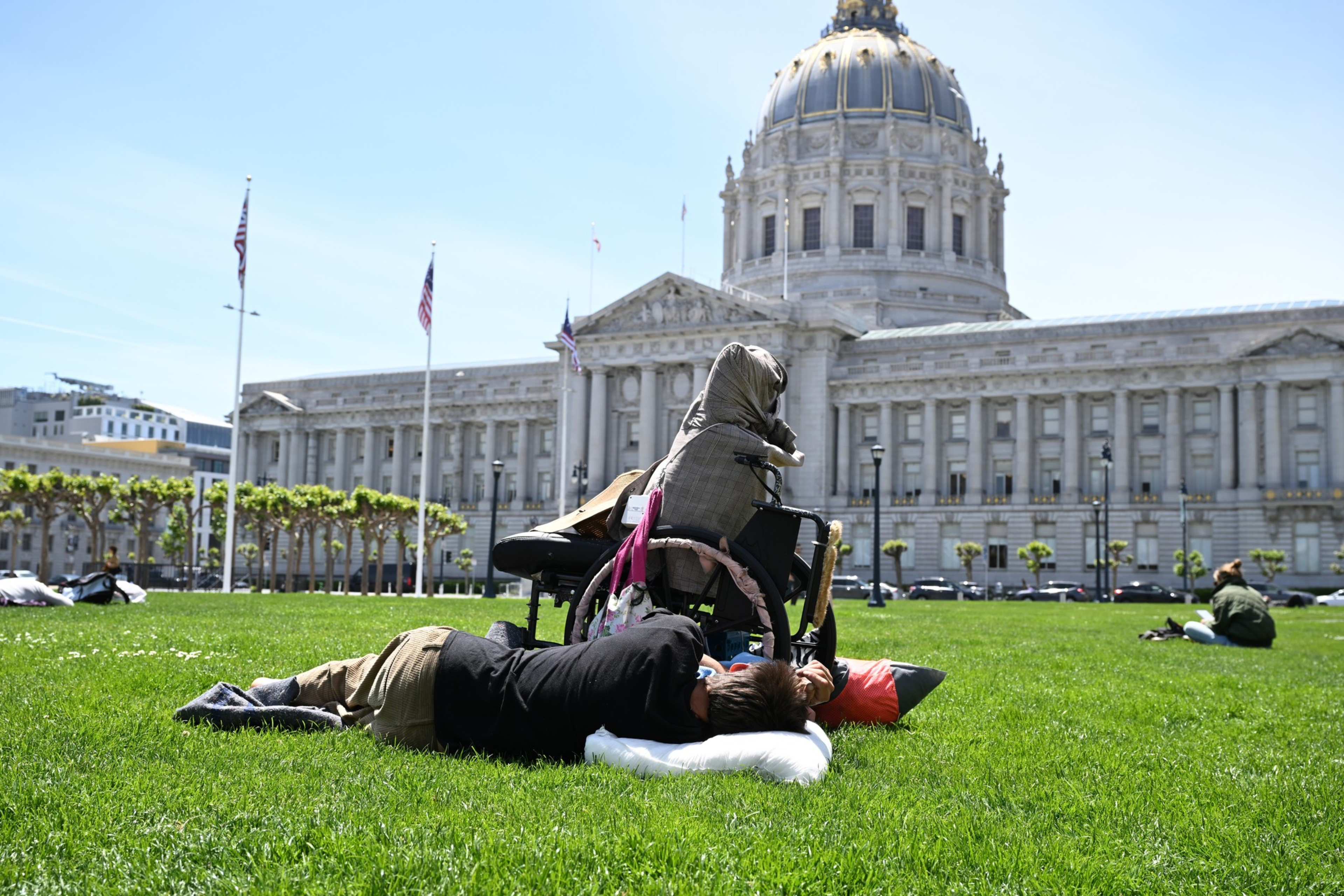 A man sleeps outside of City Hall in 2025. | Source: Tayfun Coskun/Andolu/Getty Images
Cities are required to conduct the HUD count in order to be eligible for federal funding. But the process of obtaining an accurate number is often criticized as an inherently futile task. HUD offers broad guidelines under which cities are required to conduct a count. But this year, the planning was more difficult, as the federal government hasn’t released guidance, according to city officials.
While many city advisers have long called for changes to the count, they acknowledge that the new methodology will make it challenging to compare the 2026 data to that of previous years.
“Whatever number we come up with this year, it will not be legitimate,” said Del Seymour, a member of the Local Homeless Coordinating Board. “This is something I’ve been begging for for years, and now it’s coming into fruition. So I’m a little scared.”
What’s changing?
One of the biggest obstacles to obtaining an accurate count is that the homeless population is transient not just day to day, but hour by hour. And in San Francisco, where street enforcement of homelessness has ramped up over the last two years, they often don’t want to be found.
The most controversial of the changes in the new count is a timing shift. The city will move the time slot for the count, previously conducted between 8 p.m. and midnight, to between 5 and 10 a.m.
Some advisers say this will lead to a significant increase in the number of people counted, as there will be more visibility in dark alleys where people may have hidden in years prior. Critics argue that fewer homeless people are visible in the morning, as law enforcement begins sweeping them from sidewalks at around 7 a.m., and some choose to sleep during this time.
“Many people stay awake overnight for safety and sleep in the morning,” said Whit Guerrero, a member of the Homelessness Oversight Commission. “Counting during this window will inevitably lower the numbers and distort comparisons year to year.”
Guidance is also changing on how to identify people as homeless. In previous years, canvassers were instructed to guess housing status from a distance and not interact with the individual. But during this year’s count, the city plans to engage with every person to ensure they are not housed.
“On my beat, there was a lot of guesswork with the lack of engagement. Sometimes we couldn’t be sure of anything,” said Sharky Laguana, a member of the Homeless Oversight Commission. “Visibility was a real problem, especially in dark alleys and corners. … This approach sounds more sound to me.”
 A woman on Minna Street during the homeless count. | Source: Jason Henry for The Standard
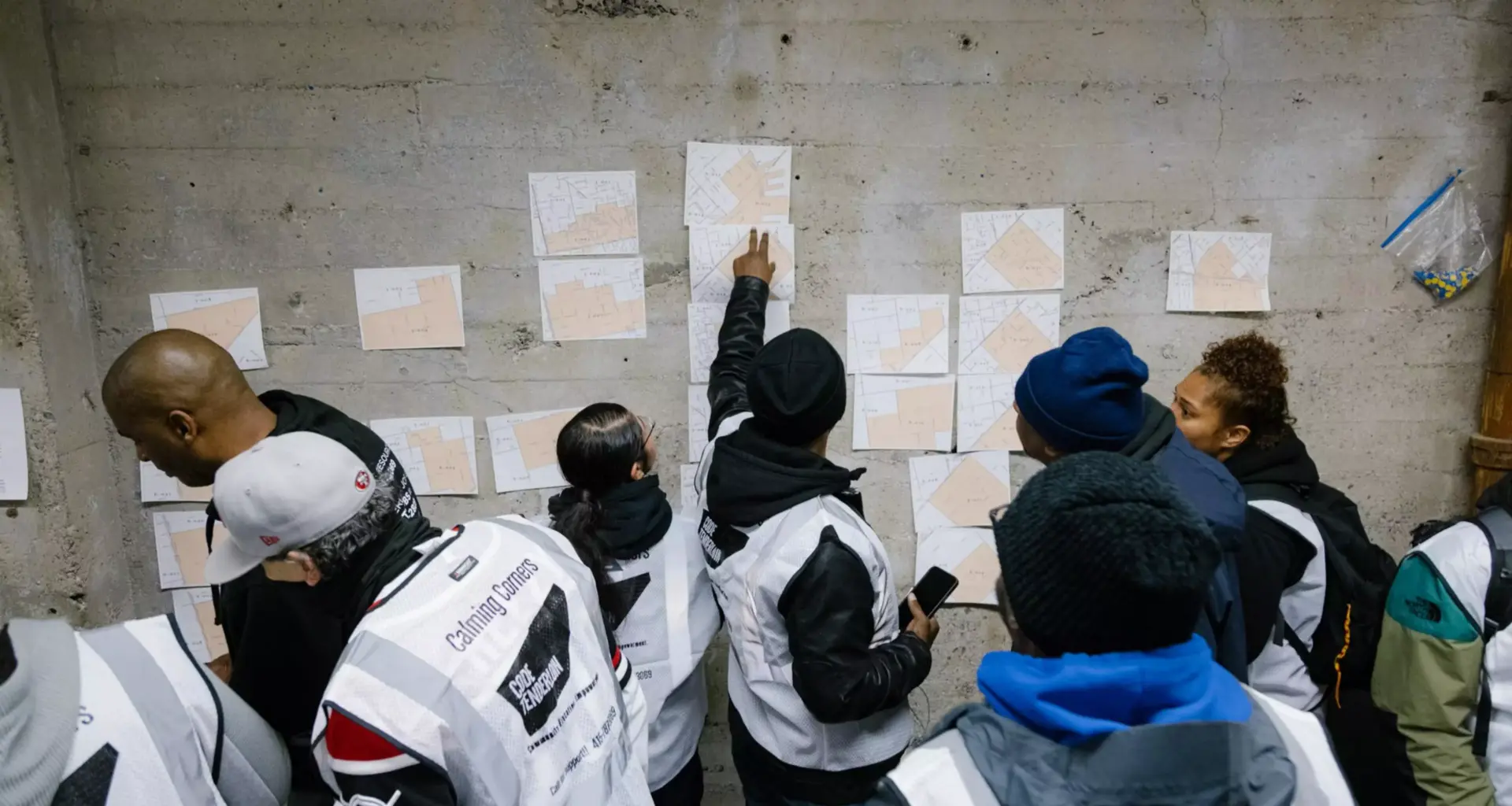
 Code Tenderloin volunteers look over maps during the homeless count. | Source: Jason Henry for The Standard
Canvassers will conduct the biennial survey, which obtains information about the population’s health and history of homelessness, on the night of the headcount rather than in the weeks after.
The new count also will minimize the role of volunteers, instead relying mostly on city employees to gather the information. And the city will increase the use of internal data to supplement the headcount — though details on the extent of those alterations weren’t immediately clear.
Past confusion
During the 2024 count, volunteers’ tactics varied from group to group. Following The Standard’s report on the confusion, the city conducted a partial recount but eventually stuck with its original data.
The 2024 count found a 7% increase in the total number of homeless people in the city compared with 2022. The number of homeless families nearly doubled, people experiencing chronic homelessness increased by 9%, and the number of people living in vehicles rose by 37%. The data also showed a 16% decrease in unsheltered homelessness and a 39% increase in people staying in shelters.
 Code Tenderloin community ambassadors approach people on Julia Street during the 2024 count. | Source: Jason Henry for The Standard
Since then, the city has reported a dramatic decrease in the number of tents on streets, reaching the lowest number on record by the end of 2025. But many people are sleeping without tents due to widespread anti-camping enforcement.
City officials say they are hopeful the new approach will lead to a more accurate tally, even if it complicates comparisons to past years.
Others, however, hope the city will one day abandon the headcount altogether.
“You have all this data, you have all the services, we could count everyone so easily. This is Silicon Valley, man, c’mon,” Seymour said. “One day 100 years from now, we’ll look back and say, ‘You were actually out there counting people?’”