
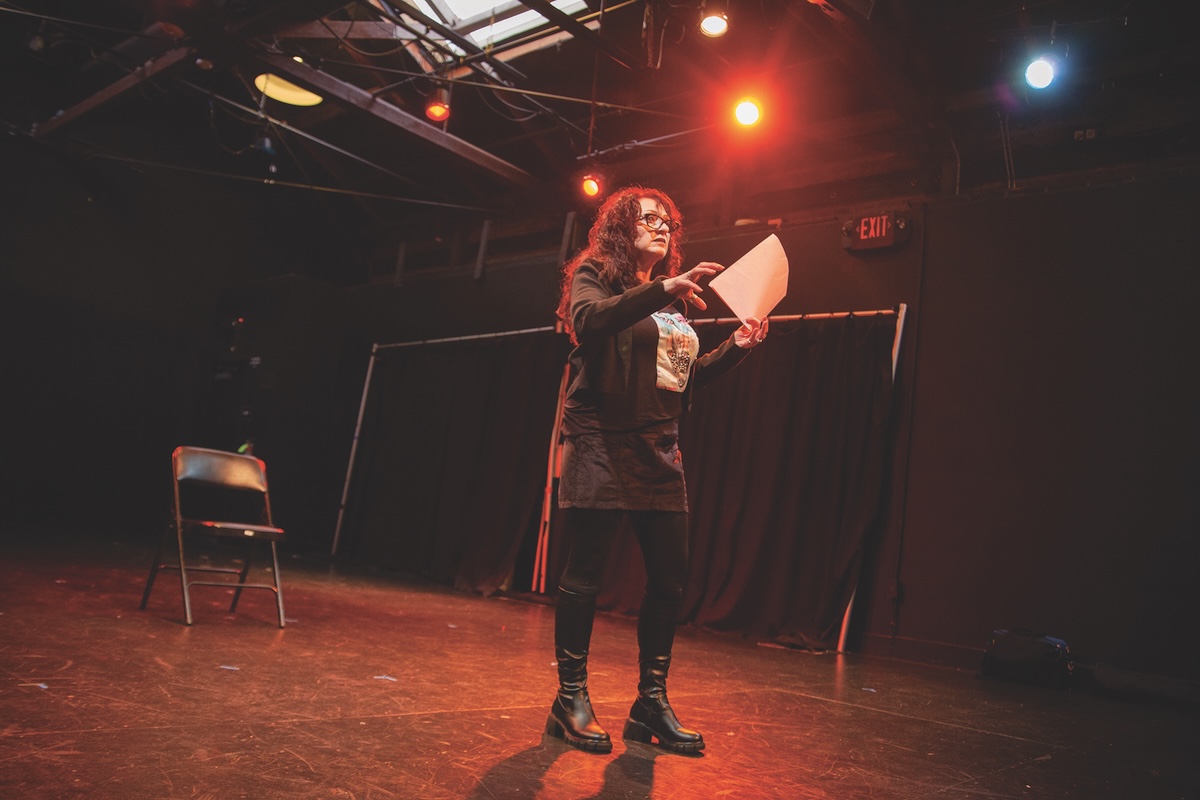
It is beyond uplifting to begin a new year with a sliver of good news. Cutting through the terror, trivia, intense political disarray and other significant clutter is the Formerly Incarcerated People’s Performance Project’s (FIPPP) continuation as Berkeley Repertory Theatre’s company-in-residence.
Founded in 2020, FIPPP develops and presents solo performance stories by formerly incarcerated people. After presenting festivals in 2021 and 2023, and offering workshops and special events in 2022, the East Bay nonprofit embarked on a three-year residency with the nationally lauded theater company.
In 2026, the culmination of their relationship is a four-day festival on Jan. 15-18. Five different shows feature solo performances by 12 formerly incarcerated people. Helming the program are Berkeley Rep School of Theatre director Anthony Jackson and FIPPP co-founder and producer Mark Kenward. Kenward is a highly visible, award-winning actor/director of 40 full-length solo shows in the San Francisco theater scene.
FIPPP’s co-founders are Rebecca Fisher, Wayne Harris and Mark McGoldrick. Guest coaches include Candace Johnson, Dan Hoyle and Dylan Russell. The tiny troupe launched six years ago now has eight professional theater directors on the artistic team and 15 formerly incarcerated performers.
This year’s festival also includes short films by documentary filmmaker Jim Granato. Three moderated panel discussions feature performers interacting post-show with each other and audience members.
FIPPP performers range from veterans of the stage—stand-up comedians, TEDx speakers, Moth winners, Shakespearean actors and more—to storytellers with new, freshly minted voices. Each individual speaks with clear intention, sharing prison and post-prison experiences and realities. The stories reveal hard-won success, reinvention and rise-above initiative in the face of opposing forces. Which means their stories are also filled with sobering truths about prison life and obstacles to reentry, such as substance abuse, homelessness, societal stigmas and more.
Performer Scott Schell was arrested in 1998 for grand theft. He began his recovery in the San Francisco Sheriff’s Department Resolve to Stop the Violence Project and eventually became its program manager.
“These stories need to be told,” Schell said in an email. “Most people don’t know what it’s like to be incarcerated and how people are treated. It’s about giving back folks’ humanity, ’cause a lot of that gets taken away when you’re incarcerated. You’re just seen as an inmate, so the humanity is gone. I see beyond the orange suit. I see an old man, a young child that’s asking for help. That’s what I see. We’re giving voice to people who don’t have a voice, and we’re sharing what we went through with other people so they can get some perspective. You’re going to hear some stuff that’s hard to hear, but necessary to listen to.”
Kenward said in a phone interview that FIPPP was fortuitously “saved” by Berkeley Rep in 2023. “We do events at PianoFight, and it’s been a hard time for theaters,” he said. “They went belly-up, and we had the Rep partnership already in place. They gave us a home when other theaters were closing.”
Jackson said Berkeley Rep gains as much through the association as does FIPPP. “The amplification of marginalized or disenfranchised voices and making them part of our community is important,” he said. “Our programs need to reach out to audiences with stories that happen every day and that people aren’t familiar with. To hear and connect to them—we benefit from having diversified our teaching staff, and morale is lifted up as we learn about their journeys. Their stories bring these stories into the context of the real world.”
Jackson said the stories that hit forcibly and stick with him are narratives that align with his personal experiences. As someone with a family member who’d been incarcerated, he said, “One thing that stuck with me is how hard it is to reenter. There are stigmas—and the hoops they have to jump through to be a part of society are just hard. FIPPP makes those stories accessible, and teaches us to have compassion.”
Kenward knows each performer well, and spoke about four of the storytellers to demonstrate the festival’s diversity of style, content and talent. He said Christina Aanestad is a prime example of someone people hear every day in her position as KPFA’s morning news anchor, but have no idea about her past.
“She came to us with a lot of writing experience, but new to the stage,” Kenward said. “She comes out of the local club scene, so candor is in her work. She’s not afraid to be bold.”
Algin Ford has a wealth of onstage experience and offers “flights of poetry, bursts of dialogue that lay out two or more vivid characters and strong, precise language.” Tony Clip is a dazzling, big-hearted performer who can “conjure up all the people he met in prison” and has the audience “rooting for him and going for the ride from the beginning.” And TedX speaker Gerald Cypert speaks his truth with an emotional vulnerability and steely honesty that “cuts like a knife and reflects like a mirror.”
Panel discussions will touch on gang affiliation, violence, race, gender and the hardships of reentry that include getting finances in order, finding employment, building a supportive community and more.
About the future of their partnership, Jackson says he hopes FIPPP artists continue to create new work, teach and partner with theater education programs, and in all ways continue to share their undersold stories in the community.