
What’s at stake?
The Fresno-Madera region will run the Point In Time Count later this month — a federally mandated process that provides an estimate of local homelessness density.
The region has seen steady growth in homelessness for over a decade.
Final preparations are underway for the Fresno-Madera region to conduct their Point in Time Count later this month — a process that aims to give local cities and counties a snapshot estimate of the headcount of unhoused residents in their community.
Commonly known as a PIT Count, the federally mandated process sees droves of volunteers conduct a physical headcount of unhoused residents. That data serves as a baseline for federal and state funding applications.
That information will be crucial for local service providers across the country, as President Donald Trump’s administration has forced local communities to stay on their toes amid an ever-changing funding landscape.
The region’s homelessness agency, the Fresno-Madera Continuum of Care, is responsible for conducting the tally, though Fresno’s County Administrative Office — following their decision to take on a more expanded, leadership role within the FMCoC — will be managing the count this year. The count was previously managed by the Fresno Housing Authority.
Dylan McCully, the county’s homelessness program manager, said that this year’s count comes with a new federal guideline that will have the volunteers conduct surveys with homeless residents. The old way of doing things leaned more toward an observational tally.
The new process should, at least on paper, help provide local communities with more accurate, detailed information regarding the state of their local homeless population.
“There are some issues with an observational tally where we may have some inaccuracies,” McCully said. “For example, a volunteer team is driving around…they may see someone who is experiencing homelessness, tally them, and then that person may move to a different part of the region and they may get counted again.”
Though widely considered a useful tool, some housing experts have criticized the PIT Count process, arguing that the practice can severely underestimate the total number of homeless residents in a region. The new survey style of counting aims to address that discrepancy.
On top of the ramifications from decisions at the state and federal level, the upcoming point-in-time count should also give leaders a better understanding of how
local anti-encampment legislation has affected unsheltered homelessness in Fresno. Last week, during his final State Of The State Address, California Gov. Gavin Newsom announced that unsheltered homelessness dropped by 9% across the state in 2025.
Though it’s far too early to tell, McCully said that there’s a “possibility” that a similar drop in the Fresno-Madera region could be a reality given the new survey style count process.
“There is, again, the possibility that number will be lower just based on the methodology, right?,” McCully said. “I think that’s one thing that we may see in this process, is we are maybe seeing lower numbers, but we are getting higher quality data in that process.”
Data from last year’s count remains uncertified by the United States Housing and Urban Development Department.
McCully said there hasn’t been “clear guidance” as to what’s led the federal housing agency to delay data certification, though the recent government shutdown — the longest in the country’s history — could be a contributing factor.
Certifying the data allows for a more nuanced look at the homelessness data that’s been provided in previous counts, like a breakdown of homelessness at the city and county level.
The last time Fresno and Madera saw such nuanced data came in 2023 — long before a slew of major changes came upon the local and federal housing landscape.
The rapidly shifting landscape hasn’t been limited to the counting process or funding availability. The situation on the ground in Fresno County has also shifted.
Last month, the county announced that they would be forced to close down two supportive housing projects early this year following federal funding cuts — leaving about 80 people with little time to find a new home.
The two projects are managed by Turning Point of Central California. They did not respond to requests for comment on this story.
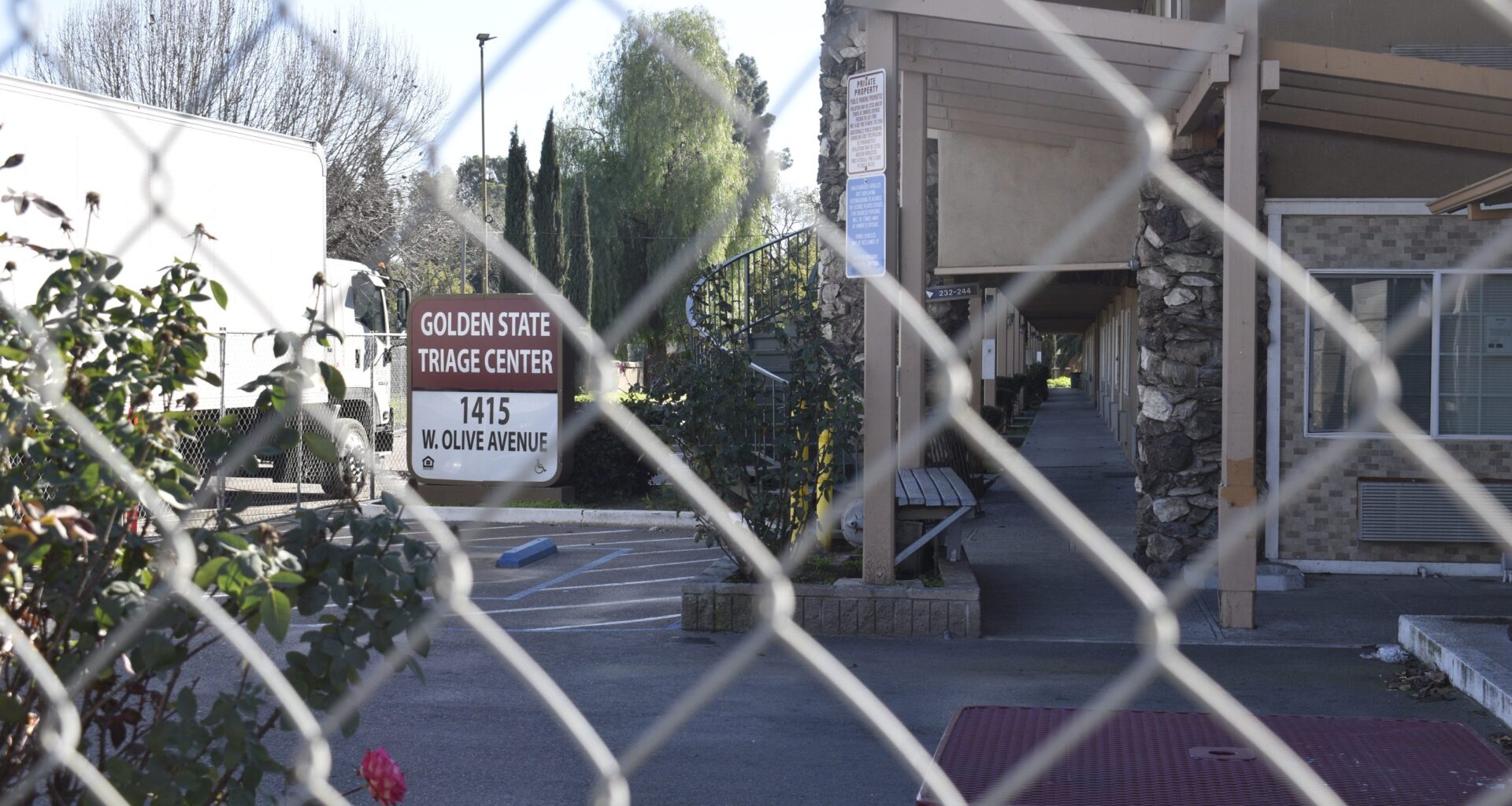
Turning Point also managed two homeless shelters funded by the City of Fresno that closed down this winter. The closures, first announced last summer, affected the Golden State Triage Center and Journey Home shelters, and were also due to a lack of funding.
Those shelters were funded using the state’s Homeless Housing Assistance and Prevention Program, another monetary source that has faced uncertainty over the last year.
A representative from the Fresno Housing Authority told Fresnoland that they, alongside Turning Point, were able “to provide individualized case management and relocation support for every resident” before the shelters closed.
The representative told Fresnoland the Golden State property will be converted into a new permanent affordable housing development known as the “Davu Village,” with an official announcement expected later this week; plans for the Journey Home shelter will be announced “around February 1.”
This year’s PIT Count will take place on the night of Tuesday, Jan. 27, and the morning of Wednesday, Jan. 28.
McCully said the county is still looking for volunteers to help with this year’s count. Prospective volunteers in Fresno and Madera can sign up online, with no experience or expertise in the housing field required. Volunteers can sign up for shifts and are sent out in teams as they sprawl around designated areas.
McCully said that, as of early last week, the county has about 250 volunteers sign up — just shy of their goal of around 350.
“I think this is something where it presents an opportunity to members of our community to connect with unhoused individuals,” McCully said, “and better understand the things that they’re going through.”
Related