
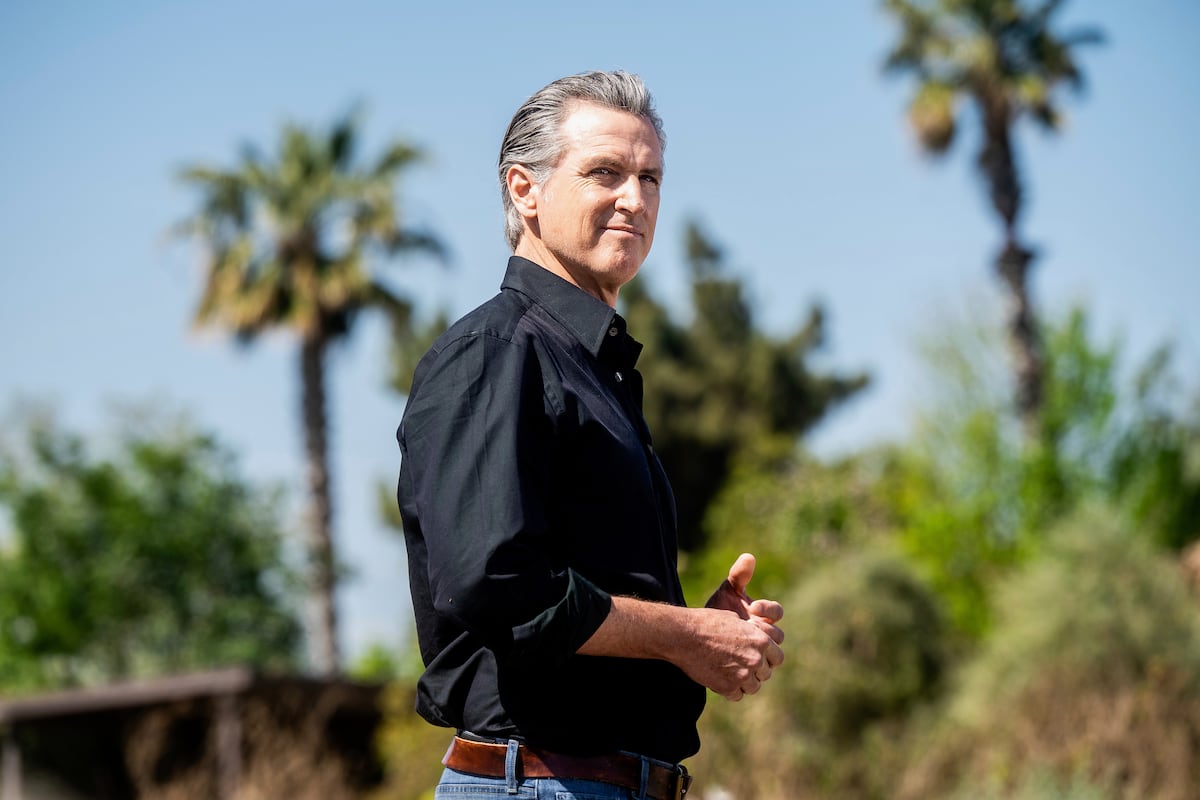
California Governor Gavin Newsom has decided to wage an all-out battle against one of the most ambitious and controversial tax proposals in the state’s recent history: a one-time 5% tax on the wealth of billionaires. The plan, called the 2026 Billionaire Tax Act, has not yet reached the ballot, but it has already sparked a chain reaction that includes threats of capital flight, strategic moves by some of the country’s richest men, and intense political confrontation.
Billionaire Tax
The proposal, promoted by the Service Employees International Union–United Healthcare Workers West (SEIU-UHW), proposes to tax California residents whose fortunes exceed $1 billion. Its proponents claim that the measure would affect about 200 people and generate tens of billions of dollars. Most of that money would go toward funding the state’s healthcare system, as well as strengthening education and food assistance programs, in response to federal cuts approved last year.
Newsom, however, believes that this tax would not solve the problems and could cause even bigger ones. In recent interviews, the governor has reiterated that he opposes the tax not because he rejects progressive taxation, but because it is a tax on assets rather than income. In his view, this difference is crucial. He pointed out that California already has the most progressive income tax system in the country and relies heavily on higher-income taxpayers to sustain its budget.
What would the tax look like?
Under the proposal, wealth would be calculated based on assets held as of December 31, 2026, and a one-time tax of 5% would be levied. Taxpayers could pay the amount over a period of five years and, in cases of illiquid assets, defer payment until those assets are sold.
The proposal has been strongly rejected by business groups and law firms representing large fortunes. Some lawyers have warned that, if approved, the law would face constitutional challenges and lengthy litigation. Others argue that even the threat of the tax could affect the recent economic rebound in the Bay Area, driven by the boom in artificial intelligence and new technology investments.
The response of the ultra-rich
Although the governor does not have veto power over a citizen initiative, he has acknowledged that his administration has been working for months to stop the project. Newsom has said that the mere announcement of the tax is already having tangible consequences: several billionaires have begun to move assets or reduce their ties to the state. Among them are Google co-founders Larry Page and Sergey Brin, as well as investor Peter Thiel and other tech entrepreneurs.
For Newsom, these moves confirm a fear he has long expressed: that California will lose not only future tax revenue, but also innovation, investment, and jobs. “This is my fear. It’s just what I warned against. It’s happening,” he said to Politico, highlighting the possibility that the state could be at a disadvantage compared to other territories competing to attract capital.
Supporters of the tax reject Newsom’s view. They argue that billionaires represent a relatively small fraction of the state’s tax revenue and that many of them minimize their tax payments by avoiding taxable income. From this perspective, the wealth tax would tax assets that would otherwise be beyond the reach of the tax authorities.
Not all billionaires are opposed. Jensen Huang, CEO of Nvidia, has publicly stated that he is willing to accept the tax and that living in Silicon Valley means accepting the state’s tax rules. However, other ultra-rich individuals have begun actively funding campaigns to block the initiative.
What’s next?
Before reaching the ballot, the promoting union must collect nearly 900,000 valid signatures, a process that is already underway. If successful, the tax would become one of the central issues in California’s political debate this year, pitting the governor against progressive sectors, unions, and a segment of the electorate that sees the measure as a direct response to inequality.
Sign up for our weekly newsletter to get more English-language news coverage from EL PAÍS USA Edition