
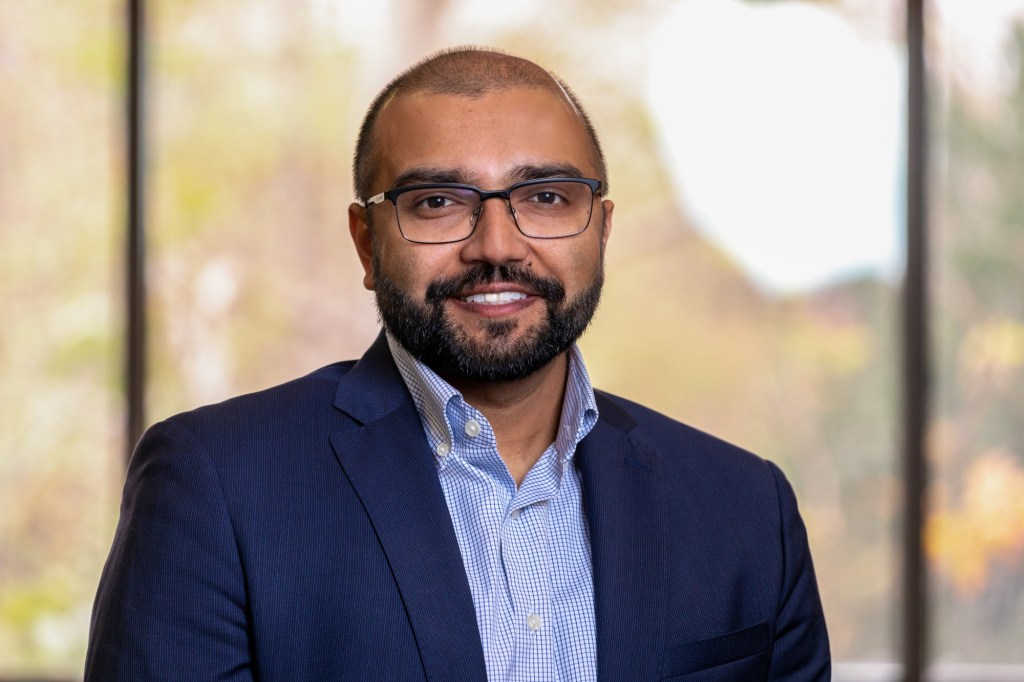
Looking to close a “between-visit gap” in patient care, an obesity medicine physician is working alongside scientists at La Jolla’s Scripps Research Translational Institute and others to offer a support app based on artificial intelligence.
NuVee Inc., the brainchild of Dr. Jennie Luna, an endocrinologist at Scripps Clinic Hillcrest, aims to “re-humanize” health care through what it describes as “emotionally intelligent AI.” One of Luna’s mentors for the start-up is Dr. Jay Pandit, SRTI’s director of digital medicine.
The tool they’re developing, called Koa, is designed to support patients between clinic visits and encourage them to make positive lifestyle choices. Luna and her team are working through “a very involved” process to ensure it can make proper real-time adaptations before it enters a clinical trial.
“The way I see it is kind of [like] training a fellow or medical resident,” Luna said.
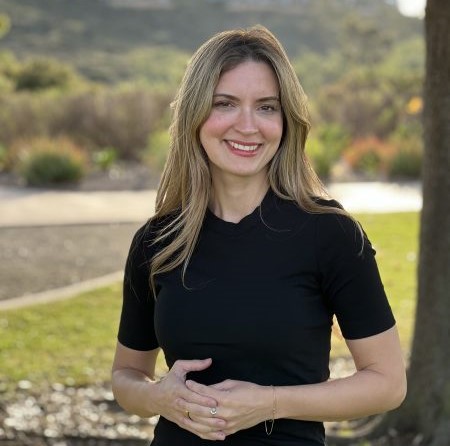 Dr. Jennie Luna, an obesity medicine physician and endocrinologist at Scripps Clinic Hillcrest, leads NuVee Inc., a start-up for an “emotionally intelligent” AI tool called Koa. (Provided by Jennie Luna)
Koa represents a step beyond ChatGPT inquiries or Google searches. Luna describes it as more of an “AI health companion” and “a digital care partner that extends the walls of the office.”
She emphasized that the technology will not replace doctors but rather give them another tool to use.
“The goal is that [it’s] going to have the knowledge of someone like me — an obesity specialist and endocrinologist,” Luna said. “[Koa’s] not giving medical advice, of course, but it’s there helping patients with treatments, specifically with GLP-1s.”
GLP-1s are medications that can help reduce blood sugar levels and promote weight loss. They include products such as Ozempic.
Luna said Koa offers a much-needed step up for supportive care between doctor visits.
“Often [patients] get started on these meds and you have all these side effects and they don’t have the support,” Luna said. “We’re here to fill that gap.”
Luna, whose efforts have spanned about two years, described SRTI as NuVee’s anchor.
SRTI was founded in 2007 to help individualize health care by combining progress in human genomics with wireless digital technologies.
The institute offered NuVee early institutional support and mentorship as well as connecting Luna with collaborators at San Diego State University to aid in entrepreneurship and business development.
NuVee is part of an Amazon Web Services start-up program called Activate. Through the program, 60% of its initial costs were covered and it got connected with Predictif Solutions, which handles engineering and “back-end development” of Koa.
In total, about 10 people are involved in Koa’s development, Luna said.
Pandit said he has no financial affiliation with the project but offers his expertise in what he and Luna describe as an advisory role. His goal, he said, is to help translate her idea into a product and set her up for successful fundraising.
Luna said she expects to market the app to businesses rather than as a direct-to-consumer product.
Pitching it, however, does present some challenges, Pandit said.
“It is a very patient-facing project,” he said. “But when you have a product that’s very patient-facing or patient-friendly, sometimes it doesn’t have a reimbursement mechanism, which is one of the challenges she’s going to face right now — to identify how to get this product paid for, whether it’s a subscription model or whatever it may be.”
But Pandit added that the product has “significant utility.”
“It’s almost impossible to talk to somebody when you call for customer service these days, especially … a virtual scheduling agent or virtual customer service agent. Those are very limited in scope,” Pandit said.
“[But] if I can check in with an agent like that who can help provide accountability on any human behavior or lifestyle intervention until I get to see the doctor who is going to help make my management decisions, that is a fantastic thing.”
Building out the technology is an ongoing process, Luna said. The tool uses a combination of behavioral data, self-reported outcomes, patient experiences and common engagement patterns to support clients.
“Being a practicing clinician now for over a decade, our intention is to be very meticulous with the training of Koa,” Luna said. “That way, when it’s in the hands of patients, we’re fully confident that [it’s] ready to be there and to help.” ♦