
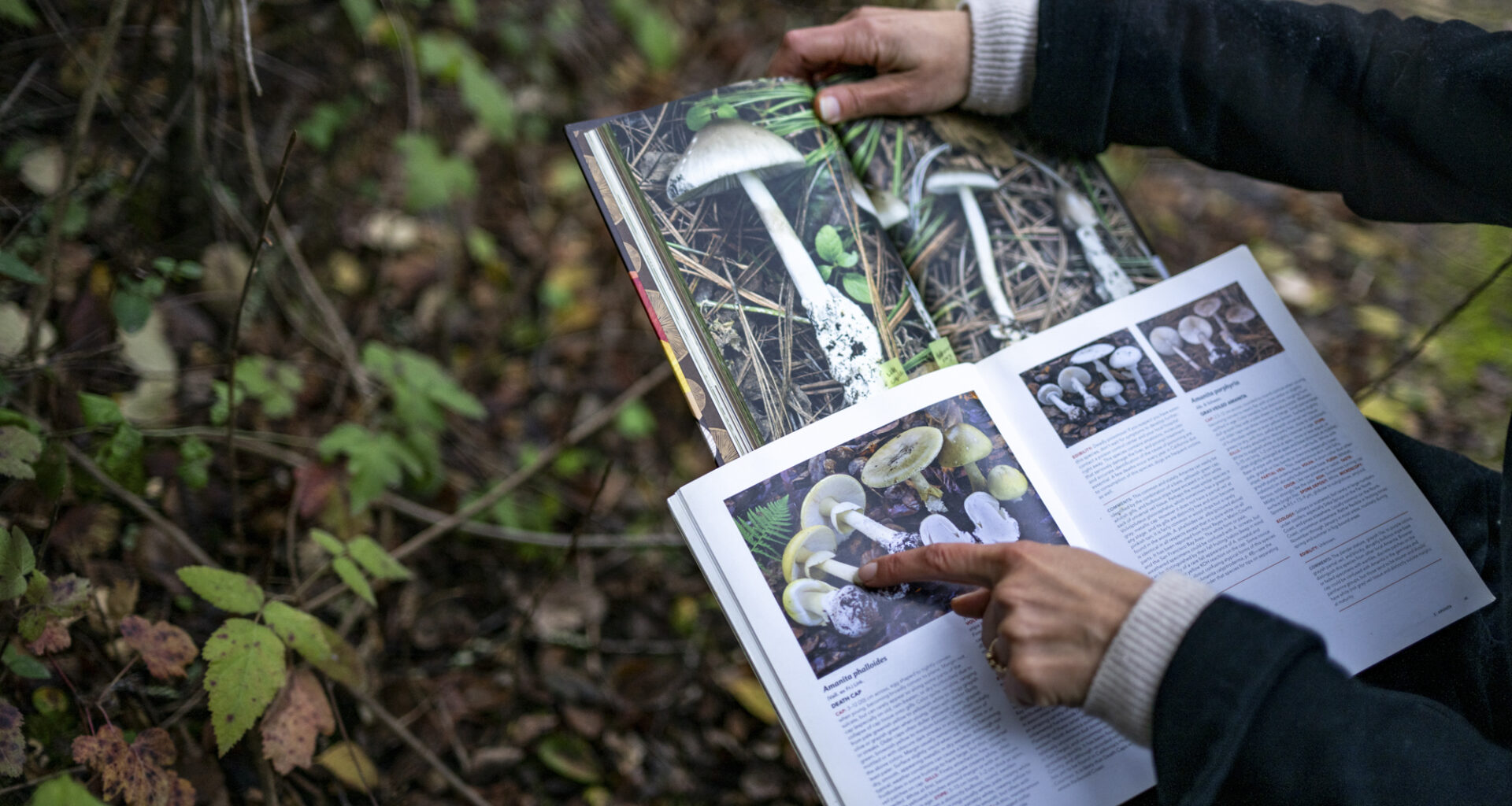
Local mushroom experts and enthusiasts have bemoaned the state’s messaging around the poisonings as narrow and fear-based. Many would prefer to see an emphasis on education, rather than a prohibition on all foraging, and point out that touching, smelling and looking at mushrooms is safe.
“There’s a lot more nuance,” said Debbie Viess, co-founder of the Bay Area Mycological Society. “It’s much more important to steer people to places where they can educate themselves about the safety and the dangers of eating wild mushrooms.”
Viess said field reports coming into her organization suggest the growth of death caps may be slowing in the Bay Area, while another kind of poisonous mushroom known as the destroying angel, or Amanita ocreata, is starting to pop up.
People who believe they or a family member may have ingested a toxic mushroom — or health care providers who have a patient showing signs of mushroom toxicity — can call the state’s toll-free poison control hotline 24/7, free of charge for advice: 1-800-222-1222.
Translation services are available in any language, and all personal information is kept confidential, said Dr. Cyrus Rangan, a pediatrician and toxicologist with poison control.
“We can then determine whether you need to go into the emergency department or whether we, as poison experts, can help you treat the situation at home,” he said.