
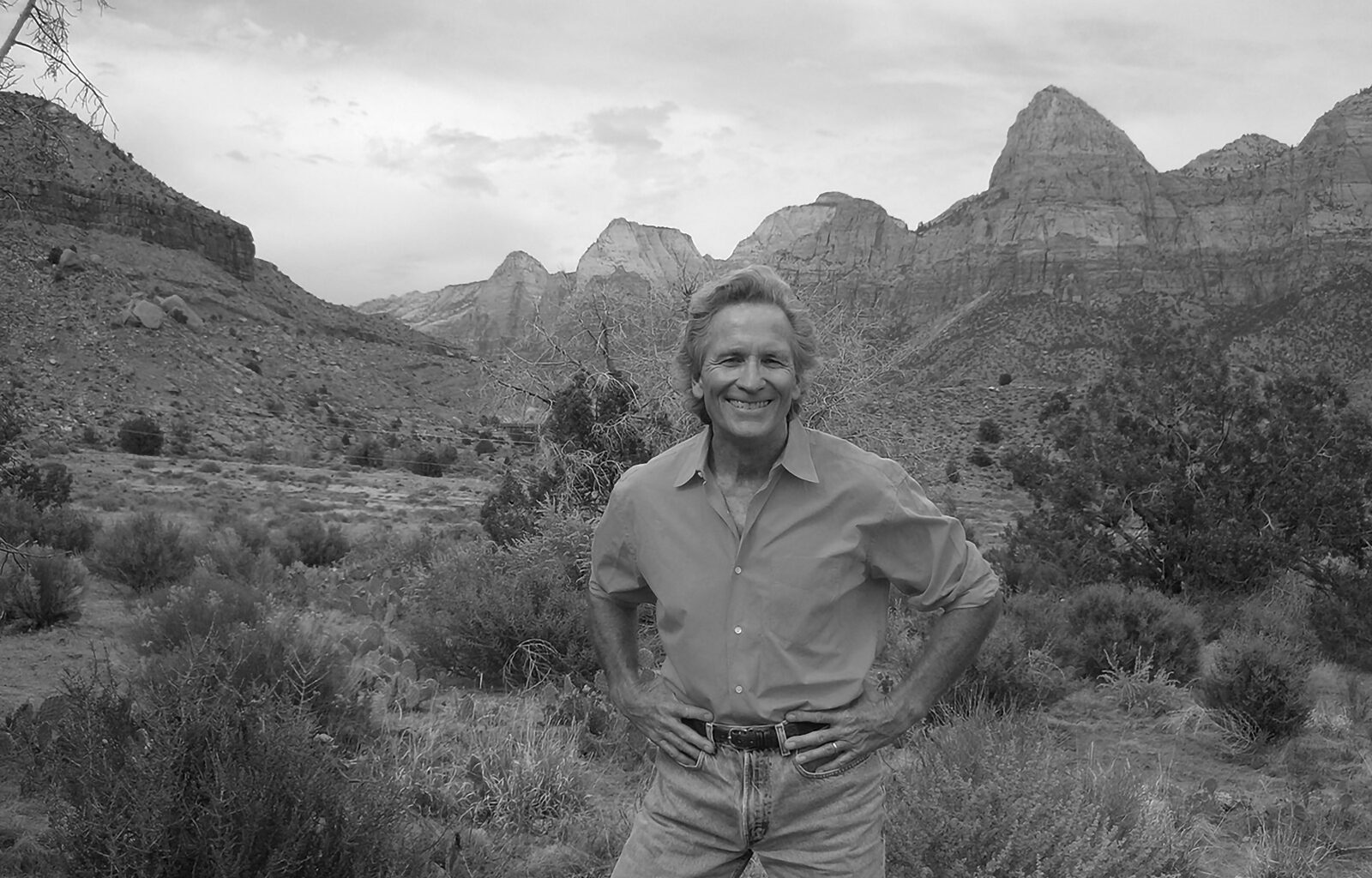
Doug McConnell, who died on January 13, 2026, spent decades using local television to help Northern Californians see their landscapes as shared civic assets rather than scenery, making conservation legible, practical, and personal.Best known for Bay Area Backroads and OpenRoad with Doug McConnell, he treated parks, trails, and open space as the result of human choices and public effort, consistently foregrounding the people and institutions that protected them.A storyteller shaped by a lifelong love of California’s diversity, he combined curiosity about place with a clear-eyed understanding of governance, showing how history, policy, and persistence shape the land people inherit.At a time of mounting environmental strain, McConnell resisted despair by staying close to the work itself, drawing energy from those quietly maintaining and restoring the natural world, and inviting viewers to join them by paying attention.
See All Key Ideas
Doug McConnell spent much of his adult life doing something that sounds simple and is not: he helped people look closely at the places where they lived. For decades he turned Northern California’s open spaces, back roads, and overlooked corners into familiar destinations people came to recognize and talk about, shown not as scenery but as places shaped by human care and choice. He died on January 13th 2026, after nearly half a century on air and in the field, still working, still curious, still convinced that attention to land mattered.
He was a broadcaster, but his real subject was place. McConnell’s programs treated public land as something worth learning about, not just visiting. He did not lecture or scold. He did not argue from a studio desk. He drove, walked, hiked, climbed, and filmed. He listened to rangers, volunteers, advocates, and scientists, and tried to explain what they were doing in plain terms to viewers who might never attend a planning meeting or read an environmental report.
McConnell often described himself as someone fortunate to have joined two long-held interests: nature and storytelling. “Getting a chance to do what I have been now doing for so many decades, which is to go wander around, usually with a small camera team and put the spotlight on great people, great places and the wonderful people doing great things on our behalf, has really been a way for me to combine my two passions in life,” he once told the Midpeninsula Regional Open Space Trust. He was enthusiastic but controlled, grateful for access, and careful to present the work as something larger than himself.
His attachment to the natural world began early and close to home. As a boy he traveled widely across California and became deeply drawn to its range of landscapes. “I fell in love with the diversity of the state,” he later said. “The beauty, the natural world … I spent a lot of my growing up years in places like Yosemite … I just fell in love with California, fell in love with nature.” That attachment did not express itself as vague admiration. It led him toward particulars: a ridge line, a watershed, a stretch of coast, a local museum, or a small fight that kept a trail open. He was interested in how history settles into land, and how land, in turn, shapes the lives built around it.
His path into broadcasting was not straightforward. He earned a bachelor’s degree in government from Pomona College and a master’s in political science from Rutgers University, and for a time worked well outside television. That training proved useful later. McConnell understood that conservation is not only about beauty or inspiration. It is about decisions: who owns land, who manages it, who pays for its care, and what happens when development pressures mount. He also understood that the organizations doing this work often speak in technical or institutional terms. His skill was explaining their efforts without oversimplifying the work.
Much of his career unfolded through programs that became regional fixtures. In the 1980s and 1990s he hosted Mac and Mutley, a show built around outdoor adventures with a scuba-diving dog. In 1993 he became host and managing editor of KRON’s Bay Area Backroads, which ran for years and became one of the longest-running regional television series in American broadcast history. Later he created OpenRoad with Doug McConnell, which began on public television and eventually aired on NBC Bay Area, timed to the seasons when people were most likely to step outside and explore.
These programs could be mistaken for pleasant diversions. McConnell did not see them that way. He treated them as a way of showing how land actually gets protected. A restored marsh, a protected ridgeline, a new trail, or an urban national park that draws families who might never visit Yosemite—these were not just weekend destinations. They were the results of sustained effort: negotiations, public funding, volunteer labor, and patience. Viewers watching him move through a park were also seeing the years of planning, funding, and labor behind it.
He was careful about credit. “It’s really the people we find and feature who are the ones who deserve the credit and they inspire me,” he said. “If I can play a small role and kind of bringing their voices into people’s lives, that’s terrific.” That attitude earned trust. Land managers and advocates, often wary of short attention spans and shallow coverage, recognized that McConnell stayed long enough to understand what he was filming. His shows lingered on competence: trail crews at work, habitat restoration, controlled burns—the unglamorous tasks that keep landscapes functioning.
McConnell did not stand apart from the civic world he covered. He served on boards and advisory groups, including San Francisco Baykeeper, and was recognized as Volunteer of the Year by the San Francisco Bay Trail Project and Humanitarian of the Year by the Marin Humane Society. He was named an honorary ranger in both the National Park and State Park systems. Such honors can be ceremonial. In his case they reflected a steady commitment to the places he cared about and his willingness to be involved beyond the camera. He believed institutions, for all their limits, were tools through which people could protect places they cared about.
People listened to him because he clearly enjoyed what he was showing. He spoke often about the Bay Area’s ecological and climatic variety, calling it endlessly engaging. He could discuss a long ridge walk with the same interest he brought to a historical oddity. One favorite story from his Backroads years involved a canceled interview and a dart thrown at a map. The dart landed on Byron, leading him to a local historian and a set of unexpected connections stretching back generations. His point was simple: “There are great stories wherever you are. Just be open, and listen.” Curiosity shaped how he moved through the world.
In 2012 he suffered a stroke after dismissing symptoms during a morning that began as usual, with dogs and a familiar trail. He later described his access to prompt medical care as “a stroke of good luck.” The episode did not slow his work for long, but it reinforced his sense that time and attention are finite, and that both should be spent carefully.
McConnell understood the emotional toll of environmental reporting. Asked how he stayed upbeat amid climate change and policy setbacks, he refused despair without pretending optimism came easily. “I’ve got no choice. We’ve got no choice,” he told Marin Magazine. He described reading the news each morning and feeling its weight, then finding relief by returning to the field and spending time with people “making the world a better place.” The remark was practical rather than hopeful. It acknowledged the odds, and then moved past them.
At heart, Doug McConnell was a guide. He believed Northern California had been given remarkable natural and historical assets, and that they remained valuable only if people understood them well enough to care. His television did not ask viewers to master the details. It asked them to notice. To go out. To look again. To learn who was doing the work and why it mattered.
His programs often ended with him heading down the road, the camera pulling back as the landscape widened. It was never a promise of novelty. It was a reminder that there was always more to see, close at hand, if one took the time to pay attention.
(McConnell’s interview with me in 2007)
Header image: Doug McConnell. Photo by Jack Uhalde
