
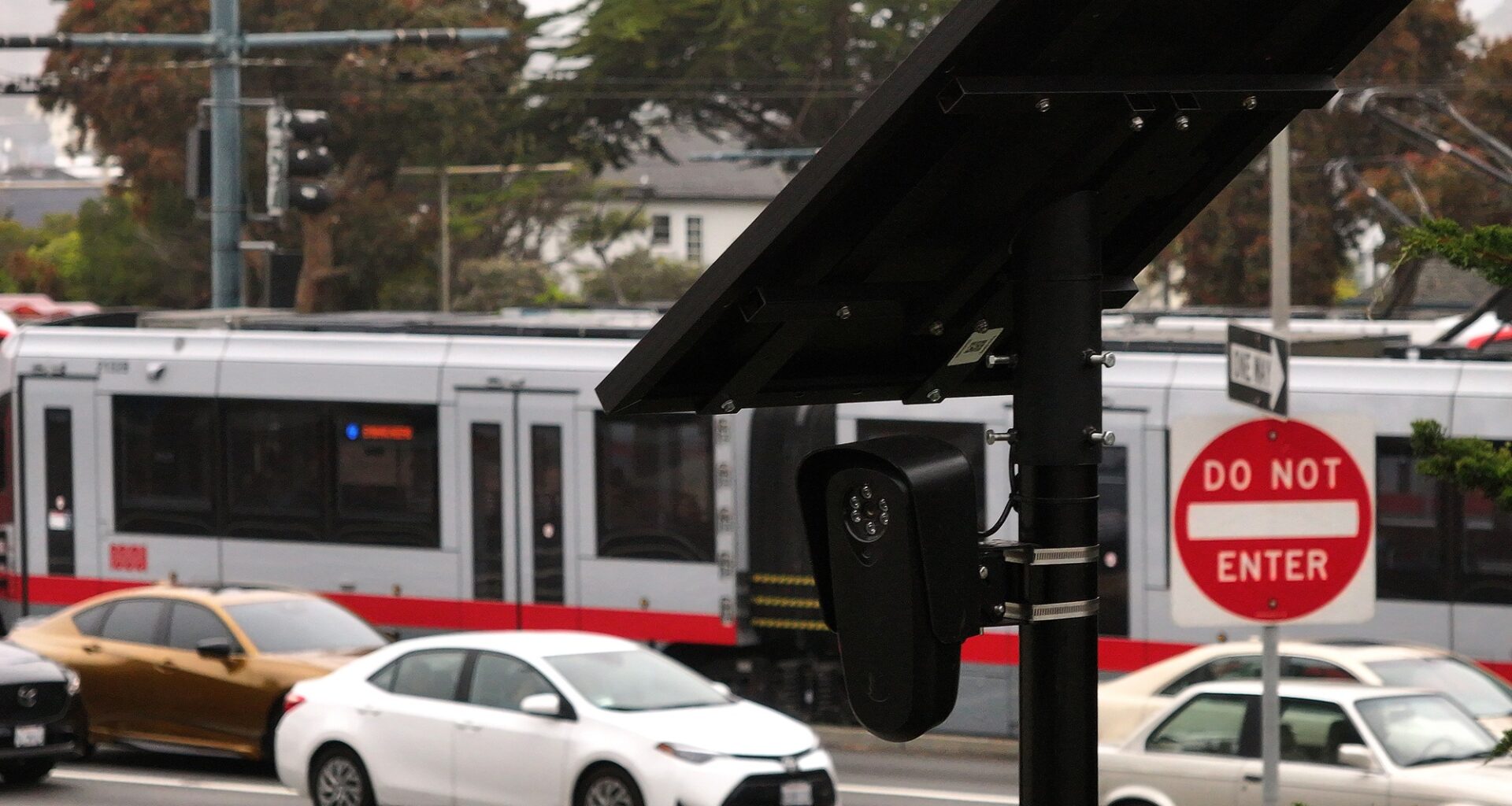
“We’re not interested, as they continue to develop their product, to be an experiment for a system which appears to have enormously big holes in it that they discover every day and try to patch to fix,” he said, adding he doesn’t fault the Santa Cruz Police Department.
Last November, Santa Cruz police Chief Bernie Escalante confirmed the city’s Flock data had been accessed by out-of-state agencies prompting city officials to temporarily limit outside agencies’ access to the city’s license plate reader data and to review its agreement with Flock.
“California for ten years has prohibited the sharing of license plate data out of state. Ten years!” said Peter Gelblum, chair of the ACLU’s Santa Cruz County Chapter told KQED.
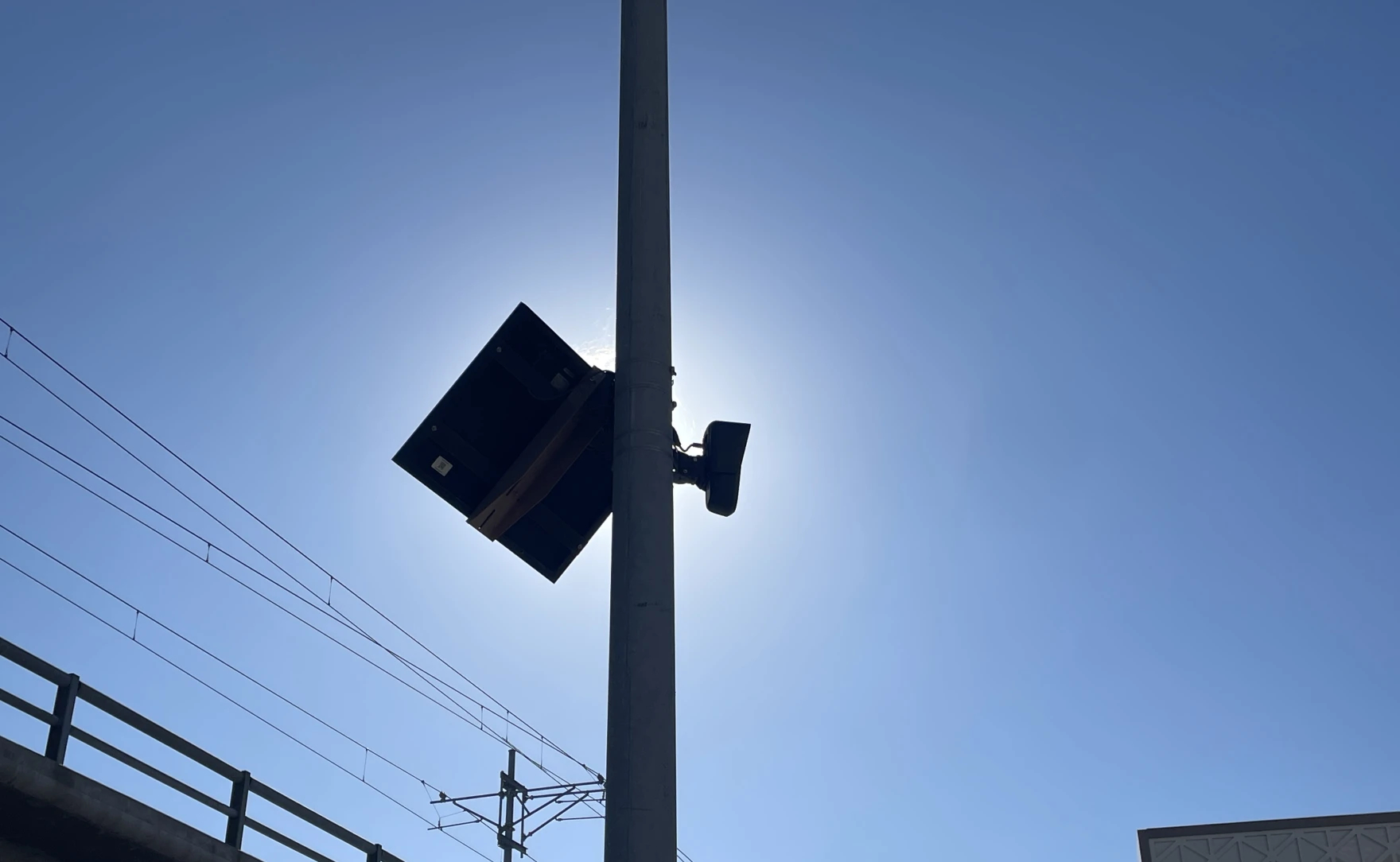 A Flock camera at Fashion Valley Mall cast in silhouette on Oct. 27, 2025. (Scott Rodd/KPBS)
According to Goldblum and other civil liberties advocates, Santa Cruz is the first city in California to end its Flock contract. He credited the Trump administration’s immigration policies for dialing up the sense of urgency in the sanctuary city, as well as data compiled by the recently formed grassroots group Get the Flock Out.
They laid out a case that included the finding that, between June and October 2025, state agencies accessed Santa Cruz camera data roughly 4,000 times on behalf of federal law enforcement, including U.S. Immigration and Customs Enforcement, or ICE, in violation of California’s SB 34.
Under SB 34, California law enforcement agencies are required to adopt detailed usage and privacy policies governing license plate reader data, restrict access to authorized purposes, and regularly audit searches to prevent misuse.
“And yet, the typical standard Flock contract, which the agencies in Santa Cruz County all signed, enables nationwide sharing, and nationwide sharing was going on the entire time,” Gelblum said.