
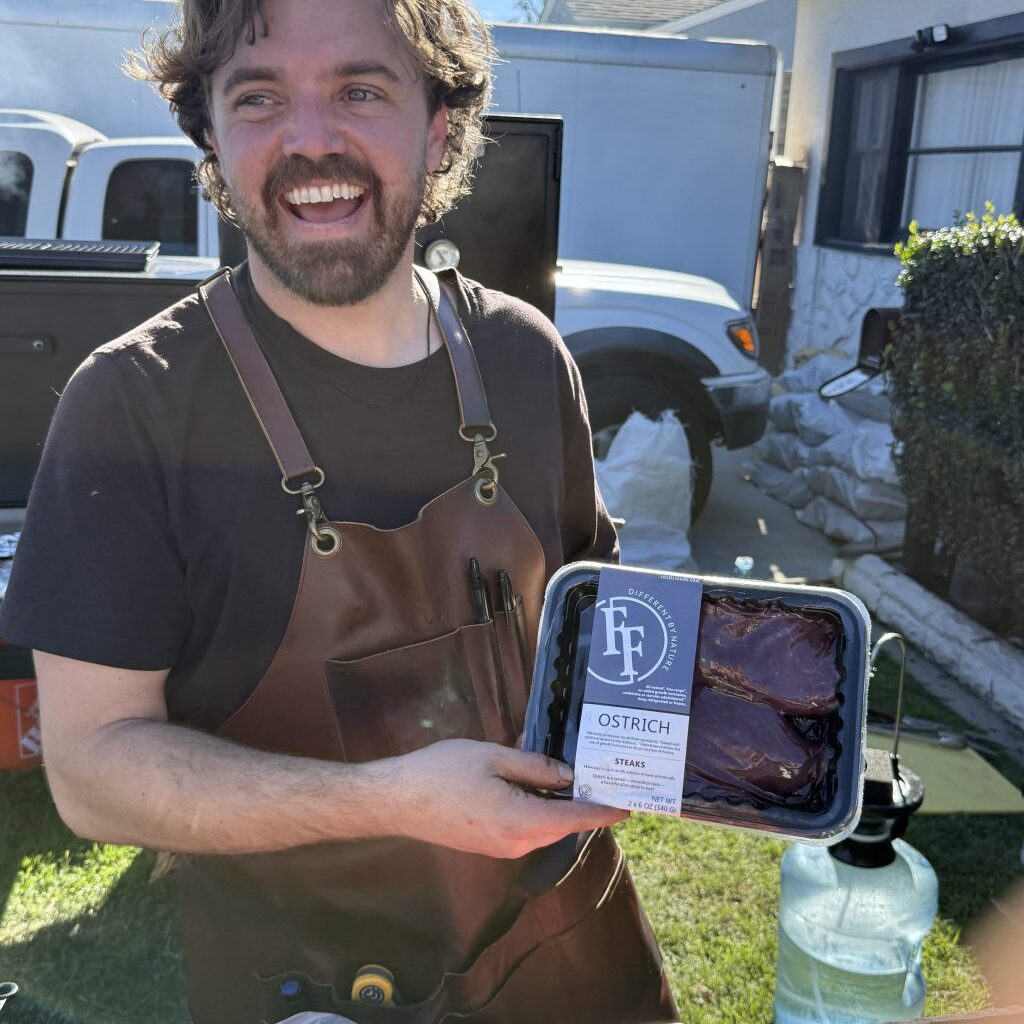
Daniel Matheny has been offering a free pop-up service dubbed BYO Meat in my Belmont Shore neighborhood, leveraging his culinary knowledge by smoking Osso Bucco and cooking steak and vegetables for my family — all at no charge.
His day job is fulfilling clients’ visions of dreamy parties by providing the hippest event rentals. It’s only natural for him to switch to the food side of entertaining on the weekends, so I sat down with Matheny to learn more about the new endeavor.
Q: What is the concept behind BYO Meat?
A: “Wood-fire cooking really started for me as a kid at church camp, sitting around a fire with nothing but a skewer and a marshmallow. It was there that I realized that with enough attention and patience, you can create something beautifully colored on the outside while the inside becomes soft and tender. That moment stayed with me, and it’s still the feeling I experience every time I cook over fire.
I’ve always been fascinated by things that take time. During Covid, when the world paused, I caught a glimpse of what early retirement might feel like. I finally had the time to slow down, enjoy the fire, and reconnect with those childhood memories. That curiosity led me to Firewood of My Ranch, a firewood supplier in Gardena, where I bought every type of wood they had just to see how each one behaved.
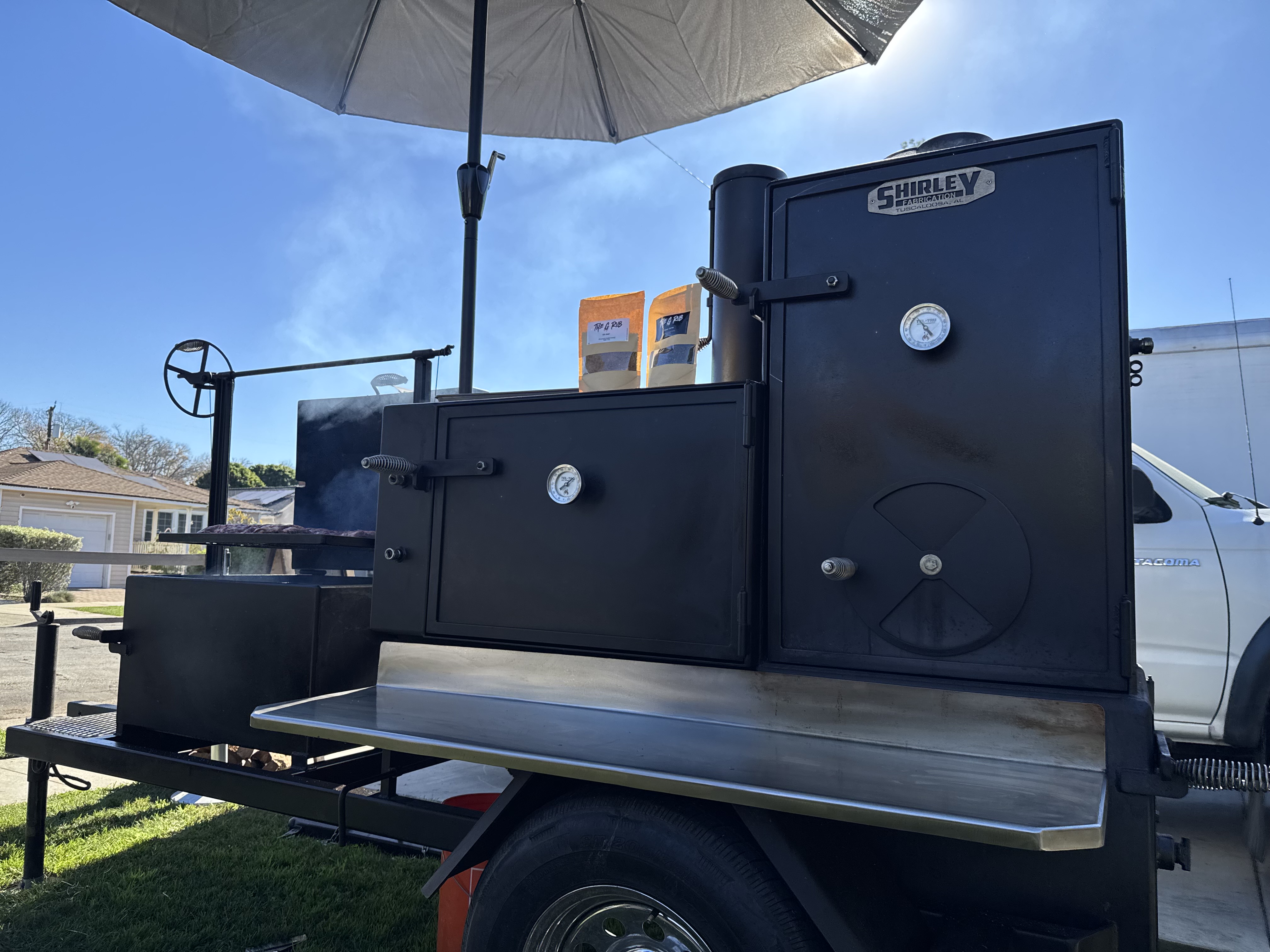
The smoker Daniel Matheny uses for his pop-up, dubbed BYO Meat. (Courtesy photo).
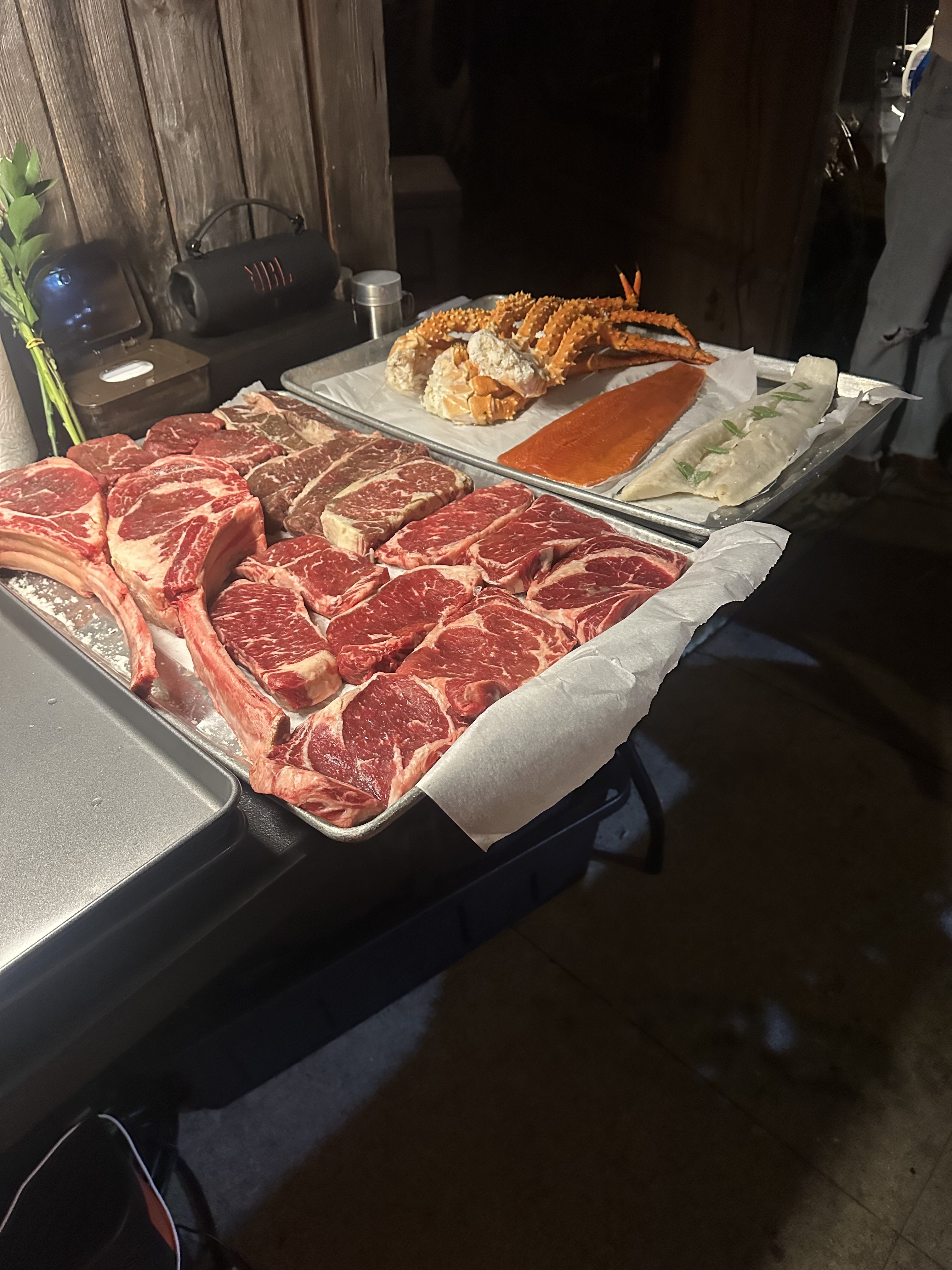
Daniel Matheny’s free pop-up dubbed BYO Meat offers smoked meat services for people in Long Beach. (Photo by Jo Murray)
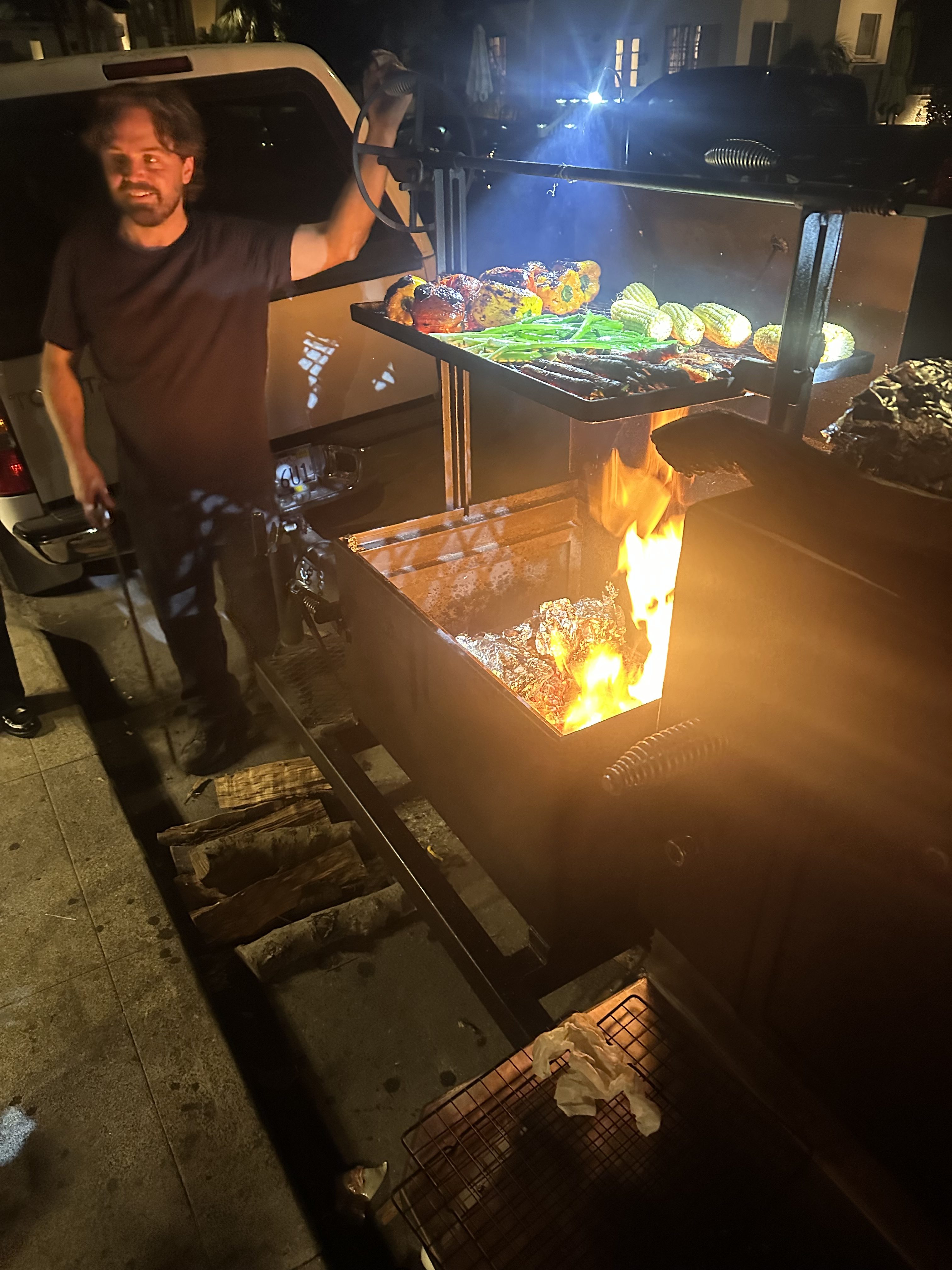
Daniel Matheny’s free pop-up dubbed BYO Meat offers smoked meat services for people in Long Beach. (Photo by Jo Murray).
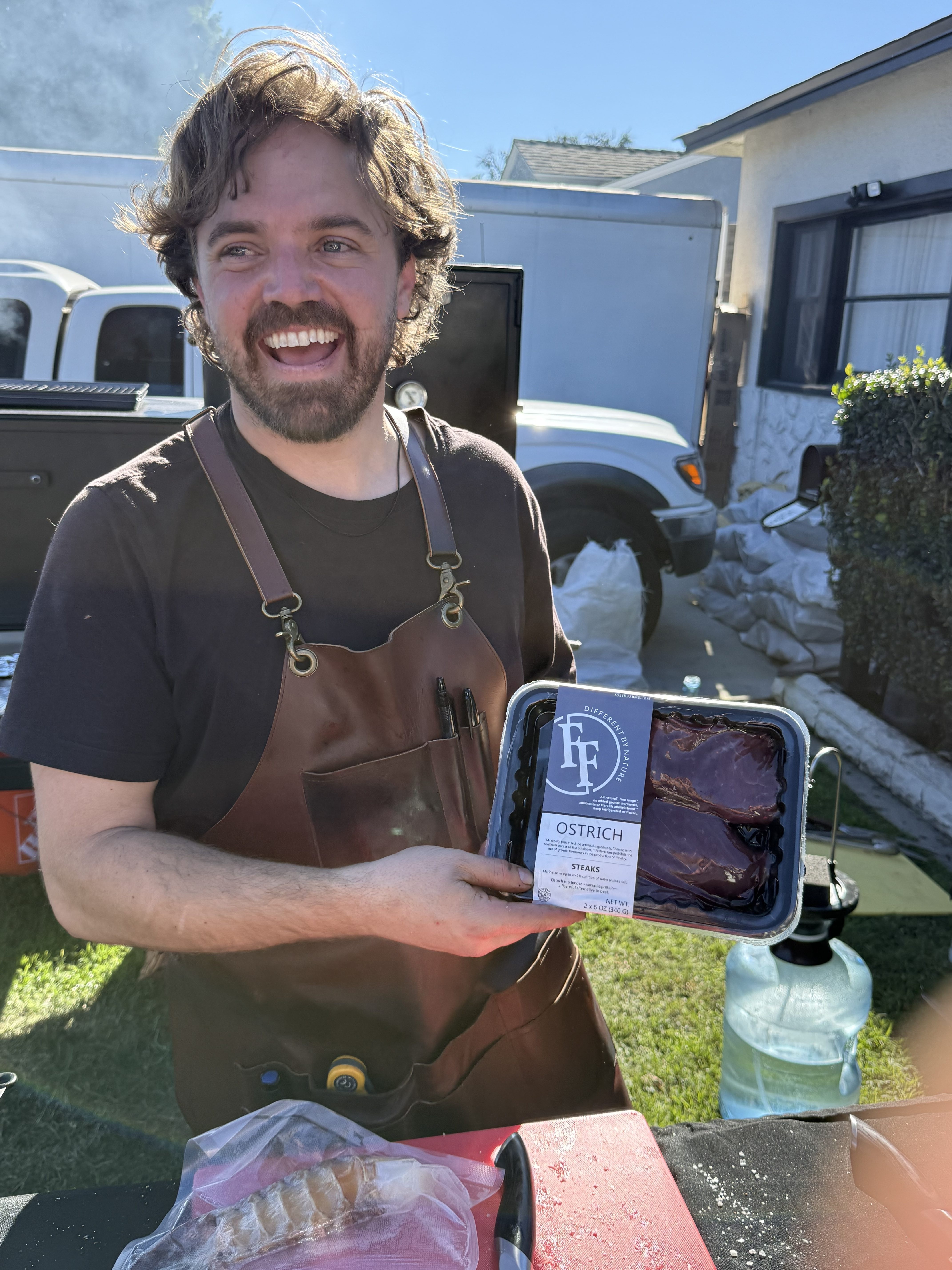
Daniel Matheny started a pop-up dubbed BYO Meat, which offers free meat smoking services to people in Long Beach. (Courtesy photo).
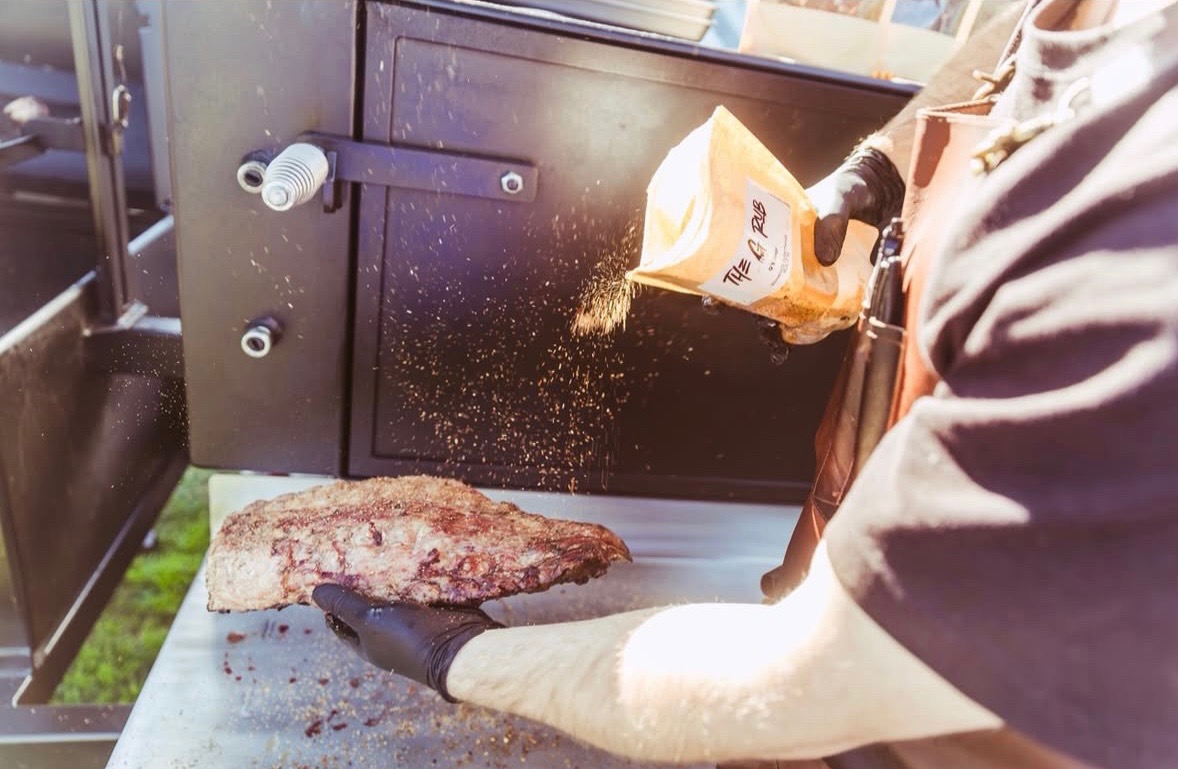
Daniel Matheny seasons up some meat for his pop-up, BYO Meat. (Courtesy photo).
Show Caption
1 of 5
The smoker Daniel Matheny uses for his pop-up, dubbed BYO Meat. (Courtesy photo).
I didn’t realize at the time how lucky I was to have so many hardwood options available locally. I also didn’t know that while people will use just about any wood to roast a marshmallow, you can’t do that when it comes to cooking food. The wood has to come from a tree that produces a nut or a fruit — that’s what makes it safe to cook with.
So there I was, enjoying each unique aroma and noticing differences not only between types of wood, but also between stages of the burn and how those aromas impacted food over time. Some woods—like red oak, mesquite, and hickory—are bold, sharp, and immediately noticeable, but if food basks in that smoke too long it can become bitter and harsh. Other woods, like pecan, cherry, and apple, are much more subtle in flavor, pushing low-and-slow cooking to new lengths.
With a growing fascination, I cooked over fire whenever possible, finding comfort in the crackle of the wood and watching the meat transform—beautifully colored on the outside, tender on the inside.
There’s something about fire you have to feel for yourself, but there’s also knowledge with deep generational cooking history. For that, I found my way to YouTube. It was there that I discovered countless channels filled with people who loved what I loved—cooking with wood, outside.
By that point, I had tried, owned, operated, and even rented a few different smokers and wood-fire cookers, and I knew it was only a matter of time before I needed consistent access to something that could do a good amount of everything. That’s when I spotted the grill of my dreams — a Shirley Fabrication competition-style pit built in Tuscaloosa, Alabama, which had been garaged, kept in perfect condition, and was waiting to be sold secondhand out near Temecula, California.”
Q: Tell me about your pull-behind smoker. It’s the most sophisticated I’ve ever seen, and I heard you drove all the way to Temecula to pick it up.
A: “The rig itself is a competition pit, meaning it’s built to support multiple styles of cooking at once. It’s a tow-behind trailer equipped with a Santa Maria grill, two wood-fire cooking chambers that can operate either low and slow as smokers or hot and fast as oven-style roasters, along with a separate flat-top plancha located on the backside of the rig. I’ve been operating it consistently for the last few months, learning its rhythm.”
Q: Is there an art to cooking on a wood fire? Is it about the type of wood used? How do you maintain the temperature?
A: “For open-fire cooking, I tend to use the bolder woods like red oak, mesquite, and hickory. In the closed fire chambers, I favor the more subtle woods like pecan, cherry, and apple. Temperature is maintained by continually feeding the fire throughout the day — sometimes burning as much as 280 pounds of wood in a single cook.
Managing the heat comes down to airflow: adjusting valves, intake, exhaust, and how the wood is arranged in each firebox. The fire tells you when it’s ready to be fed. The way those aromas layer and move together creates a wonderful-smelling gift that carries through the neighborhood and becomes something to share with everyone nearby.
That flexibility is what makes BYO Meat possible. The idea is intentionally simple: People bring their meat —raw, thawed, trimmed, and unseasoned — and I return it to them cooked and tasty. When someone arrives, they fill out a small ticket — what they brought, how fast or slow they want it cooked, seasoning preferences, doneness, and any restrictions. It keeps things organized, but more importantly, it sets the tone. This is their meat, their call, cooked with care.
I have a lot of Long Beach love. I’m fourth generation here, and my goal is to pop up randomly throughout the city, gifting people in different areas of Long Beach free wood-fire cooking. For a lot of folks, this is something new to see, and it’s exciting to share. As I build my following online with people who already know and love this style of cooking, I can feel their excitement too, seeing something familiar show up in a new environment, with palm trees and beaches as the backdrop.”
Q: How often do you cook? How can readers find you?
A: “Every Saturday, I cook and go live on a few social platforms, which is brand new for me. I’ve spent my entire life keeping my distance from social media, but after observing from afar, I finally feel ready to step in and make my mark. Anyone who wants to follow along can find me @byomeat on all platforms, and they can also navigate between them and sign up for FIND THE FIRE at linktr.ee/byomeat.”
Q: What keeps you going?
A: “In the end, it all circles back to church camp. That was a time in my life when I was deeply blessed to be raised in the church, sitting around a fire with space to listen, meditate, and talk with God. Those conversations didn’t end back then — they stayed with me. Being around a wood fire still slows me down in the same way. A hot wood fire has a way of grounding my day, keeping it chill, and that’s the energy I try to bring into every BYO Meat cook.”
Trader Joe’s
Another neighbor, meanwhile, brought me a bag with some cookies and a pretty candle in. But those gifts came with a special surprise — they were inside one of those coveted Trader Joe’s bags. You know, the ones that are selling online for thousands of dollars? I haven’t checked eBay, but the closest thing to it had a starting bid of 300 bucks.
When she gave it to me, I thought it was as Long Beach as a Joe Jost’s t-shirt — but now I know it’s a little more special.