
“Google has tried to do something and ran headfirst into a global pandemic. And like virtually every other entity that planned to build offices or office expansion, they put the brakes on their plan. And I expect those brakes will be in place for several years,” Liccardo said.
Liccardo said he thinks Google is “going to act like any landowner would at a time of great economic uncertainty,” and may simply sit on the land until it’s clear they need more office space.
“And that’s certainly not now, and it’s probably not going to be next year either,” he said.
While the potential expansion of the artificial intelligence-driven economy could push Google’s original development plans into reality, it’s also possible the company may need to “reimagine” uses for the land to skew more toward housing, Liccardo said.
Bert Weaver, a board member of the Delmas Park Neighborhood Association, representing residents whose homes abut Google’s planned village, said he thinks the company has been a good neighbor.
He said the company listened to input from residents and local organizations, maintains and secures the parking lots and buildings it owns, and puts on events at the Creekside area that are “very well attended.”
Even if the development has stalled for now, Weaver said he’s “cautiously optimistic” the plans will eventually shape up.
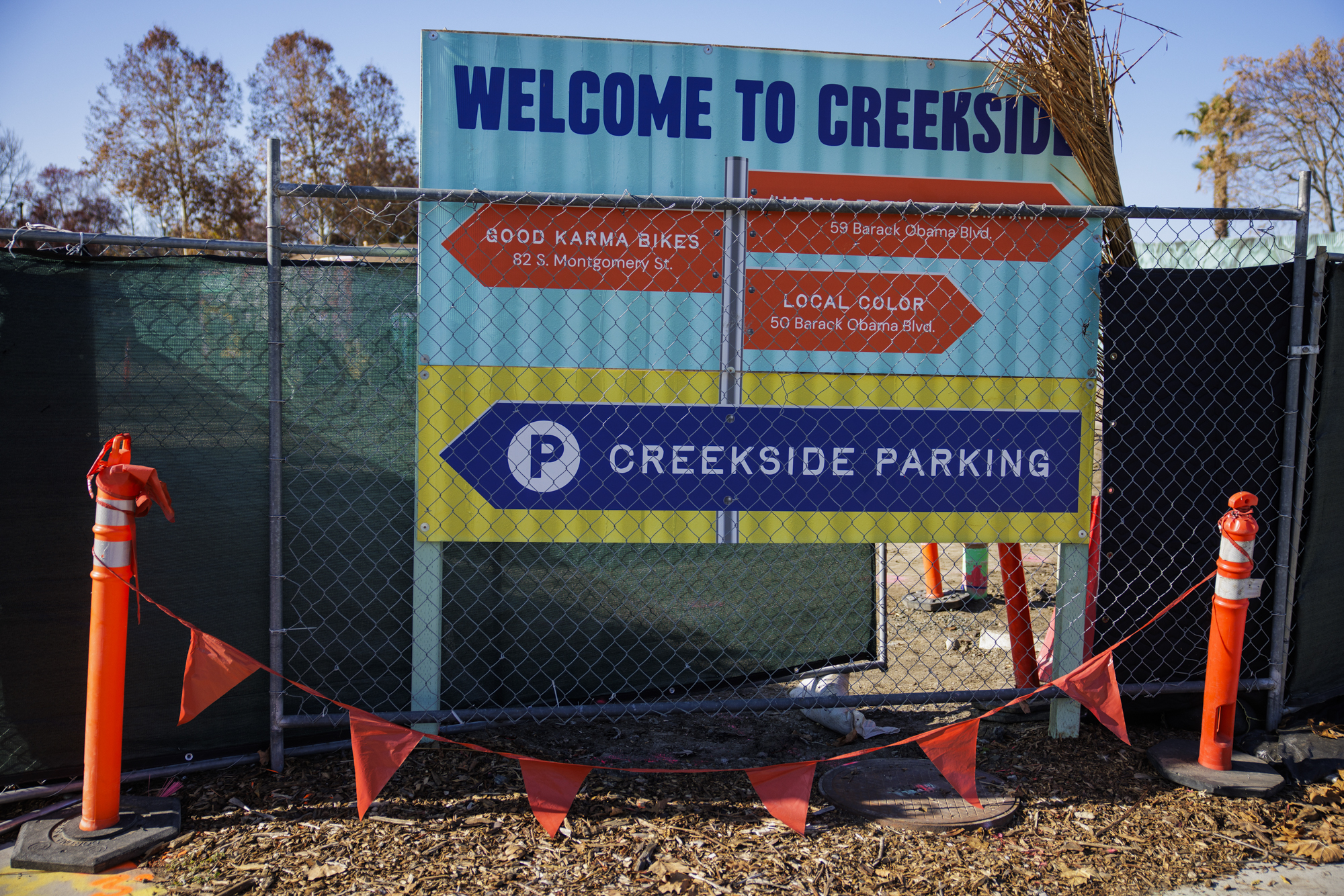 A sign for Creekside San José in front of the lot where the Poor House stood in San José on Dec. 8, 2025. (Martin do Nascimento/KQED)
“I mean, I hear occasional comments from neighbors that ‘No, Google is never going to come here,’ and all that. But I really don’t feel that way. And a number of my friends, a number of leaders of our group, feel the same way, that one day they will. As business improves, things will begin to happen,” Weaver said.
He said the neighborhood association leaders had a meeting with a Google representative in October, where no timelines were shared, but the company “sort of tried to assuage our fears and remind us that the bad rumors are not necessarily true, but, you know, they’re still there.”
At Hannah Coffee, a cafe across from SAP Center, customers are mostly neighborhood residents and people who work nearby at local businesses or for the San José Sharks, according to Andrew Harms, a manager at the shop.
Harms said that since he moved to the area about three years ago, he has heard a lot about the Google development.
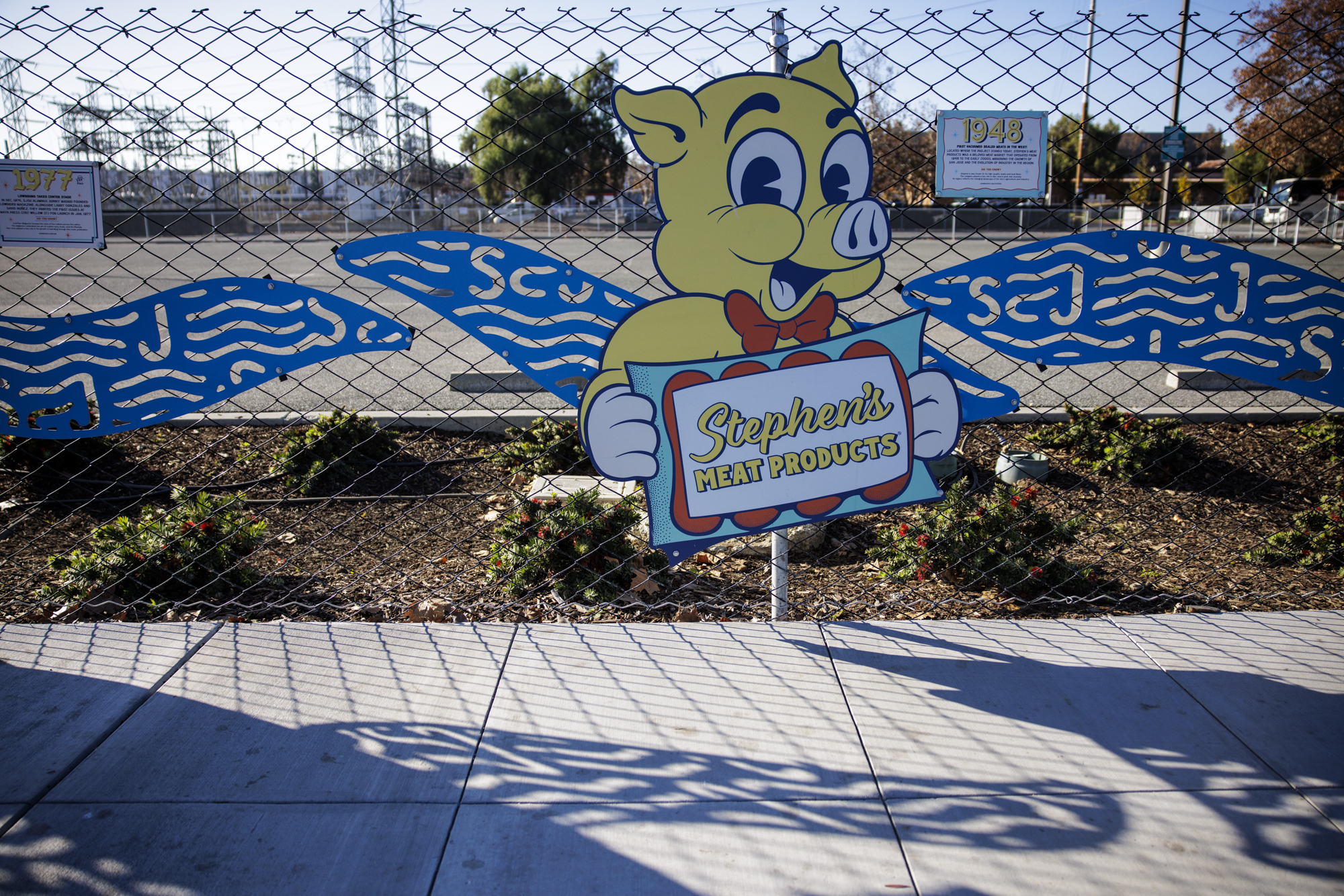 A sign on a fence commemorating the Stephen’s Meat Products sign in San José on Dec. 8, 2025. (Martin do Nascimento/KQED)
“The privatization of any amount of space here is always, I think, a concerning thing to people, whether or not it affects their day-to-day lives, because it’ll change the landscape of the city forever, potentially,” Harms said. When the project was moving through the city approval process years ago, many residents and community organizations expressed concerns about gentrification and whether the development would benefit some while hurting others. But more jobs, housing, liveliness and gathering spaces would be a net benefit for the area, he said.
Still, the lack of substantial progress on the plans has been noticeable, he said.
“It’s strange to hand the golden keys, so to speak, to Google and have them do basically nothing with the space,” he said.
Jen Baker, San José’s director of economic development, who came to the city last summer from the Pacific Northwest, sees the area with fresh eyes. She expressed optimism about the potential of not only Downtown West, but the broader 250-acre Diridon Station area, where the city has envisioned millions more square feet of office space and up to 12,000 homes, including Google’s original plans.
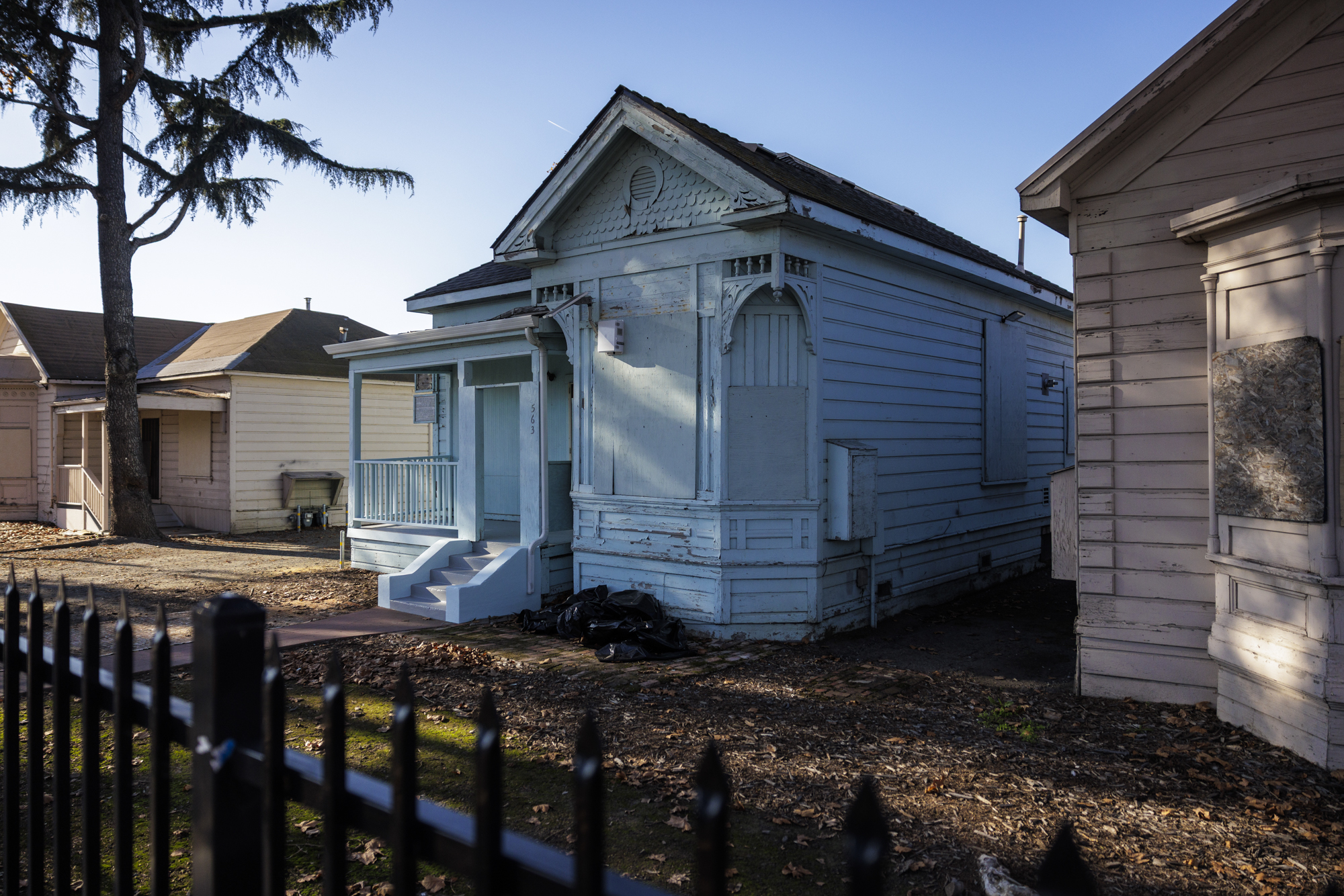 One of three Victorian-era homes on W. Julian Street in San José now owned by Google that could eventually be relocated as part of the company’s development plans for the area on Dec. 8, 2025. (Martin do Nascimento/KQED)
“It’s really a unique and amazing site and space. How many West Coast cities have potentially developable acreage that is in downtown or downtown adjacent to really accomplish a major vision?” Baker said.
The pandemic’s effects on the economy and office markets have meant that projects didn’t move at the pace many were hoping for, Baker said, but she sees “an amazing canvas of opportunity” there.
“I realize that the timeline for people is not what was anticipated,” Baker said, “but I’m very bullish that something amazing will be realized.”