
A year ago, you couldn’t go a day without hearing Mayor Daniel Lurie using the phrases “more cops” and “safer streets” as the city reeled from a post-pandemic PR crisis over public safety.
But the mayor’s priorities have shifted: Gone is the never-ending tough-love language about eliminating crime and mayhem, replaced by an overarching message of affordability, the political topic du jour as the nation reels from high grocery prices, soaring child-care costs, and out-of-control rents and mortgages — all problems with which San Franciscans are intimately familiar.
In his first State of the City address since taking office last year, Lurie on Thursday presented a landmark policy aimed at making life in the city less miserable for working residents. The city will expand subsidies allowing a family of four earning less than $230,000 a year to receive free child care, while those earning $310,000 will be eligible for a 50% subsidy. The money will come from funds accrued through 2018’s Proposition C measure.
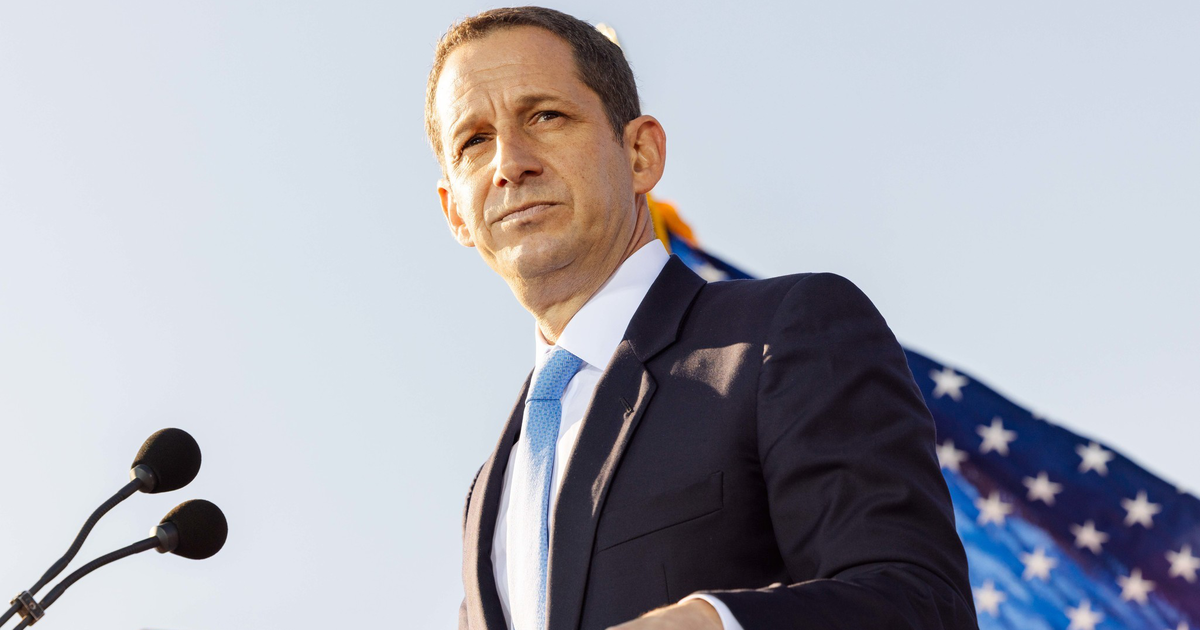
 Affordability was the cornerstone of Lurie’s speech as Democrats across the nation jump on the issue. | Source: Amanda Andrade-Rhoades/The Standard
“When tech booms, opportunity grows, but so does anxiety about rising rents, displacement, and a boom-and-bust cycle that has historically left too many people behind,” Lurie said during his remarks at Rossi Park in the Inner Richmond. The child-care subsidies, part of what the mayor is dubbing his “Family Affordability Agenda,” focus on an expense that can eat up a huge portion of families’ incomes.
“This is going to remove a huge burden for working parents,” said Lurie. “And we’re not going to take four years to roll this out; we’re going to be the first major city in the nation to actually get it done.” Lurie cited statistics showing that a family of four in San Francisco needs $160,000 just to meet basic needs, like food and rent.
Those expenses come as the Trump administration has gutted funding for healthcare, blowing a $220 million hole in the city’s budget.
“Affordability has been a challenge in San Francisco for a long time, but as the federal government cuts support and drives up costs on everything from the price of groceries to insurance premiums and child care, the pressure is building,” Lurie said.
The mayor’s shift to pocketbook issues coincides with a national conversation over affordability that’s ratcheting up, with Democrats using the topic as a wedge issue to pick up voters they lost in the 2024 national election. In New York City, Mayor Zohran Mamdani’s concentration on making life more affordable has forced officials elsewhere to shift their messaging.
That appears to include Lurie, who peppered Thursday’s speech with nods to just how expensive life has become in San Francisco, touching on the cost of utilities and housing. He said his administration will continue to bring down the cost of gas and electricity for low-income families and touted his Family Zoning Plan, a contentious, state-mandated initiative that Lurie says will eventually lead to lower housing costs. Progressive critics of the housing plan contend that it will lead to displacement and is a giveaway to developers.
 “We’re going to be the first major city in the nation to actually get it done,” Lurie said of his child-care subsidies. | Source: Amanda Andrade-Rhoades/The Standard
Lurie said he and Mamdani had a short phone call after the New York City mayor was sworn in this month but did not describe details of the conversation.
Lurie’s messaging pivot follows populist efforts underway across the city and state, some of which may be in direct conflict with Lurie’s close alliances with San Francisco’s business community. A city ballot measure under consideration would increase taxes on businesses, while a California wealth tax has caused consternation among the state’s tech leaders.
In his first public remarks about the state wealth tax, which would levy a 5% tax on billionaires’ assets, Lurie came out against the proposal.
“Everyone needs to pay their fair share,” he said. “But I have concerns about this, as the governor [has] stated (opens in new tab). We are seeing people leave the state already — which, in my mind, reduces revenue to take care of Muni, to take care of early childhood care, to take care of our families, to keep our streets safe and clean. Anything that drives revenue out of our city or state is something I have concerns about.”
Keally McBride, a politics professor at the University of San Francisco, said Lurie wants to prove his Democratic bona fides by focusing on affordability issues but can’t alienate the base of wealthy supporters whom he has placed in charge of the city’s revitalization projects.
“He thinks about billionaires as local resources,” McBride said. “He’s scared that they will leave.”
The public safety conversation was not missing from Lurie’s remarks Thursday. He extolled statistics showing crime on a downward trend and trumpeted his efforts to clamp down on homelessness and public drug use.
 Former Mayor London Breed was in attendance. | Source: Amanda Andrade-Rhoades/The Standard
“Public safety is the foundation for San Francisco’s recovery, and it will always be my North Star as mayor,” Lurie said.
The mayor additionally hinted at efforts to put stricter rules around how money is doled out for homelessness funding, stating that the city will be “redoing every single homeless services contract in the city with a clear focus on accountability and results.” He then announced that he plans to combine the city’s Planning Department, Permit Center, and Department of Building Inspection, the latter of which has been at the center of corruption scandals.
Attendees of Thursday’s address complimented Lurie for shifting the narrative of a city that was flailing during the pandemic but is now — in their eyes — on the road to recovery.
“Daniel has really created momentum and is continuing the momentum for the city,” said Larry Baer, CEO of the San Francisco Giants. “And that’s what we need.”
Others concurred. “I think the mayor’s going in a good direction,” said Dr. Jonathan Butler, San Francisco’s NAACP president. “There’s obviously so much to do, but he’s done a lot.”
But others questioned just how much progress has been made on the public safety front. Roberto Hernandez, a community leader in the Mission, said much of the homelessness and public drug use has moved from the Tenderloin south to his neighborhood.
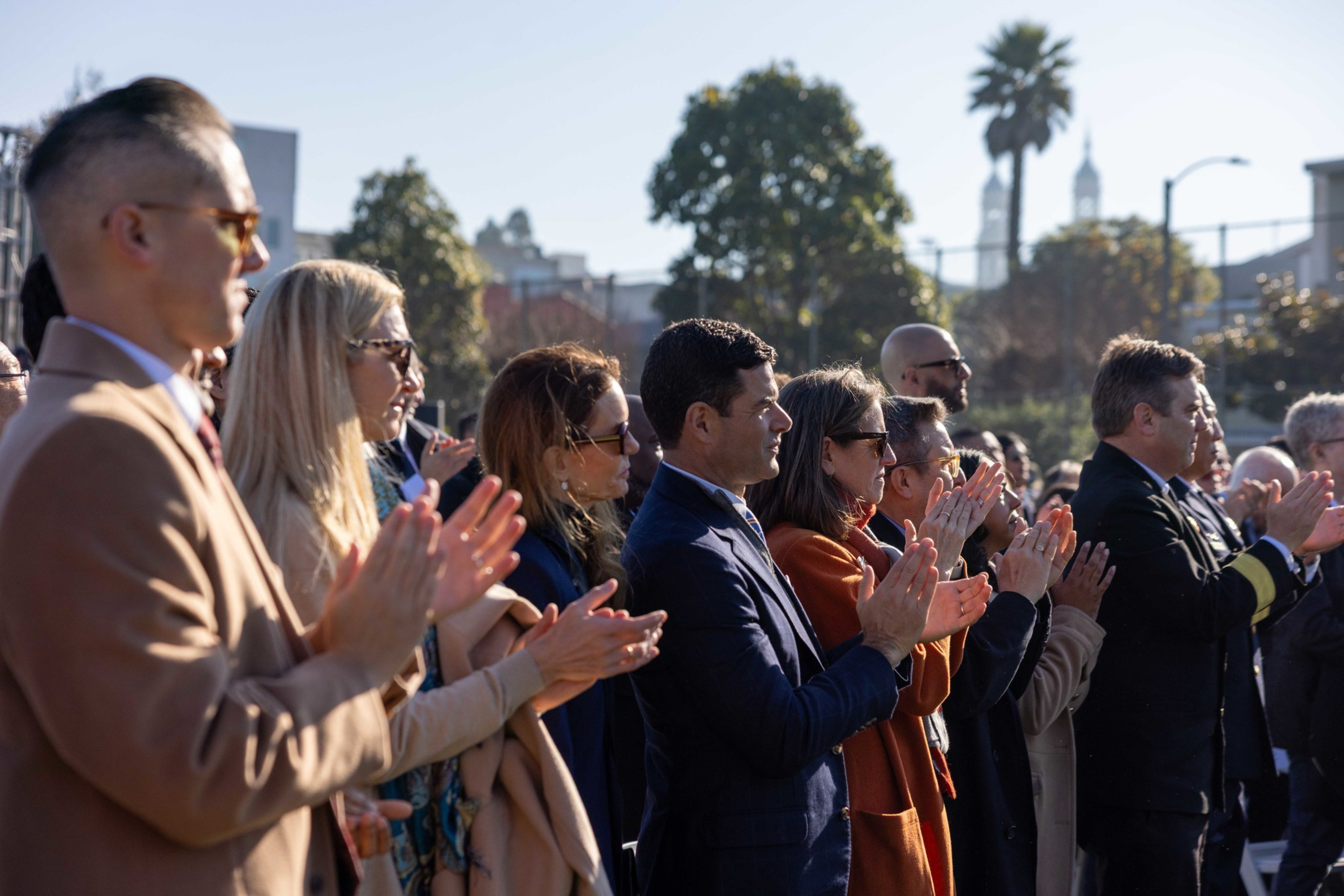 Source: Amanda Andrade-Rhoades/The Standard
“We’re at a crisis,” he said. “It hasn’t improved. It’s gotten worse. I’ve heard him [talk about] safety and thriving in the whole city. And I hope that that happens in the Mission. Because it is not happening in the Mission. We haven’t seen the change.”
Tellingly, perhaps the loudest response to Lurie’s speech came when he mentioned an issue unrelated to either affordability or crime. It was his convincing President Donald Trump not to send federal agents to the city in October, a feat that epitomized his popularity in his freshman year as mayor. For that, Lurie received the longest standing ovation of his first State of the City.