
You may have noticed that even after the morning fog lifts, a layer of haze continues to hang over the Valley.Air quality across the Northern California Valley is on Thursday was rated from moderate to unhealthy due to increasing pollution levels. This is the result of a persistent area of high pressure overhead, which creates conditions that trap stagnant, dirty air in the valley.High pressure aloft leads to very stable weather–winds remain light and are unable to disperse the layer of haze, which can include harmful gases, emissions, smoke, and other airborne particles.At the same time, the warmer air higher in the atmosphere of high pressure sits above cooler, denser air near the surface. The setup prevents vertical mixing. As the air aloft also sinks, it compresses the lower layers and traps pollution near the Valley floor. As normal urban activity continues to produce pollution, this haze thickens.The Sacramento Air Quality Management District has put Thursday and Friday into the “Stage 1 – No Burn Unless Exempt” category. That means in Sacramento Country it is illegal to operate a wood-burning device or light a fire unless you use an EPA-certified fireplace insert or stove or pellet stove, and it does not emit visible smoke. The annual Check Before You Burn season runs from Nov. 1 through the end of February.As the high-pressure system remains parked over the West Coast, reduced air quality is expected to linger through the weekend.How to check air quality where you liveKnowing how to check air quality conditions can help you make the best decisions to keep yourself and your family safe.Here are two tools that the KCRA 3 Weather Team uses and trusts.AirNow.govThis site is run by the Environmental Protection Agency.The EPA has sensors throughout Northern California that track both smoke pollution and ozone pollution. Live updates on those readings can be seen using AirNow’s interactive map. The site also provides a rough forecast of expected air quality conditions in specific areas.All of the reports are based on the Air Quality Index, also developed by the EPA.An AQI of 50 or lower represents “Good” quality air that is relatively free of pollutants. Once the AQI reaches 101, air pollution is at a level that is unhealthy for sensitive groups, including the very old, the very young and anyone with a respiratory or immune condition.An AQI above 300 is hazardous in the short and long term for everyone.If you want to check the air quality on the go, the AirNow app is a good, free resource.PurpleAir.comPurpleAir is a private company with its own network of air quality monitors purchased by users around the world. These sensors are specifically designed to track smoke pollution.The free interactive map page displays real-time AQI readings.See more coverage of top California stories here | Download our app | Subscribe to our morning newsletter | Find us on YouTube here and subscribe to our channel
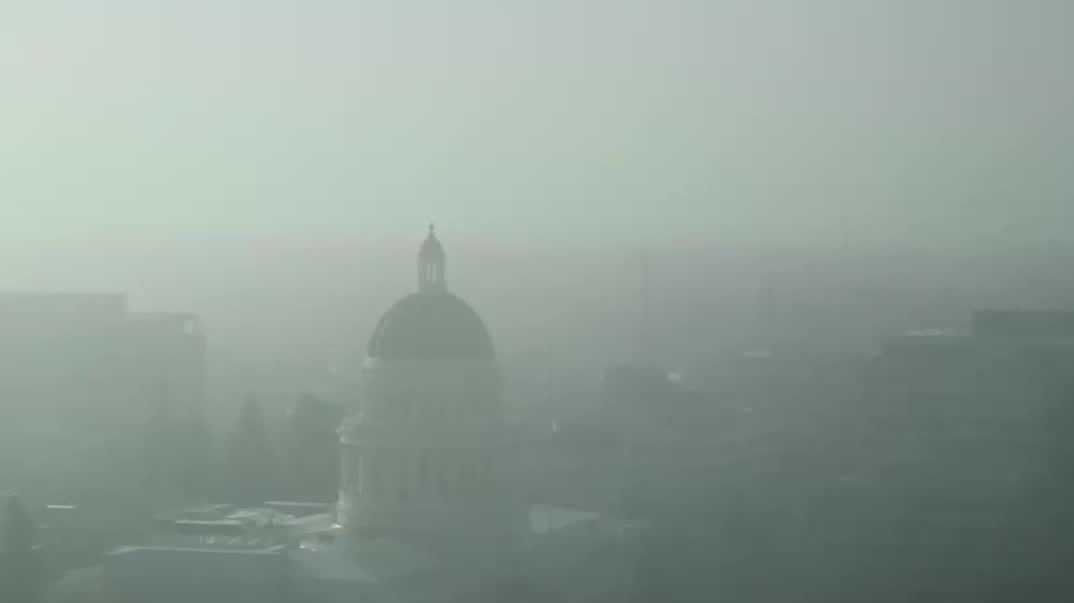
You may have noticed that even after the morning fog lifts, a layer of haze continues to hang over the Valley.
Air quality across the Northern California Valley is on Thursday was rated from moderate to unhealthy due to increasing pollution levels. This is the result of a persistent area of high pressure overhead, which creates conditions that trap stagnant, dirty air in the valley.
High pressure aloft leads to very stable weather–winds remain light and are unable to disperse the layer of haze, which can include harmful gases, emissions, smoke, and other airborne particles.
At the same time, the warmer air higher in the atmosphere of high pressure sits above cooler, denser air near the surface. The setup prevents vertical mixing. As the air aloft also sinks, it compresses the lower layers and traps pollution near the Valley floor. As normal urban activity continues to produce pollution, this haze thickens.
The Sacramento Air Quality Management District has put Thursday and Friday into the “Stage 1 – No Burn Unless Exempt” category.
That means in Sacramento Country it is illegal to operate a wood-burning device or light a fire unless you use an EPA-certified fireplace insert or stove or pellet stove, and it does not emit visible smoke.
The annual Check Before You Burn season runs from Nov. 1 through the end of February.
As the high-pressure system remains parked over the West Coast, reduced air quality is expected to linger through the weekend.
How to check air quality where you live
Knowing how to check air quality conditions can help you make the best decisions to keep yourself and your family safe.
Here are two tools that the KCRA 3 Weather Team uses and trusts.
This site is run by the Environmental Protection Agency.
The EPA has sensors throughout Northern California that track both smoke pollution and ozone pollution. Live updates on those readings can be seen using AirNow’s interactive map. The site also provides a rough forecast of expected air quality conditions in specific areas.
All of the reports are based on the Air Quality Index, also developed by the EPA.
An AQI of 50 or lower represents “Good” quality air that is relatively free of pollutants. Once the AQI reaches 101, air pollution is at a level that is unhealthy for sensitive groups, including the very old, the very young and anyone with a respiratory or immune condition.
An AQI above 300 is hazardous in the short and long term for everyone.
If you want to check the air quality on the go, the AirNow app is a good, free resource.
PurpleAir is a private company with its own network of air quality monitors purchased by users around the world. These sensors are specifically designed to track smoke pollution.
The free interactive map page displays real-time AQI readings.
See more coverage of top California stories here | Download our app | Subscribe to our morning newsletter | Find us on YouTube here and subscribe to our channel