
Santa Clara County is using its latest round of federal funding for homelessness to rapidly house people in apartments.
The county received nearly $600,000 from the Emergency Solutions Grants Program, which can be used to fund shelter operations, outreach, homelessness prevention or rapid rehousing. Over the past five years, the county has received $2.5 million in these grants and largely used the money to fund rapid rehousing programs, which give people time-limited rental subsidies.
“(These) funds are an important source of funds for our rapid rehousing program, assisting approximately 50 households a year to obtain and maintain permanent housing,” Hilary Armstrong, deputy director of the Santa Clara County Office of Supportive Housing, told San José Spotlight.
The federal government awarded these grants for fiscal year 2023-24, before President Donald Trump took office. While the Trump administration has recently pushed for changes to how federal homeless funds are handed out, county officials said there’s no indication future Emergency Solutions Grants funding will be stopped.
Last year, Trump called for the end of the “housing first” model, a longstanding strategy to prioritize housing people without work or sobriety requirements.
The Trump administration has attempted to undercut homeless funds that helps keep people permanently housed by shifting Continuum of Care grants — the largest source of federal homelessness funding — to temporary housing programs. That move has been temporarily blocked by a federal judge due to a lawsuit from the county and other organizations.
Continuum of Care grants help roughly 1,800 county residents stay housed.
The Emergency Solutions Grants Program, formerly known as emergency shelter grants, was established in the mid-1980s to provide local governments money to build and operate shelters. In 2009, funding was expanded to focus on more long-term solutions to homelessness, including rapid rehousing and homelessness prevention.
Todd Langton, founder of nonprofit Agape Silicon Valley, said he’s glad the county is spending the federal funds on rapid rehousing, but wants to see more job training, financial literacy and rehabilitation services offered to people in the program to keep them housed. Participants get up to 24 months of rental assistance, with the expectation that they’ll be able to sustain their own rent at the end of the subsidy period.
Langton said a homeless person he helped get into the rapid rehousing program couldn’t keep up with rent and ended up back on the streets after subsidies ended.
“(Chronically homeless people) will need so much extra care and continuing care, as far as drug and alcohol rehab,” Langton said. “The other issue is, quite often, they lose their community that they were unhoused with.”
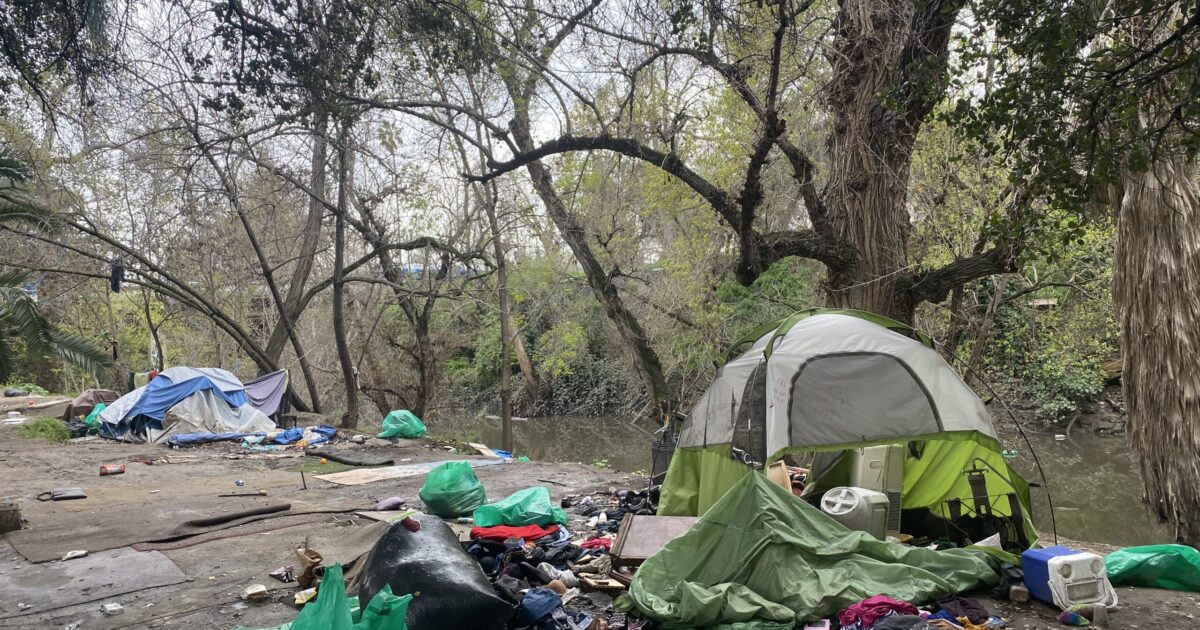
Homelessness has hit an all-time high in the county with more than 10,700 people who are homeless — and more people are finding it difficult to break the cycle. The 2025 point-in-time count found 4,650 people are chronically homeless, defined as those who have been homeless for a year or longer with a disabling condition that makes maintaining work or housing difficult. That’s a 21% increase from 2023, when there were 3,833 chronically homeless residents countywide.

The county’s rapid rehousing program is generally geared toward families and people who have been homeless for a short time, according to a county memo. More than 1,600 households participated in the program from April 1, 2024 to March 31, 2025, and 1,239 of those remained permanently housed after the subsidies ended, according to county data.
“I’m really happy that the county is stepping up and focusing on permanent housing, because the city, 95% of their focus is on temporary (housing),” Langton said. “These people are going in and out (of housing), it’s a carousel. And you create these false hopes for these people.”
Contact Joyce Chu at [email protected] or @joyce_speaks on X.