
The Sacramento County Board of Supervisors has approved an expanded camping ban that now includes most private property, aiming to address the movement of homeless encampments from public to private areas.”We’ve had people pass out from fentanyl on the front steps of our building, a block away from our local elementary school,” community member Holly Tolbert said in Tuesday’s meeting.Previously, the county could only address encampments on public property, which often resulted in camps moving to private property. Starting next month, deputies will be able to take action on encampments located on private property when owners are unreachable, issuing written warnings and removing tents.”What that does in the long run, it is it helps our businesses allow them to do what they do best and in their businesses and it allows us to be able to tackle some of the issues that are related to homelessness,” Sacramento County Board Chair Rosario Rodriguez explained to KCRA.The ordinance would make camping on private property illegal, with a few exceptions. Camping would be allowed on a person’s own property or with written permission from the owner. Campers would also need access to toilets, trash collection and must avoid fire risks. Camping would be allowed for up to three consecutive days at a time and no more than three times a year. However, the decision has drawn opposition. Mike Jaske with Sacramento Area Congregations Together, or SAC ACT, expressed skepticism about the effectiveness of the ban in addressing homelessness.”Are people going to be charged, taken downtown to the jail and processed and then probably released in 24 hours or less to go find another place to camp illegally, quote unquote?” Jaske questioned.Jaske pointed toward more funding and services to combat the homeless issue in the county. “With the aid of state and federal organizations that provide funding, to increase that funding, increase shelter space, increase housing, and find a location that’s humane and acceptable and offers supportive services. Some of these people will then be able to recover their lives and become employable and be self-sufficient,” Jaske said.Rodriguez told KCRA that some shelters in the county are not operating at “full capacity.””Ultimately, the goal is we want to help people get the services that we are offering so that we can get them off the streets,” Rodriguez said.See more coverage of top California stories here | Download our app | Subscribe to our morning newsletter | Find us on YouTube here and subscribe to our channel
SACRAMENTO COUNTY, Calif. —
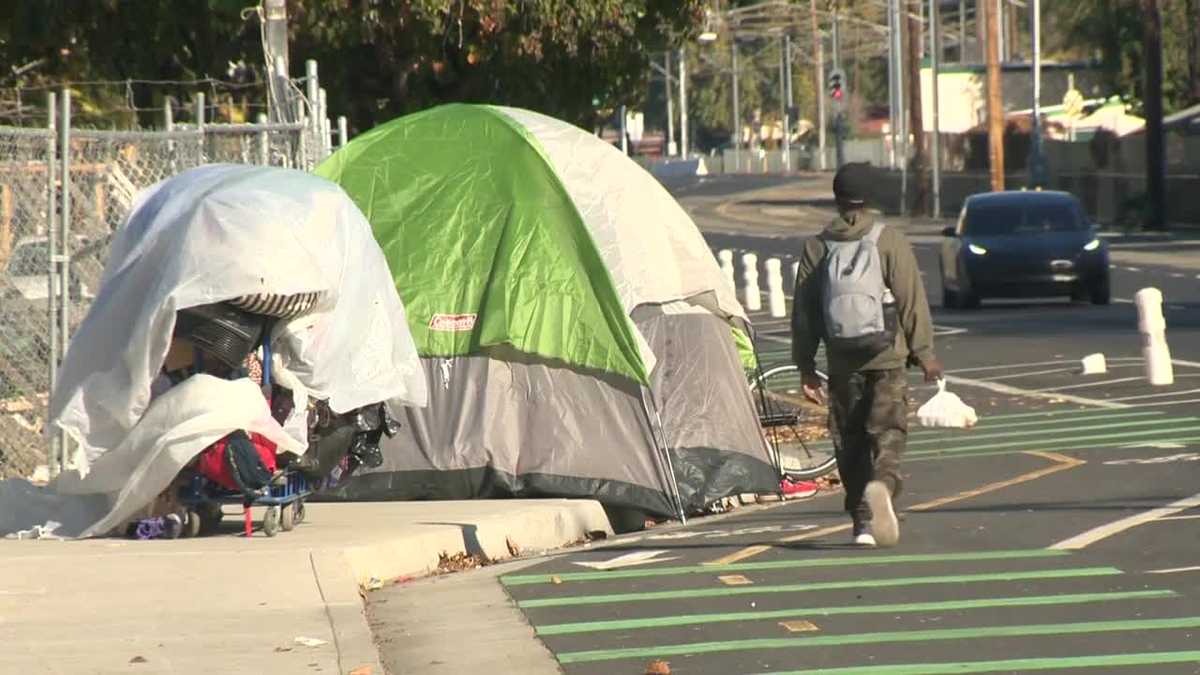
The Sacramento County Board of Supervisors has approved an expanded camping ban that now includes most private property, aiming to address the movement of homeless encampments from public to private areas.
“We’ve had people pass out from fentanyl on the front steps of our building, a block away from our local elementary school,” community member Holly Tolbert said in Tuesday’s meeting.
Previously, the county could only address encampments on public property, which often resulted in camps moving to private property. Starting next month, deputies will be able to take action on encampments located on private property when owners are unreachable, issuing written warnings and removing tents.
“What that does in the long run, it is it helps our businesses allow them to do what they do best and in their businesses and it allows us to be able to tackle some of the issues that are related to homelessness,” Sacramento County Board Chair Rosario Rodriguez explained to KCRA.
The ordinance would make camping on private property illegal, with a few exceptions. Camping would be allowed on a person’s own property or with written permission from the owner. Campers would also need access to toilets, trash collection and must avoid fire risks. Camping would be allowed for up to three consecutive days at a time and no more than three times a year.
However, the decision has drawn opposition. Mike Jaske with Sacramento Area Congregations Together, or SAC ACT, expressed skepticism about the effectiveness of the ban in addressing homelessness.
“Are people going to be charged, taken downtown to the jail and processed and then probably released in 24 hours or less to go find another place to camp illegally, quote unquote?” Jaske questioned.
Jaske pointed toward more funding and services to combat the homeless issue in the county.
“With the aid of state and federal organizations that provide funding, to increase that funding, increase shelter space, increase housing, and find a location that’s humane and acceptable and offers supportive services. Some of these people will then be able to recover their lives and become employable and be self-sufficient,” Jaske said.
Rodriguez told KCRA that some shelters in the county are not operating at “full capacity.”
“Ultimately, the goal is we want to help people get the services that we are offering so that we can get them off the streets,” Rodriguez said.
See more coverage of top California stories here | Download our app | Subscribe to our morning newsletter | Find us on YouTube here and subscribe to our channel