
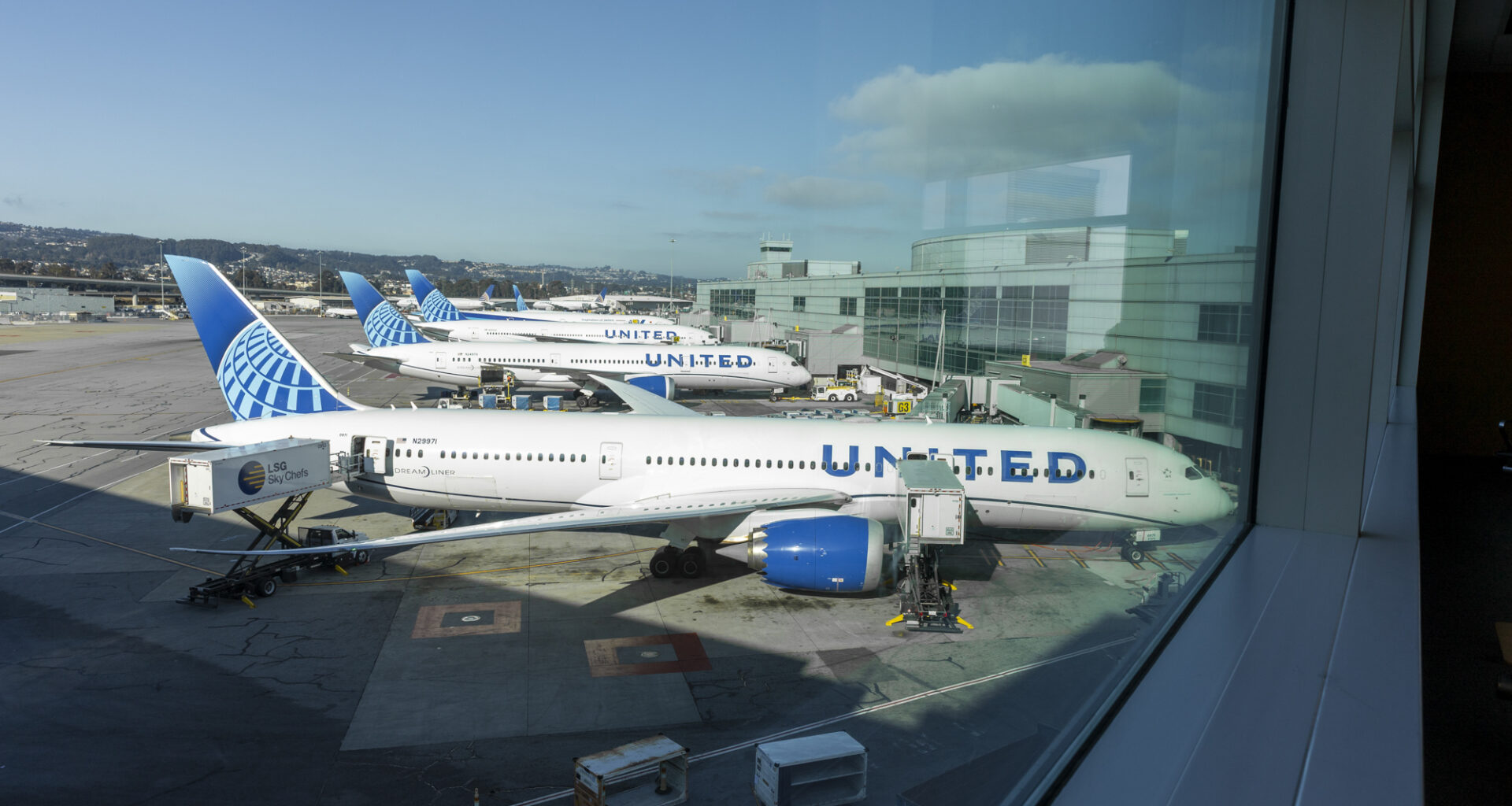
The fear of flying is less a single phobia than a place where other fears converge. For many people, it’s rooted in one or more anxieties that flying brings into focus — the fear of turbulence, of heights, or of having a panic attack in front of strangers with no escape.
For Vance, being inside an aircraft activates her claustrophobia — a condition she developed at nine years old. A series of surgeries caused her to feel severe anxiety in closed spaces. Her panic attacks increased during her teenage years, especially on airplanes.
“If I’m in a car, I can pull over, open my door and get some relief,” she says. “But when I’m in a plane, there’s no out.”
A safe space to face the fear
Air travel isn’t something that most people can do often enough to ease their anxiety. Each trip can feel like starting all over again.
Luckily, Vance found somewhere to practice being uncomfortable: the Fear of Flying Clinic, a nonprofit support organization hosted at the San Francisco International Airport.
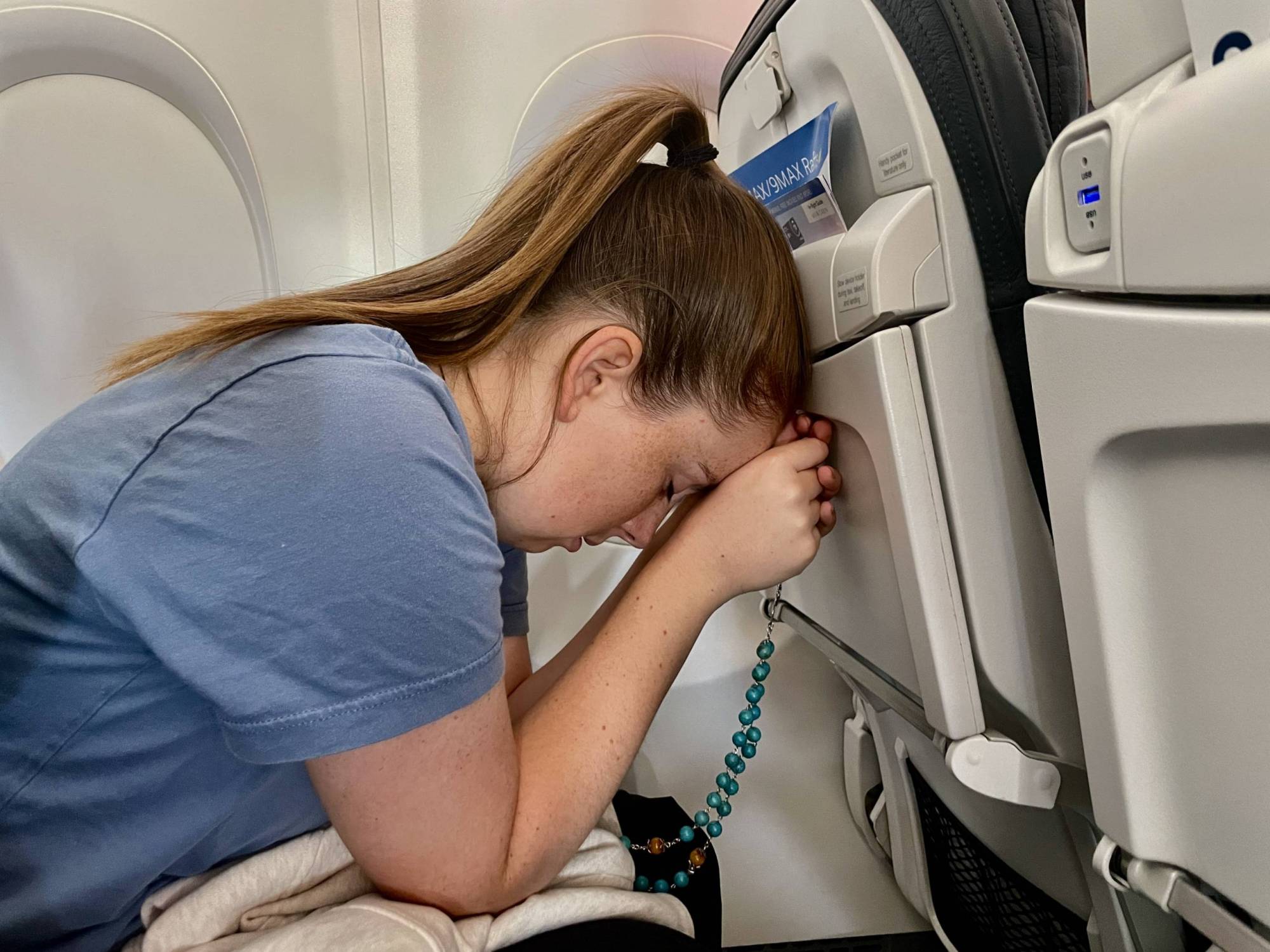 Collette Vance, a participant in the Fear of Flying Clinic, prays before takeoff from San Francisco on Aug. 10, 2025. (Evan Roberts/KQED)
Fran Grant and Jeanne McElhatton, both licensed pilots, founded the clinic in 1976 in San Mateo, California. They created an educational program in order to help Grant’s husband overcome his turbulence anxiety so he could travel to Australia.
The curriculum demystified air travel and addressed the physical and psychological roots of fear. The first clinic welcomed a small group of anxious travelers and, by the end, Grant’s husband was calm enough to sleep through turbulence that had once overwhelmed him.
Today, clients from across California spend two consecutive weekends understanding the mechanics of flight and learning how to rewire their anxious thoughts. A four-day workshop culminates in a round-trip graduation flight to Seattle.
Vance arrives at the clinic on the first day with her mother, Louise, joining eight other participants, including one couple who drove in from Fresno. Volunteers run the workshop — many of whom are nervous flyers and have gone through the clinic themselves — and include instruction from working pilots, air traffic controllers, flight attendants and aircraft maintenance technicians.
Volunteer psychotherapist Paula Zimmerman begins the workshop by asking everyone to introduce themselves and their concerns about flying. Reasons for signing up range widely: panic attacks, childhood trauma from an earthquake, a decades-old rescue mission during the Vietnam War. One participant in their fifties had never even been inside an airplane.
Often, Zimmerman says, they sign up because of an important upcoming trip.
Retrain the brain
Zimmerman wants participants to understand the difference between adrenaline and real danger. Her goal is to help them to distinguish between the thing that’s happening to them and how they think about the thing that’s happening to them.
She writes the letter “A” on a large sheet of paper at the front of the room. A stands for an activating event — like, for example, turbulence.