
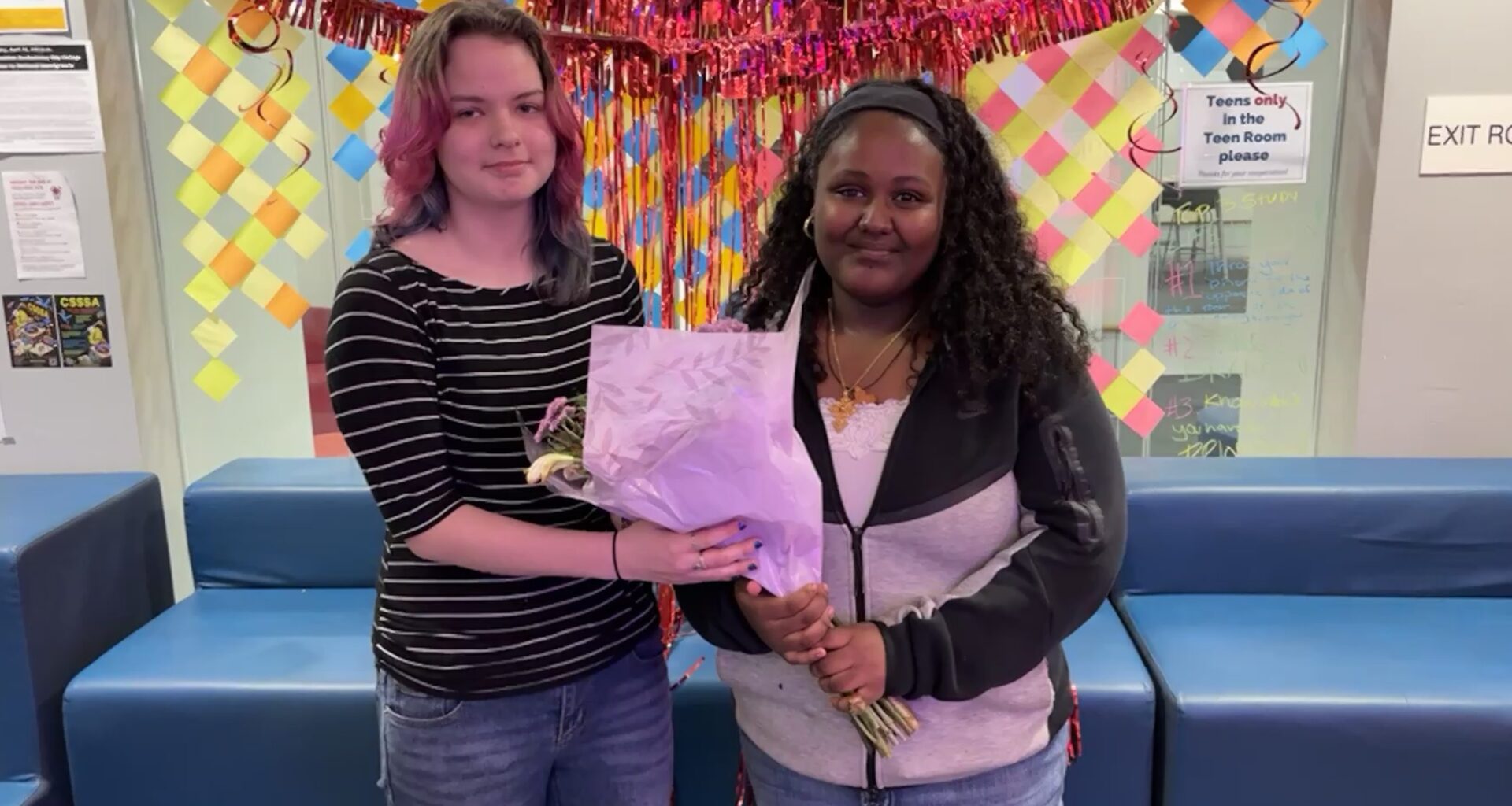
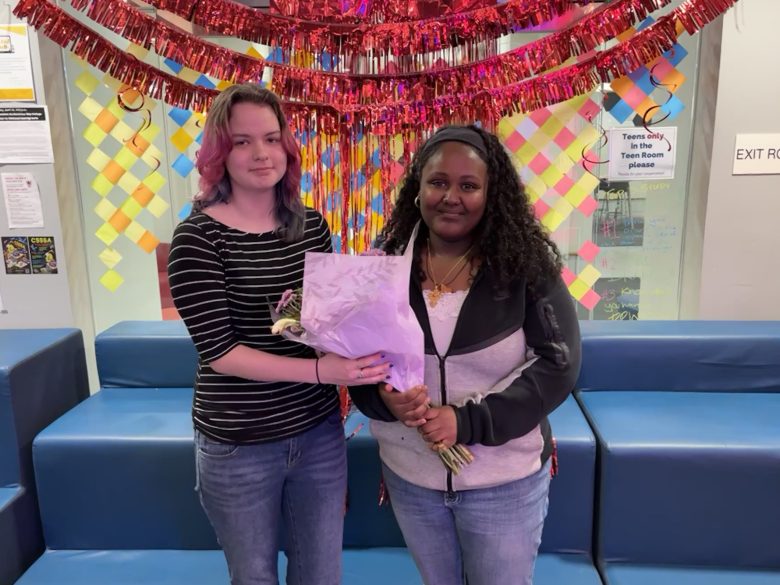
 Youth Poet Laureate Nolawit Ketema (right) and Vice Youth Poet Laureate Rachel Dunn after the award ceremony Tuesday at the Berkeley Public Library’s Central Branch. Credit: Zac Farber/Berkeleyside
Berkeley has crowned a new poet laureate and two new youth poet laureates.
Hanan Masri, a kindergarten teacher at Berkwood Hedge School, is the city’s third poet laureate, succeeding Aya de León, who finished serving her two-year term in December.
As poet laureate, Masri will serve as a “creative ambassador of the city,” according to the city’s website, and will have a variety of official duties, including composing an original poem inspired by or related to Berkeley, coordinating public readings and reciting poetry at city events, including those held by the Berkeley Public Library.
Masri will receive a $5,000 honorarium for her two-year term spanning 2026-27.
Scroll down to read poems by Masri, Ketema and Dunn. And read a chapbookby entrants to the youth poet laureate contest.
Masri will also serve as mentor to the newly named Youth Poet Laureate, Nolawit Ketema, a 14-year-old first-year at Berkeley High School, and the city’s new Vice Youth Poet Laureate, Rachel Dunn, 15, also a Berkeley High 9th grader.
In their official capacity, Ketema and Dunn will have the opportunity to read poetry at library events and city functions, will lead a community art project, and will take part in writing workshops across the city. They will also be eligible to enter the National Youth Poet Laureate competition.
While Berkeley’s poet laureate program is relatively new — the first laureate, Rafael González, was appointed in 2017 and the first youth laureates in 2024 — Masri said that this has long been a “city of words.”
“The spoken word and the written word is so valued around here,” she said, apparent not only in the prestige of UC Berkeley and the many writers who inhabit the city, but also the plethora of Little Free Libraries, the placards and signs you see in people’s windows or at political rallies, the Berkeley Poetry Walk in downtown Berkeley, and on and on.
“ Words are really important to the city,” she said. “ This is a city that really knows how powerful that platform is, especially given the time we are in now, to amplify our voices and to use them to promote what we know is just and right.”
Poet laureate Hanan Masri: Title will ‘place a little more fire’ around her poetry
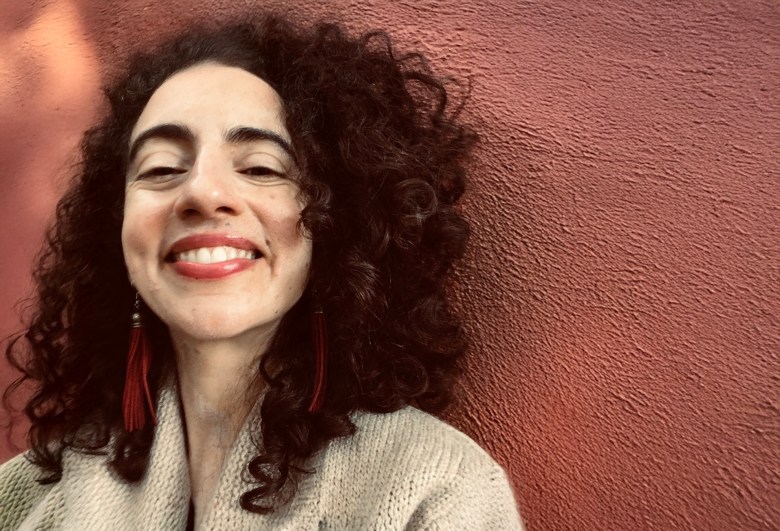 Hanan Masri. Courtesy of the poet
Hanan Masri started keeping a journal when she was 7 years old.
This was around the time she moved with her family to Miami, after spending her childhood in various locales throughout the Middle East, including Syria, Lebanon and Kuwait.
“ My first seven years of life was a lot of suitcases,” said Masri, who is of Palestinian and Lebanese descent.
She found that her journal was a place where she could “deposit all my thoughts and all these life events that were happening to me.”
She calls writing poetry “a lifesaving practice” — “a figure to hold me through the hard moments of my life.”.
Poetry “has such an abundance of support for our thoughts and ideas,” she said. “There isn’t quite a genre that can be as flexible as poetry.”
Masri’s poetry explores themes of land and ancestry and what she calls the “mitochondrial haunt” of her mother’s Palestinian heritage.
“There are things in our DNA that are only passed mother to daughter and are only passed down the matrilineal line,” she said. “And I just became really interested in great-grandmother, grandmother, mother, and then trying to make sense of it all with myself.”
Masri is looking forward to her term as poet laureate as a way to deepen her practice and to “place a little more fire” around her personal writing.
When she was 17, Masri traded the balmy shores of Miami for the cold winters of Providence, Rhode Island, where she studied American and English literature, with a focus on texts written by 20th century women of color, at Brown University. After graduating, she relocated to California as a teacher for Teach for America and taught at a variety of schools before landing at Berkwood Hedge in 2001, where she has been ever since.
Masri is also a certified herbalist and nutritionist and the co-founder of High Road Scholars, a “youth engagement business” that runs screen-free day camps for children aged 4-13, with an emphasis on nature, movement, the arts, cooking and the exploration of Indigenous cultures.
Youth laureates Nolawit Ketema and Rachel Dunn: Inspired by English teachers and TikTok
Ketema is the city’s third youth poet laureate, and was officially appointed to her one-year term at an event on Tuesday at the central library in downtown Berkeley.
“I’ve been writing for a long time but I intentionally started focusing on poetry more in eighth grade,” said the Berkeley High student.
Much of her inspiration comes from poets on social media.
“Most of my exposure [to poetry] came from TikTok,” she said. “Most likely because it was really accessible to me.”
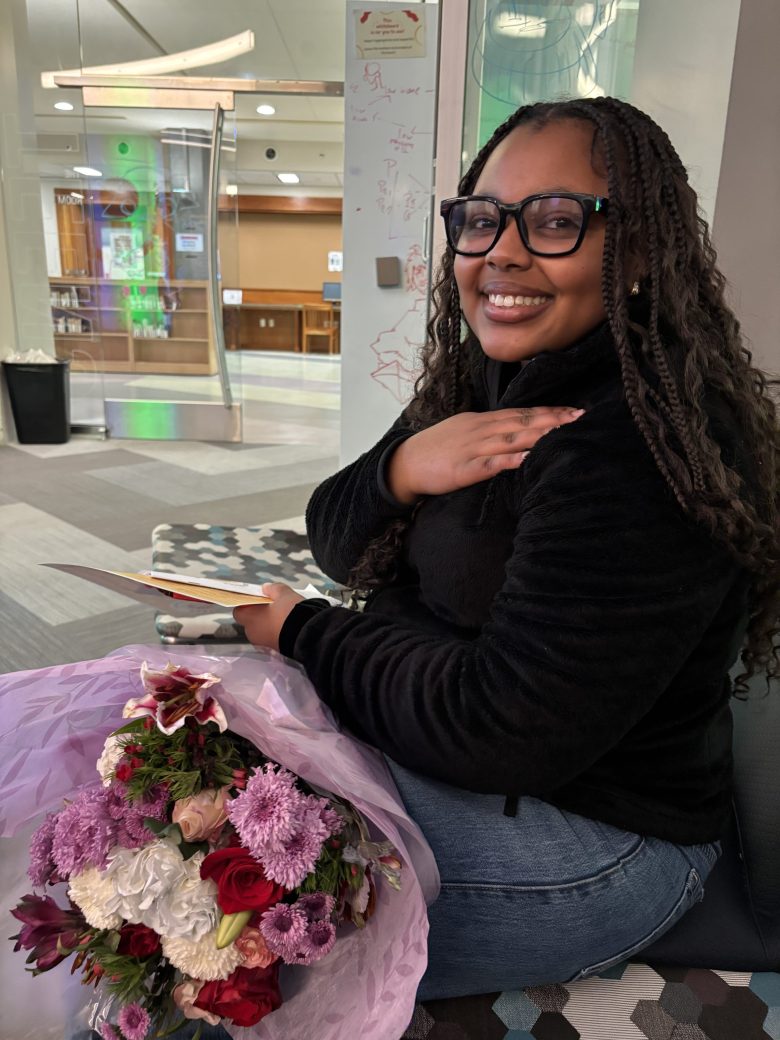 Youth Poet Laureate Nolawit Ketema’s older sister Christian cheered her on at the awards ceremony. “I’m so proud of her,” she said. “She actually didn’t want me to come. She doesn’t like reading her poems in front of me.” Credit: Zac Farber/Berkeleyside
Ketema’s work focuses on “feelings and experiences I’ve been going through,” she said, with a big emphasis on honesty.
One of the poems she included with her youth poet laureate application, “when a crow takes a bite out of my flesh,” explores these themes.
“I was thinking about how pain can become so familiar that it really starts to feel normalized,” she said about the poem, which she wrote late one night after a long battle with writer’s block. “ So writing that was trying to put that feeling into words in a way that made sense.”
As laureate, Ketema wants to create spaces where young people “ feel comfortable expressing themselves through poetry,” she said.
“ I really want to help others find their voice,” she said. “That’s what really matters to me.”
Ketema has already done this for her friend, Rachel Dunn, the new vice youth laureate. Dunn said that, when it comes to writing poetry, Ketema is “the person who has inspired me the most.”
Dunn’s first exposure to poetry was the writings of Shel Silverstein, and she said she’s been writing “sparsely” since the age of 5. But she was really motivated to write more this year by her ninth grade Berkeley High English teacher, Julie Panebianco.
As vice youth laureate, Dunn looks forward to “performing and collaborating with others,” she said.
Poems by Berkeley’s new laureates
Green
By Hanan Masri
O Berkeley
You gorgeous Boheme
with your Tibetan bling and cracked pepper fil fil falafel,
the center crispy and green ‘cause I know you got that parsley from the Arab Spring
Oakland broke my heart, Berkeley healed it.
It was here that I met her,
my heart leapt out of my chest like a hawthorn tree in winter,
we listened to Al Green,
foraged for city sorrel,
stuffed that verdant tang in dough and called it dinner
Ample make this bed
I trace my finger across this map,
past war and gardens,
azures and emerald,
From Huichin to Here,
a love note nestled between ancient humps of breast stone,
Beirut city’s Green Line,
there are no grenades,
sages, mint, thyme, marjoram,
the shepherds keep a pinch of zaatar in their pockets,
steady the nerves,
sumac brightens the blood,
the olives stain our DNA
Five hours
I’m not sure when we’ll leave this room,
all of us, midnight’s children.
“How do you make your grass?”
“Show us your W2s”
“Do you pledge allegiance to any flag with a band of green?”
In between the minutes, I think of you, Berkeley,
Your placard filled windows,
Your justice unhushed,
California poppies blooming in your front yards, don’t put you to sleep
I think of something I wish my mother had said,
as Saturn’s rings began to fade from around her neck,
“We tender rascals of women,
electric wires of green,
red splashes,
We will make our own incisions,
We will never beg for thread.
My daughter, find the loudest people in the room
and make friends with them”
when a crow takes a bite out of my flesh
By Nolawit Ketema
when a crow takes a bite out of my flesh
it does not flinch.
it knows hunger like i know grief,
a constant, gnawing thing,
never full, never satisfied.
it tears into me as if my body were soil,
as if i were made for this,
for the taking, for the losing,
for the slow unravel of all that i was
before the world taught me
that pain is patient,
that it does not need permission to stay.
i do not stop it.
i watch, numb, as it tears away pieces of me
like the world always has.
bit by bit, moment by moment,
until i am nothing but a collection of gaps,
a body shaped more by what is missing than what remains.
the crow does not ask why i do not fight.
perhaps it sees the way my hands tremble,
the way my ribs rise like broken wings,
the way my skin splits without protest.
perhaps it knows what i have always feared:
that i was never meant to keep myself whole.
the crow only does what the world has taught it to do.
it sees something broken and takes what is left,
because that is the way of things.
to strip, to consume, to leave behind only what cannot be used.
perhaps i have been hollow for so long
that i no longer know the difference between loss and relief.
perhaps i was never meant to be whole,
only something to be taken from,
a feast for whatever finds me first.
i press my fingers to the torn place,
half-expecting to find nothing at all.
but pain is proof, is it not?
a reminder that something was once there,
that something was worth taking.
maybe that was the cruelest mercy.
to be picked apart but never finished,
to be emptied but never gone.
to remain, in pieces, waiting for the next hunger
to find me again.
To Me, Too
By Rachel Dunn
O newborn bird,
Living yolk
Made of down,
What is the world
To you?
Your mother,
Made of wind
And light,
Is all the eye
Can see.
She is to me too,
As she obscures the sun
For a second
A blinding eclipse.
As the sun returns to me,
Showers me in orange light,
I too am
A living yolk.
To me too,
She is the world.
Disclosure: Berkeleyside Editor-in-Chief Zac Farber was among the judges of the youth poet laureate competition.
“*” indicates required fields