
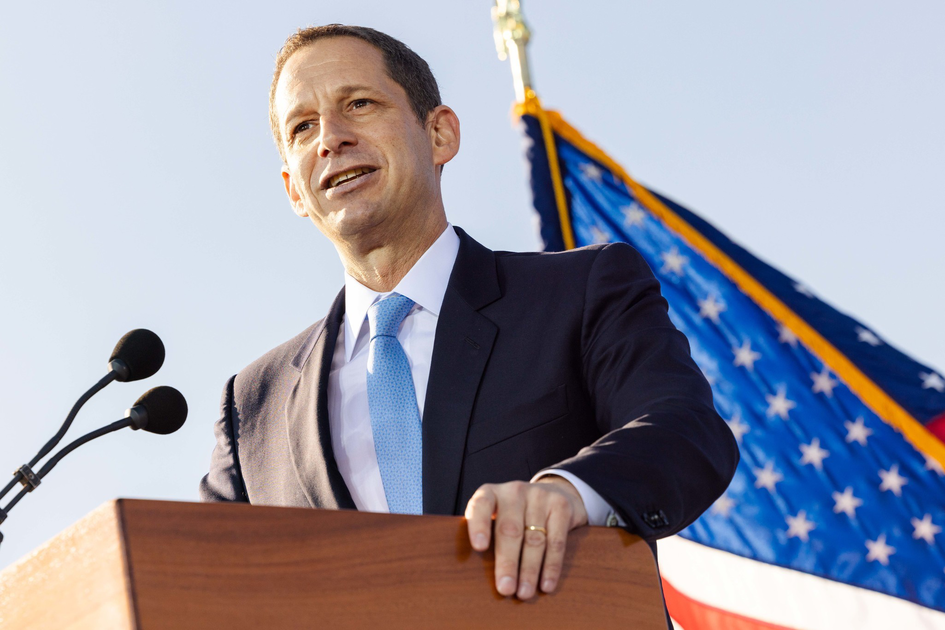

It is tempting to believe the sun always shines on Daniel Lurie.
That’s been the case, anyway, for the two biggest speeches he has given as mayor: His inaugural address a year ago on a resplendent Civic Center Plaza, and his first State of the City effort Thursday morning at a sun-drenched Angelo J. Rossi Playground in the Inner Richmond.
The mayor, a year into his life as an elected official, is improving as a public speaker. Last week, I heard him at his wittiest, off-the-cuff best in his remarks at a retirement party for San Francisco parks czar Phil Ginsburg. Still, the mayor was outshone by two predecessors who spoke after him: London Breed, a flashier and more theatrical speaker, and Willie Brown, whose nimble physicality and fluidity at nearly 92 put him in a class of one, at least on this coast.
But on Thursday, Lurie had the stage to himself, and he rose to the occasion. His language was workmanlike rather than magisterial, a good fit for the sporty venue. “As a kid, I played soccer and baseball here,” he said, pickleballs thwacking in the distance. “As a dad, I’ve watched my son do the same.”
Many listeners, having spent countless hours attending youth sports games and practices at Rossi, nodded their middle-aged heads in agreement.
The mayor’s oratory was no match for the soaring words of his New York City counterpart, Zohran Mamdani, who, at his Jan. 1 inauguration, went full 2008 Obama: “I stand alongside countless … New Yorkers watching from cramped kitchens in Flushing and barbershops in East New York, from cellphones propped against the dashboards of parked taxi cabs at LaGuardia, from hospitals in Mott Haven and libraries in El Barrio that have too long known only neglect. I stand alongside construction workers in steel-toed boots and halal cart vendors whose knees ache from working all day.”
Now consider Lurie’s roll call, uttered two weeks later: “Our future depends on the servers in our restaurants who are working double shifts, the teachers going to bat every day for our kids while raising their own, the young families early in their careers, and the artists and immigrants who make San Francisco the greatest city in the world.”
Mamdani paints a picture; Lurie takes attendance.
One of Lurie’s better lines in the 39-minute speech, ironically, was a knowing jab at Mamdani, whose affordability platform the mayor appears to be cribbing. While New York’s new mayor quickly unveiled a child-care program that will be phased in over four years, Lurie on Thursday announced a plan, taking effect this month, that will save families tens of thousands of dollars and will be financed by existing city funds.
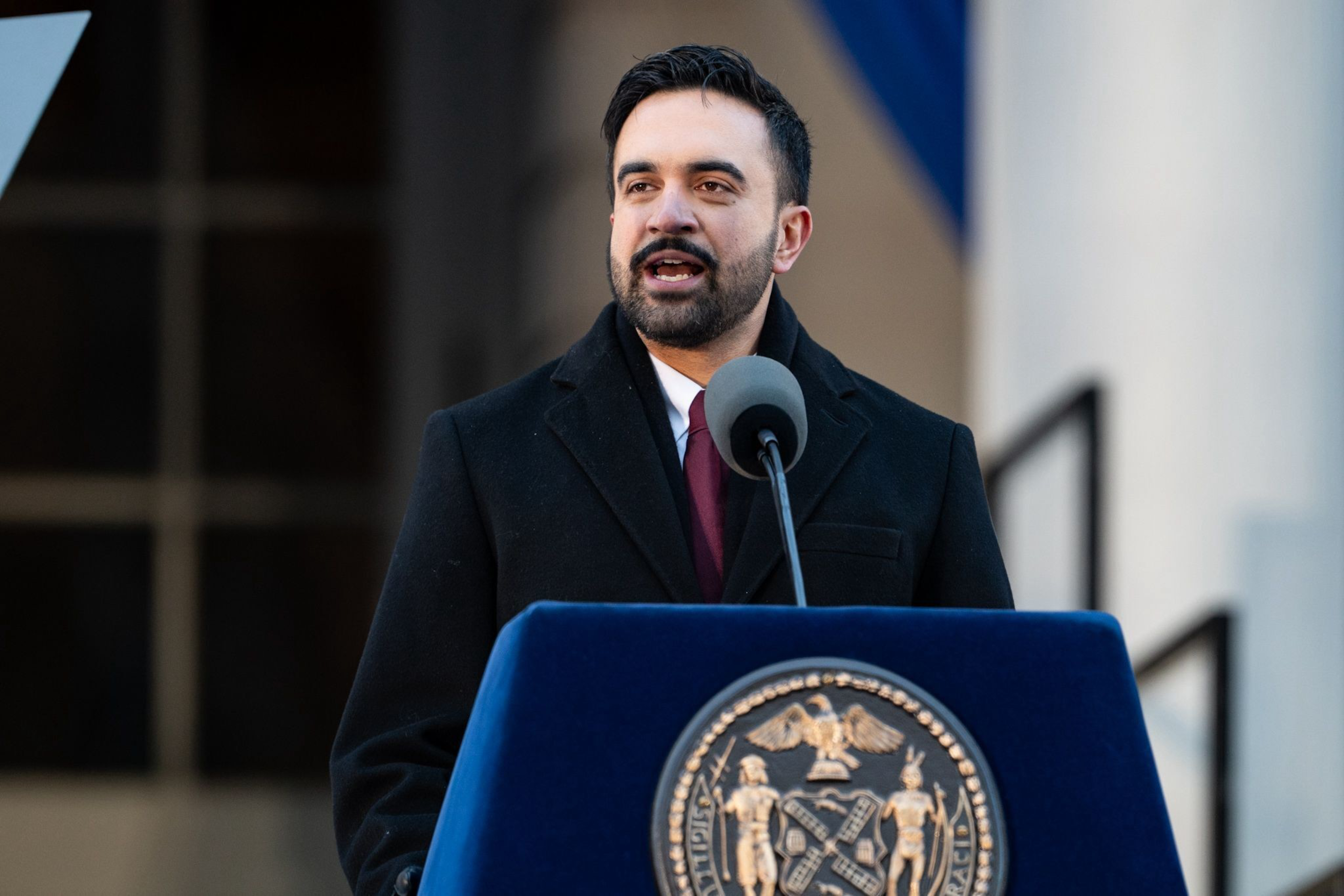 Zohran Mamdani speaks at his inauguration in New York on Jan. 1. | Source: Mostafa Bassim/Anadolu via Getty Images
“This is going to remove a huge burden for working parents,” Lurie said. “And we’re not going to take four years to roll it out. We’re going to be the first major city in the nation to actually get this done.”
Take that, Big Apple.
Less stirring but just as consequential, the mayor unveiled his plan to merge three cumbersome city agencies: the Department of Planning, Department of Building Inspection, and Permit Center. If accomplished, this joining would fulfill one of Lurie’s earliest efforts to streamline the city’s bureaucracy, hinted at in an executive directive 11 months ago.
The mayor didn’t dive into the details of what will be needed to make the merger happen. In fact, to combine Planning and DBI, he’ll need to amend the city charter, a herculean chore. Lurie winked at this challenge briefly in his speech, but for the bureaucrats in the audience, it was undoubtedly the elephant in the park.
Discussing the need to reform the city’s overly long and complicated charter, a process he and Board of Supervisors President Rafael Mandelman kicked off last month, Lurie said he would “not accept or maintain an outdated system that drives up costs and breeds dysfunction and even worse, corruption.”
Overall, Lurie’s speech was a combination victory lap and blueprint for the coming year. He began with public safety, the signature plank in his 2024 campaign platform, extolling the city’s low crime rates. He moved on to the ongoing efforts to cure the twin ills of homelessness and drug addiction, which have plagued the city for years.
He then transitioned into more comfortable terrain, noting the undeniable progress he’s made in revitalizing the city’s economy. He ticked off bustling shopping destinations like the Ferry Building and Stonestown Galleria; a “summer of music” that included wildly popular Dead & Co. concerts (cue the somber acknowledgement of Bob Weir’s death); the just-announced 1,000-student Vanderbilt University campus; and the advent of the San Francisco Downtown Development Corp., which aims to pump money into the still-ailing central business district.
This was Lurie at his cheerleading, open-for-business best — the commonsense, pro-commerce mayor who says out loud what leftist adversaries admit only under duress: that San Francisco wants tourists to spend and corporations to hire.
There was no mention of another new group, the CEO-heavy Partnership for San Francisco, which has kept a low profile — other than a conventional-wisdom-confirming poll (opens in new tab), released this week. He didn’t utter the words “Great Highway” or “Sunset Dunes.” He also didn’t reference fraught ongoing negotiations between business and labor over dueling business tax measures that could curtail the city’s economic recovery, and about which he has said precious little.
The one ballot measure to which he did give ample lip service was the parcel tax to support the city’s transit agency. “Saving Muni is non-negotiable,” he said, in some of his strongest language. “We cannot operate as a world-class city without safe, reliable, and affordable public transit.”
About the only time the mild-mannered mayor amped up his rhetoric was over his recently passed rezoning legislation. He thanked by name each of the seven supervisors who voted for his Family Zoning Plan and assailed those who “are still putting their own interests ahead of what’s good for San Francisco families by trying to shut down this plan.” He was referring to the NIMBY and tenants-rights coalition that is litigating against the zoning law. This passes for spicy in Lurie’s argot, and he made clear he is ready to fight any lingering opposition. “I will not back down,” he said.
Lurie admirably values comity, but I like the combative Lurie too. His passion for making it easier to build housing in San Francisco is sincere — as is his irritation with those who don’t share it.
Lurie’s winningest quality as mayor may be his ability to connect with everyday San Franciscans, either in person or through his wildly popular social media channels. He embraces this virtue as a mode of governing. “For me, being mayor isn’t a job you can do from behind a desk,” he said. “You can’t solve what you can’t see. You can’t fix what you don’t understand.”
At the one-year mark, Lurie clearly understands a lot.