
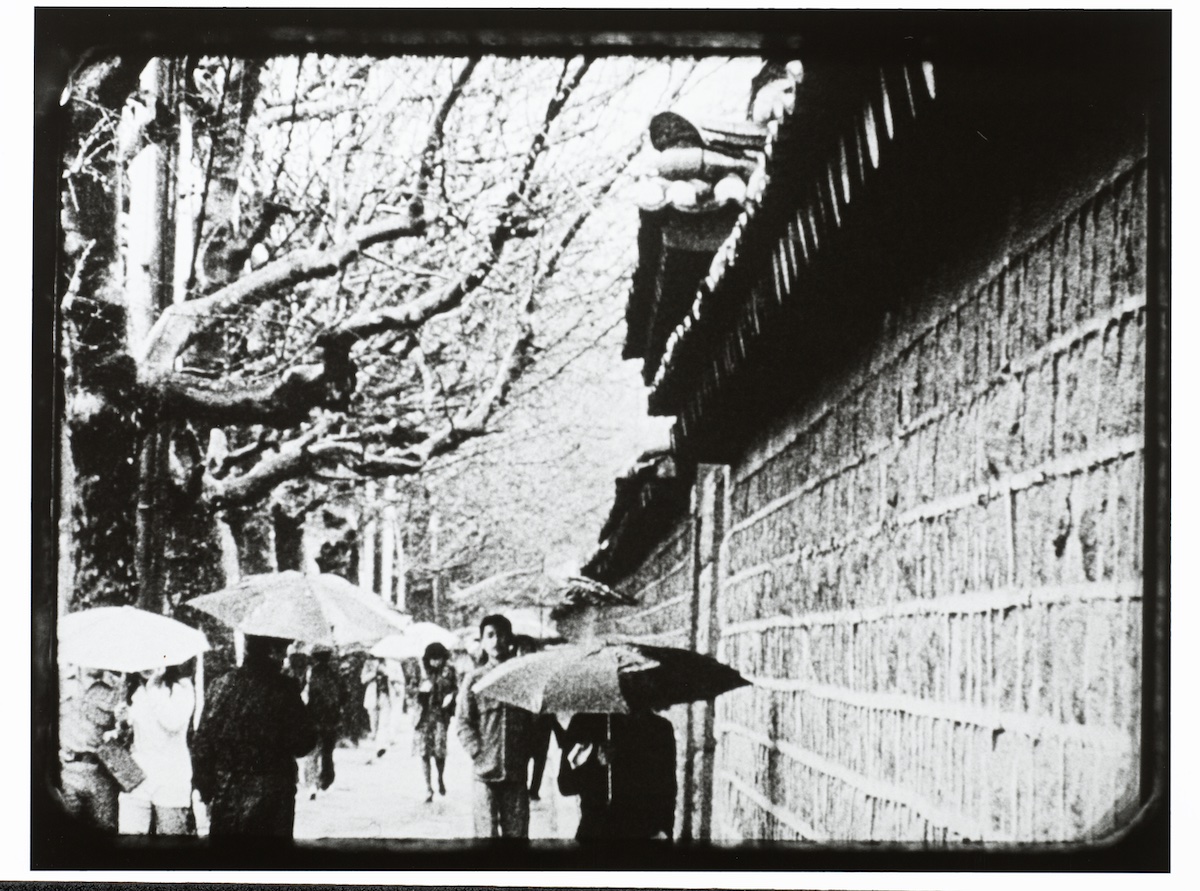
The 1960s and 1970s were heady years on the UC Berkeley campus: The university and its environs were roiled by fierce demonstrations against the Vietnam War and in support of the Free Speech Movement and the Third World Liberation Front. As a student during this transformative environment, artist Theresa Hak Kyung Cha experimented with the ideas, materials, and forms that would become the cornerstone of her rigorous, interdisciplinary practice. While many Berkeley artists have made a lasting impact on art history over the years, few have left behind a more influential legacy as Cha, despite her untimely death at the age of 31.
“Theresa Hak Kyung Cha: Multiple Offerings” at BAMPFA, 2155 Center St. Jan. 24-April 19. See website for a list of related talks and other activities.
On Jan. 24 the Berkeley Art Museum and Pacific Film Archive will launch the largest retrospective to date on Cha, shedding new light on her contributions to conceptual art, performance, film and poetry in her short but prolific career. “Theresa Hak Kyung Cha: Multiple Offerings” draws on BAMPFA’s prodigious collection of Cha’s work, as well as works by her contemporaries and peers. The retrospective also features works by younger generations of prominent artists who have cited Cha as a major influence, including Jesse Chun, L. Franklin Gilliam, Renée Green, Yong Soon Min, Na Mira, Cecilia Vicuña and Cici Wu — a vivid illustration of the late artist’s deep ongoing impact.
Born in South Korea in 1951, Cha came with her family to the Bay Area in 1964, just in time to partake in the wave of avant-garde energy spreading across the region’s art scene. Cha spent nearly a third of her life in Berkeley, where she earned multiple undergraduate and graduate degrees in art practice and comparative literature. It was as a young Berkeley artist that she first became acquainted with Bay Area visionaries like Jim Melchert, Terry Fox and Reese Williams — all of whom were breaking new ground in the emerging fields of postmodern conceptual and performance art, and whose works will also be on view in the retrospective.
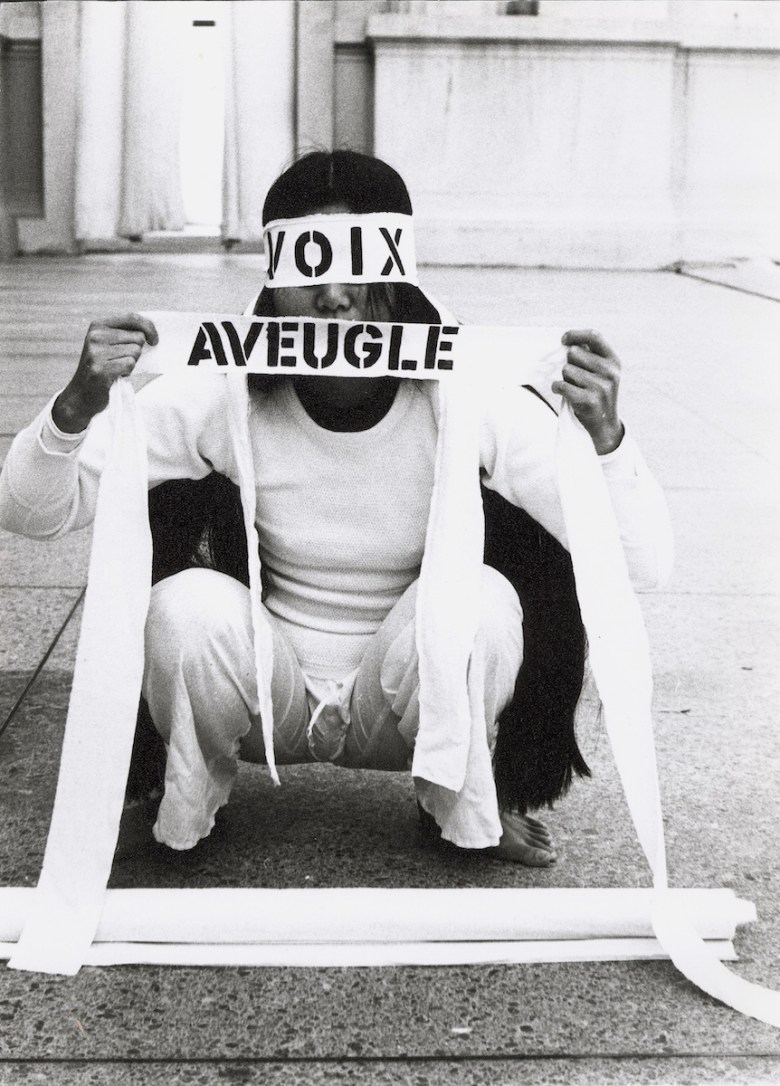 Theresa Hak Kyung Cha, “Aveugle Voix,” 1975. Documentation of performance rehearsal at Greek Theatre, University of California, Berkeley. Credit: Trip Callaghan. Gift of the Theresa Hak Kyung Cha Memorial Foundation.
Cha soon launched an ambitious artistic journey of her own, one that was deeply informed by her interest in language, memory and diasporic identity as a Korean immigrant in the United States. Her multidisciplinary practice eventually grew to include artists’ books, film, performance and poetry — culminating in her hybrid novel-poem “Dictée,” an ambitious literary work published just a few weeks before her death in 1982.
The exhibition, “Multiple Offerings,” which is titled after a phrase Cha used to describe her open-ended approach to making art, will feature more than 100 of her works and related ephemera, including early experiments with ceramics and fiber that have never been publicly exhibited. For the first time in 25 years, viewers will be able to see the full extent of the artist’s multidisciplinary collection and archive, which is held by the museum.
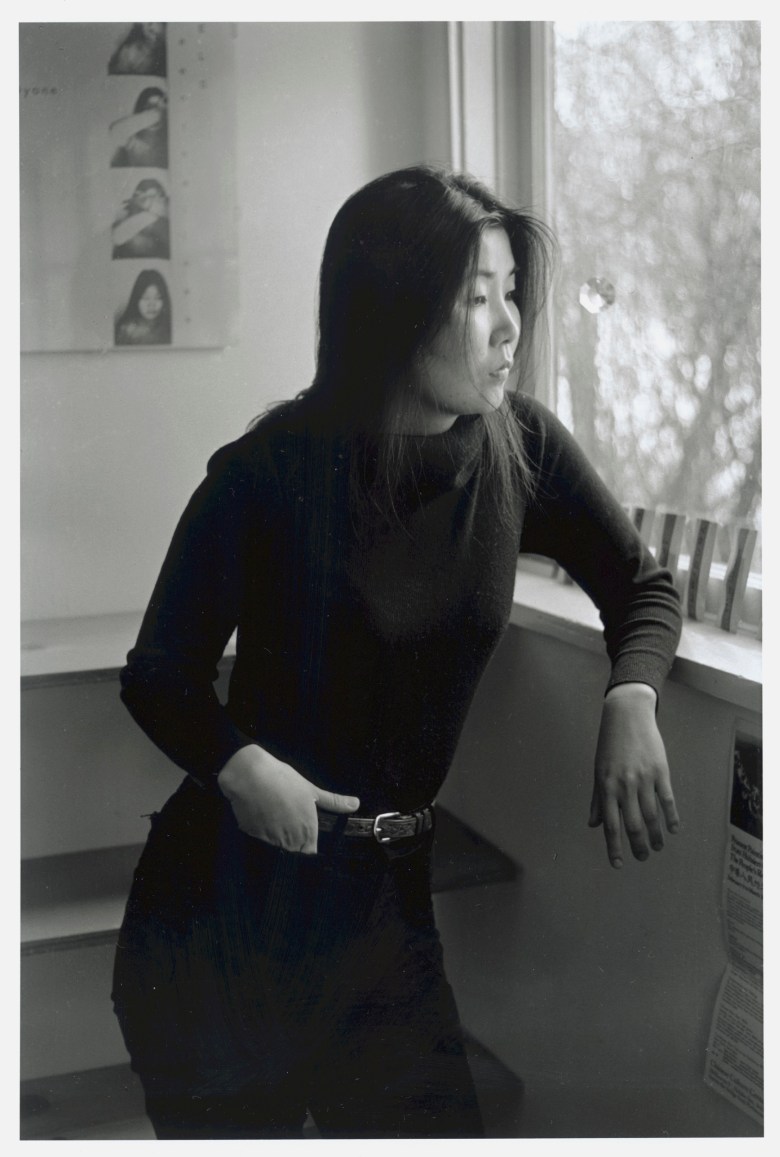 Theresa Hak Kyung Cha in 1979. Credit: James H. Cha. Gift of the Theresa Hak Kyung Cha Memorial Foundation.
BAMPFA will also present a robust roster of public programs to deepen public understanding of Cha’s legacy. Offerings include a complementary film series showcasing Cha’s own films in their original formats, as well as works by filmmakers from whom she drew inspiration; a day-long academic symposium of emerging Cha scholars; a live performance by artist Jesse Chun; a reading and conversation between poets and scholars Cathy Park Hong, Brandon Shimoda and Divya Victor; and a collective marathon reading of “Dictée,” Cha’s groundbreaking literary work. In addition, BAMPFA is publishing the first museum monograph on Cha in 25 years, featuring new scholarly essays and a roundtable discussion with artists Cici Wu and Na Mira. The catalogue is edited by BAMPFA Senior Curator Victoria Sung, who curated the retrospective with Curatorial Associate Tausif Noor.
While “Multiple Offerings” will travel to other cities after leaving BAMPFA, it’s an exhibition that could only have originated in the Bay Area — and not just because of Cha’s deep roots in Berkeley. As a UC Berkeley student, Cha was a frequent presence at what was then called the University Art Museum (now BAMPFA), working as an art handler in the galleries and an usher at the Pacific Film Archive. Since 1992, BAMPFA has been the institutional steward of nearly all of Cha’s art and archives, which were generously donated to the museum by the Theresa Hak Kyung Cha Memorial Foundation. Today, these holdings constitute more than 75% of the research requests that the museum receives from visiting artists and scholars, a new generation now discovering Cha’s work, decades after her death.
“With this exhibition, we’re excited to raise awareness of Cha’s work and cement her place in the history of art from UC Berkeley, the Bay Area and beyond,” said Julie Rodrigues Widholm, BAMPFA’s executive director. “Cha’s rigorous examination of how identity is shaped by place, language and form continues to resonate across generations and disciplines.”
“*” indicates required fields