
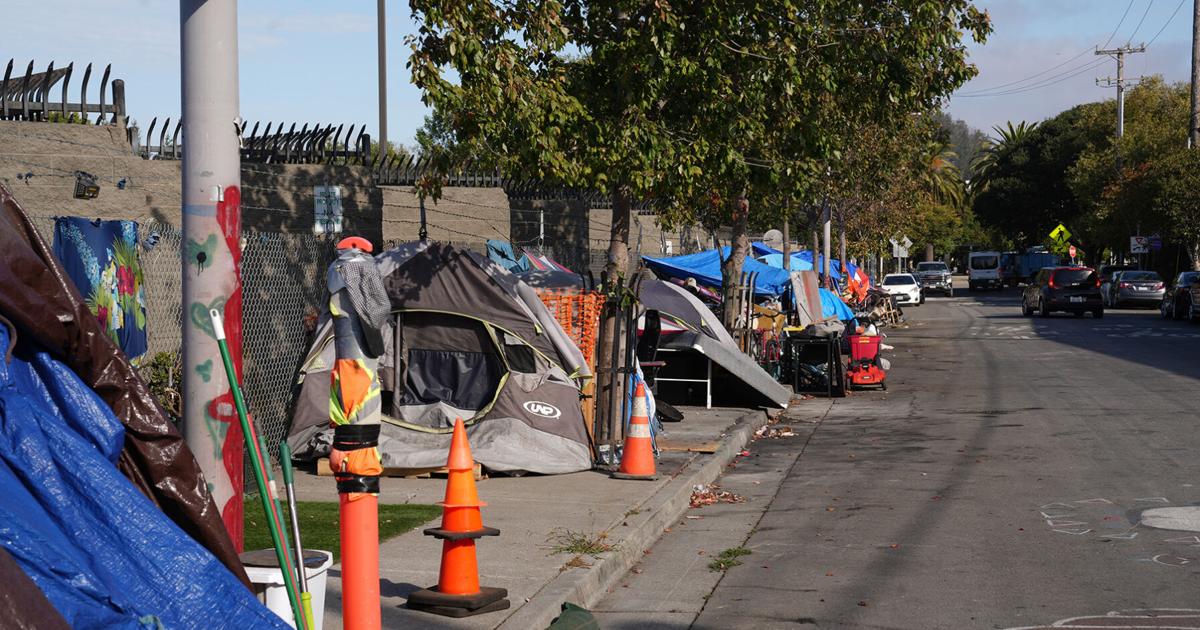
The city of Berkeley has warned residents of a leptospirosis outbreak near the Eighth Street and Harrison Street encampment. The bacterial disease has been found in numerous rats and two dogs, and can be deadly in both animals and humans.
Noemi Doohan, Berkeley’s public health officer, released a public health alert Monday that “strongly recommends” residents of the encampment relocate at least ⅓ miles away from the site due to the public health risk.
The Berkeley Homeless Union, or BHU, and the city of Berkeley have been involved in ongoing litigation over the city’s attempts to sweep the encampment. The most recent hearing was Tuesday, during which the city and BHU discussed the rat outbreak.
The city also established geographic risk zones to support the Berkeley Public Health Division’s response to the outbreak. The zone with the highest risk, called the “Red Zone,” includes areas that have evidence of leptospirosis transmission from rats to dogs, according to the public health alert. It spans seven blocks of Harrison Street, as well as parts of Eighth, Ninth and 10th streets.
“Risks are greatest for those who lack indoor shelter, functional plumbing, secure garbage, safe food storage and the ability to prevent rat infestations in their home or business,” the alert said. “Unmitigated environmental conditions are present for people living in the Harrison Street encampments.”
The second risk zone, the Yellow Zone — which includes parts of Albany and University Village — is at risk due to its proximity to the red zone but has a lower risk for those not living in an encampment, according to the alert. The alert also said encampments should not be established within the Red or Yellow Zones while the health alert is active.
The city says the cleaning period will take at least 30 days because the bacteria can live in the soil for that long. Additionally, the process of exterminating the rats takes multiple cycles of removal.
From 2020-24, Alameda County Vector Control tested rats across the county, including in Berkeley, for leptospirosis. According to a summary of the testing, all rats tested were negative for leptospira, the bacterium that causes leptospirosis.
However, according to a court document attached to the public health alert, the city decided to retest the rats near the encampment in late 2025 after a dog in the encampment tested positive for leptospirosis. “A subset of 40 rats” tested positive for “current or previous leptospirosis,” according to the document.
The document also stated that leptospirosis is typically found in communities that do not have access to “indoor and refrigerated food storage, running water and indoor plumbing” and claimed that the encampment matches these conditions.
The encampment of Eighth and Harrison streets has been the topic of an ongoing legal battle. The city’s sweep in June was halted by U.S. District Judge Edward M. Chen. In September 2025, Chen allowed a partial sweep but exempted individuals with ADA accommodations from being swept.
According to Yesica Prado, a union officer for the BHU, the injunction for residents with Americans with Disabilities Act protections remains in effect. However, the protections apply only to eight residents, rather than the initial 19 who were exempt from the sweep in September 2025.
“We don’t know where we can go next,” Prado said. “That’s why I think it’s essential for us to just find a solution, because even if we do move somewhere else, the city is just going to come to that area and then put up a new sign saying that you can’t be there.”
In November 2025, the Urban Compassion Project helped clean up trash at the encampment. According to Prado, dealing with the garbage in the encampment is a “constant battle.”
Prado alleges the city removed the dumpsters that residents used to properly dispose of trash, which she claims “has made conditions worsen, because now you have open garbage piles that keep attracting more rats.” She worries that the “framing” of the outbreak is another way the city is trying to sweep the encampment.
The city did not comment on the ongoing litigation or Prado’s claims.