
While a drought-free start for California is a win, AccuWeather’s long-range meteorologists warn it’s the ongoing snow drought that remains a concern.
Published Jan 16, 2026 11:44 AM EST
|
Updated Jan 16, 2026 11:44 AM EST
Heavy rain from a powerful atmospheric river caused rockfalls and road issues in Ventura County, California, on Dec. 24. Crews were seen clearing debris as the storm continued to soak the region.
California is the only state in the United States starting 2026 without drought or abnormally dry conditions, after a parade of atmospheric rivers delivered heavy rain and mountain snow early this winter. However, drought remains a major concern across much of the rest of the West, where snowpack levels are near record lows.
It marks the first time since 2000 that California has been completely free of at least a D1, or moderate, drought anywhere in the state. While there have been brief drought-free periods over the past 25 years, small areas of the Golden State typically remained classified as abnormally dry, the lowest category on the U.S. Drought Monitor’s five-level scale.
The U.S. Drought Monitor measures drought by combining data on rainfall, soil moisture, streamflow, snowpack and vegetation with expert input to compare current conditions to normal. It classifies dryness into five categories: abnormally dry (D0), moderate (D1), severe (D2), extreme (D3) and exceptional drought (D4), the most severe level.
U.S. drought conditions on Jan. 15, 2025, according to the U.S. Drought Monitor.
Most of California’s major reservoirs are now running about 130% of the historical average storage levels after November 2025 through January 2026 ranked as the state’s 66th wettest such period on record. Some areas received up to 18.6 inches of rain, according to AccuWeather Senior Meteorologist Chad Merrill.
Drought conditions have been gradually improving across California in recent years, especially after back-to-back stormy winters earlier this decade. In March 2024, AccuWeather Long-Range Expert Paul Pastelok said, “there can be an extension of the time without widespread drought in California even beyond early 2026.”
While rainfall has erased drought conditions in California, large portions of the West continue to feel the impacts of a decades-long snow drought that began in the early 2000s.
Pastelok said a year with “a good amount of rain with less snow is just as bad as having no snow.”
Rainwater tends to run off quickly, often failing to recharge reservoirs, springs and wells. Snowpack, however, melts gradually in spring, providing a more reliable and sustained water supply.
The ongoing snow drought in New Mexico is intensifying water supply concerns along the San Juan River and the Rio Grande. Reservoir storage for the Rio Grande system at the end of December 2025 was the fourth lowest in 45 years.
Pastelok said this winter has been too warm, resulting in more precipitation falling as rain at elevations that typically receive snow.
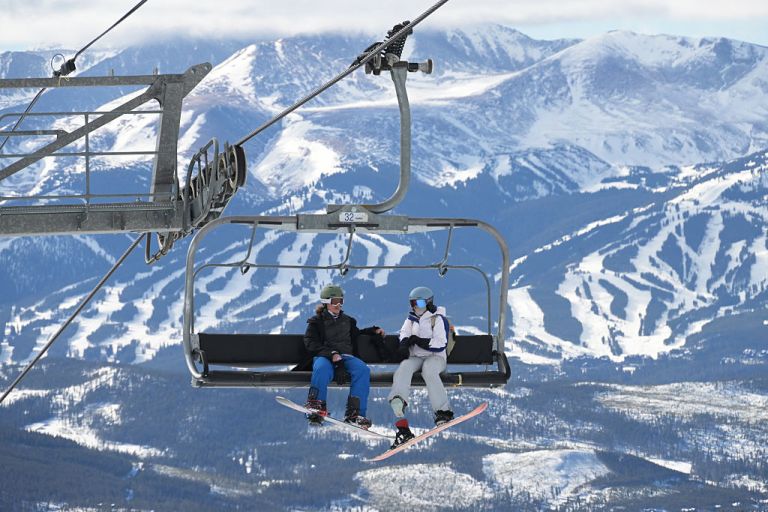
Keystone ski resort in Colorado on Tuesday, Dec. 16, 2025. Colorado ski resorts are facing sparse snow conditions early in the 2025 season. (Photo by Hyoung Chang/The Denver Post/Getty Images)
The snow drought has far-reaching impacts beyond water supply, including hydroelectric power generation. The lack of snow is also troubling for tourism with many ski resorts across the West delaying opening after a warm and wet December. Several resorts in Oregon, Utah and Colorado pushed opening dates back due to a lack of natural snow.
Ultimately, the current setup could allow moderate to severe drought to worsen and expand across the Southwest.
“This sets up for an early fire season in the Southwest this spring. Extending the fire season is just as bad as having one big fire during peak season,” Pastelok said. “The climate trend with wildfires is not so much the number, but it is the size and extension of the season, especially for the Southwest.”