
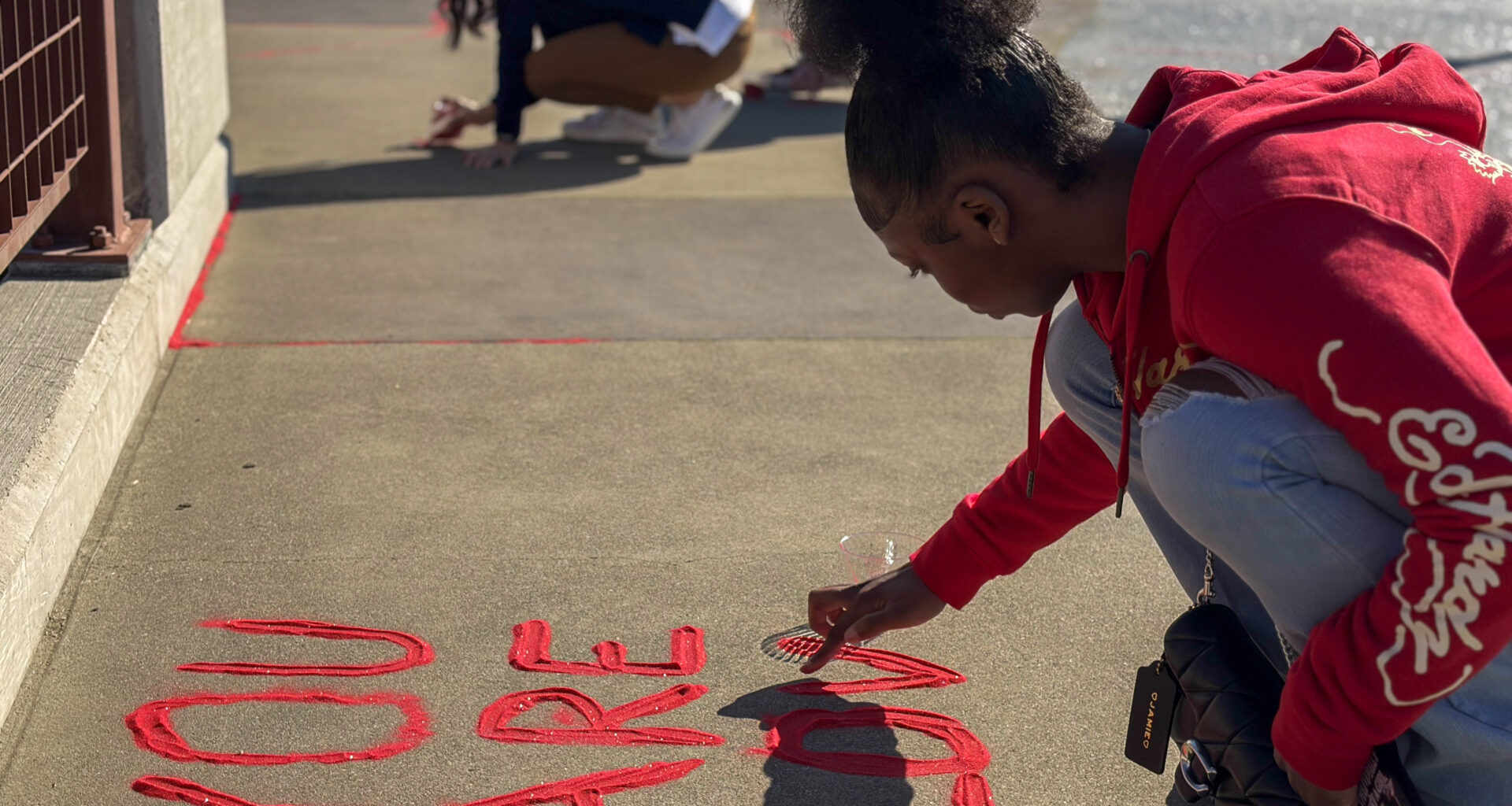
Officials, advocates and community members gathered at a pair of events Thursday to mark Human Trafficking Awareness Month and to educate the public about a crime that often goes unnoticed.
At the 16th Street light rail station in Downtown Sacramento, the Sacramento Regional Transit District unveiled a multilingual awareness campaign featuring ads on buses, trains and shelters. About 30 miles away in Roseville, the Red Sand Project drew families to Royer Park. Attendees poured red sand into sidewalk cracks to symbolize victims who fall through the cracks.
The Sacramento Regional Transit District hosted local law enforcement, elected officials and nonprofit leaders to unveil a multilingual awareness campaign.
District Attorney Thien Ho offered a sobering statistic: Between 2015 and 2020, more than 13,000 trafficking victims came through Sacramento County.
“Right now, somewhere in Sacramento County, a child is being exploited for profit,” Ho said. “This is the reality of human trafficking. It hides in plain sight. It thrives on silence.”
Sheriff Jim Cooper noted the Sacramento region ranks fourth nationally for human trafficking. The youngest victim his office has rescued was 11 years old.
The SacRT campaign features ads in multiple languages on buses, light rail vehicles and shelters. A new mural at the 16th Street station is meant to inspire action against trafficking.
Assemblywoman Maggy Krell, a former prosecutor who led statewide anti-trafficking efforts, said public transit spaces are often where trafficking intersects with everyday life.
“Every girl from this area has a story about SacRT, has a story about light rail, has a story about being solicited at a light rail station,” Krell said. “Today is a new story where we use RT to spread awareness and to truly prevent human trafficking.”
Beth Hassett, CEO of WEAVE, a nonprofit serving survivors of domestic violence, sexual assault and trafficking, urged the public to learn what trafficking looks like.
“This is not girls getting abducted in malls,” Hassett said. “They are kids in the system. They are people who are experiencing homelessness, drug addiction, family violence, where that life might look better than the life they’re in.”
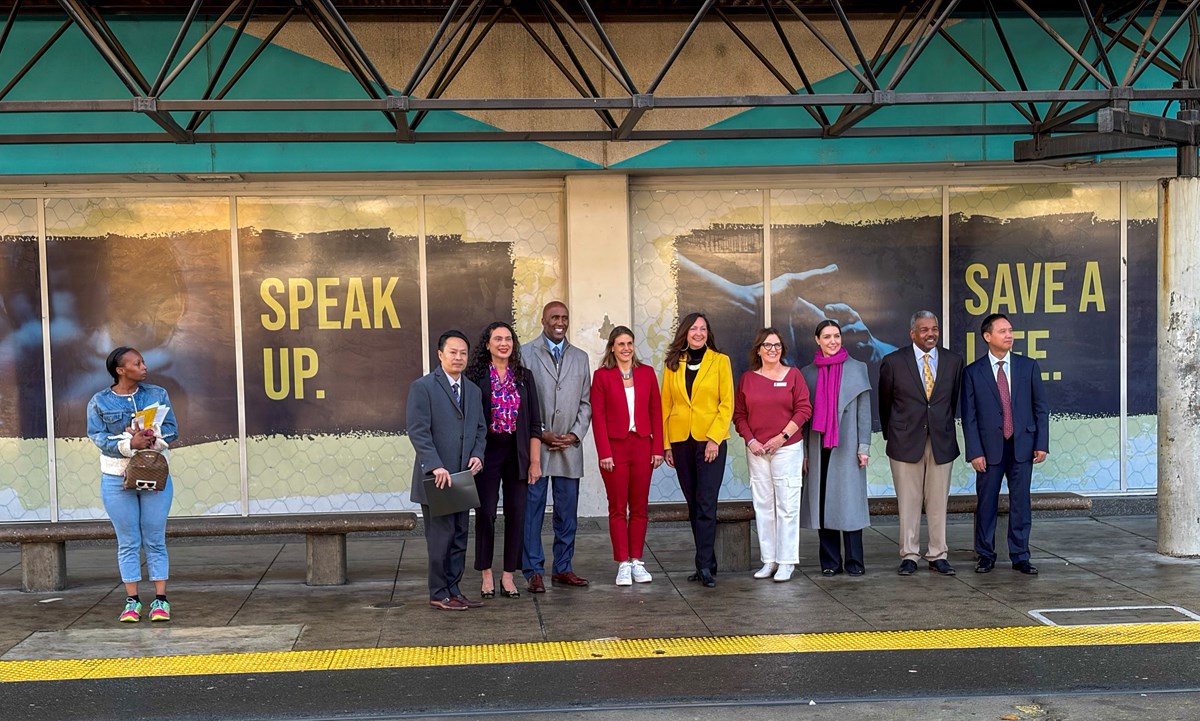 Local officials and community leaders stand in front of a new mural at Sacramento’s 16th Street light rail station during the launch of SacRT’s human trafficking awareness campaign on Jan. 15, 2026, as a rider waits nearby.Greg Micek, CapRadio
About 30 miles northeast in Placer County, the approach was hands-on. Families and community members gathered in Roseville’s Royer Park as part of the Red Sand Project. Participants filled sidewalk cracks with red sand, a visual metaphor for those who fall through the cracks.
Willow Zion helped spread the sand. She said the event felt personal.
“Coming out here really connects part of my heart with the life I used to live and the life I want to support people getting out of,” Zion said. She noted that foster care and trafficking often connect, though trafficking reaches far beyond any single population.
Stephanie Herrera from the Placer County District Attorney’s Office said the county’s location along Interstate 80 makes it a transit point for traffickers.
“People, especially in Placer County, think not here, not my community, not my kids,” Herrera said. “And it really can be anyone and anywhere.”
Herrera said many parents still associate trafficking with kidnappings. In reality it often starts with manipulation through social media and messaging apps.
“What we’re seeing is predators going online and befriending kids,” Herrera said. “They make them feel special, like a friend or a romantic partner.”
While the Sacramento and Placer County events differed in format, speakers at both emphasized that human trafficking often happens in plain sight and that small actions can make a difference.
Zion’s advice was simple.
“Step in,” she said. “Don’t stand back.”
Organizers encouraged people to trust their instincts, learn common warning signs and avoid dismissing concerns because a situation does not match common stereotypes.
Those who suspect someone may be a victim of human trafficking can contact the National Human Trafficking Hotline at 1-888-373-7888 or text “BEFREE” to 233733. The hotline operates 24 hours a day and provides confidential support and guidance.
CapRadio provides a trusted source of news because of you. As a nonprofit organization, donations from people like you sustain the journalism that allows us to discover stories that are important to our audience. If you believe in what we do and support our mission, please donate today.