
A new bill at the California State Capitol aims to tighten regulations on electric bikes as lawmakers and safety advocates raise concerns about increasingly powerful models being ridden on public streets and bike paths.Assemblymember Diane Papan, D-District 21, introduced the legislation after noticing what she describes as rapid growth in e-bike use without enough safeguards.“There’s been a great proliferation of them,” Papan said. “But without a lot of safeguards.”Many e-bikes sold today can exceed the 750-watt threshold through higher “peak wattage,” allowing for faster acceleration and top speeds while still being marketed as standard e-bikes.“That really does impact safety,” Papan said.The bill would close what Papan calls a loophole by clarifying that the 750-watt limit applies to peak motor power. Bikes that exceed that limit could be reclassified as motor-driven cycles, changing where and how they can legally be used.Riders over 16 operating bikes with motors above 750 watts would be treated more like motorcycle operators, meaning the bikes would belong on streets rather than bike lanes or shared-use paths.While the legislation does not impose new age restrictions, Papan said younger riders remain a major concern as injuries involving children continue to rise.“You have a lot of kids riding e-bikes under 16,” she said. “They’re not familiar with operating something motorized, and as a result, we’ve seen a great increase in injuries.”In a 2022 study by the Journal of the American Medical Association, e-bike injuries increased from 751 to over 23,000. At Bikes and Riders in Rocklin, Gleb Rezvukhin said the bill could help clarify what qualifies as a legal e-bike, especially as some models look like bicycles but function more like motorcycles.“There are bikes that look like regular e-bikes, but they’re very powerful,” Rezvukhin said. “They’re not really legal on the street.”Rezvukhin noted that most traditional e-bikes meet the 750-watt limit, but some high-powered models can reach speeds over 30 mph through software adjustments, even without changing the motor.“It’s not possible to make it more powerful, but you can unlock off speed,” Rezvukhin said.The bill would not ban e-bikes but aims to give consumers a clearer understanding of what they are buying and prevent powerful motorized vehicles from being mistaken for bicycles.“This isn’t to ban them,” Papan said. “It’s about making sure people know what they’re purchasing.”Parents across the state have voiced concerns, especially as children gain more independence through e-bikes, Papan said.The bill is in the early stages of the legislative process. If passed, it could change how certain e-bikes are sold, labeled, and used across California.See more coverage of top California stories here | Download our app | Subscribe to our morning newsletter | Find us on YouTube here and subscribe to our channel
, Calif. —
A new bill at the California State Capitol aims to tighten regulations on electric bikes as lawmakers and safety advocates raise concerns about increasingly powerful models being ridden on public streets and bike paths.
Assemblymember Diane Papan, D-District 21, introduced the legislation after noticing what she describes as rapid growth in e-bike use without enough safeguards.
“There’s been a great proliferation of them,” Papan said. “But without a lot of safeguards.”
Many e-bikes sold today can exceed the 750-watt threshold through higher “peak wattage,” allowing for faster acceleration and top speeds while still being marketed as standard e-bikes.
“That really does impact safety,” Papan said.
The bill would close what Papan calls a loophole by clarifying that the 750-watt limit applies to peak motor power. Bikes that exceed that limit could be reclassified as motor-driven cycles, changing where and how they can legally be used.
Riders over 16 operating bikes with motors above 750 watts would be treated more like motorcycle operators, meaning the bikes would belong on streets rather than bike lanes or shared-use paths.
While the legislation does not impose new age restrictions, Papan said younger riders remain a major concern as injuries involving children continue to rise.
“You have a lot of kids riding e-bikes under 16,” she said. “They’re not familiar with operating something motorized, and as a result, we’ve seen a great increase in injuries.”
In a 2022 study by the Journal of the American Medical Association, e-bike injuries increased from 751 to over 23,000.
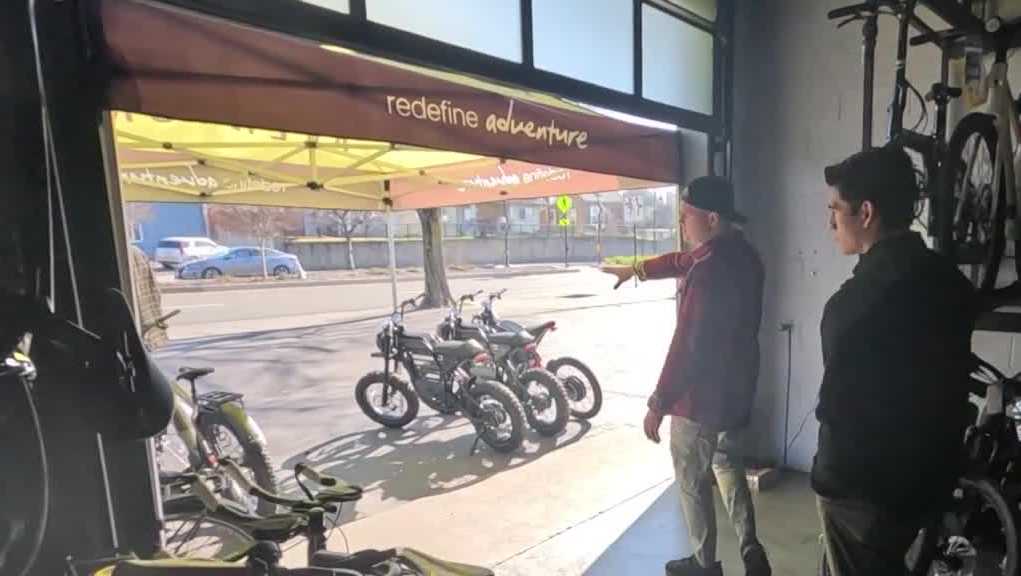
At Bikes and Riders in Rocklin, Gleb Rezvukhin said the bill could help clarify what qualifies as a legal e-bike, especially as some models look like bicycles but function more like motorcycles.
“There are bikes that look like regular e-bikes, but they’re very powerful,” Rezvukhin said. “They’re not really legal on the street.”
Rezvukhin noted that most traditional e-bikes meet the 750-watt limit, but some high-powered models can reach speeds over 30 mph through software adjustments, even without changing the motor.
“It’s not possible to make it more powerful, but you can unlock off speed,” Rezvukhin said.
The bill would not ban e-bikes but aims to give consumers a clearer understanding of what they are buying and prevent powerful motorized vehicles from being mistaken for bicycles.
“This isn’t to ban them,” Papan said. “It’s about making sure people know what they’re purchasing.”
Parents across the state have voiced concerns, especially as children gain more independence through e-bikes, Papan said.
The bill is in the early stages of the legislative process. If passed, it could change how certain e-bikes are sold, labeled, and used across California.
See more coverage of top California stories here | Download our app | Subscribe to our morning newsletter | Find us on YouTube here and subscribe to our channel