
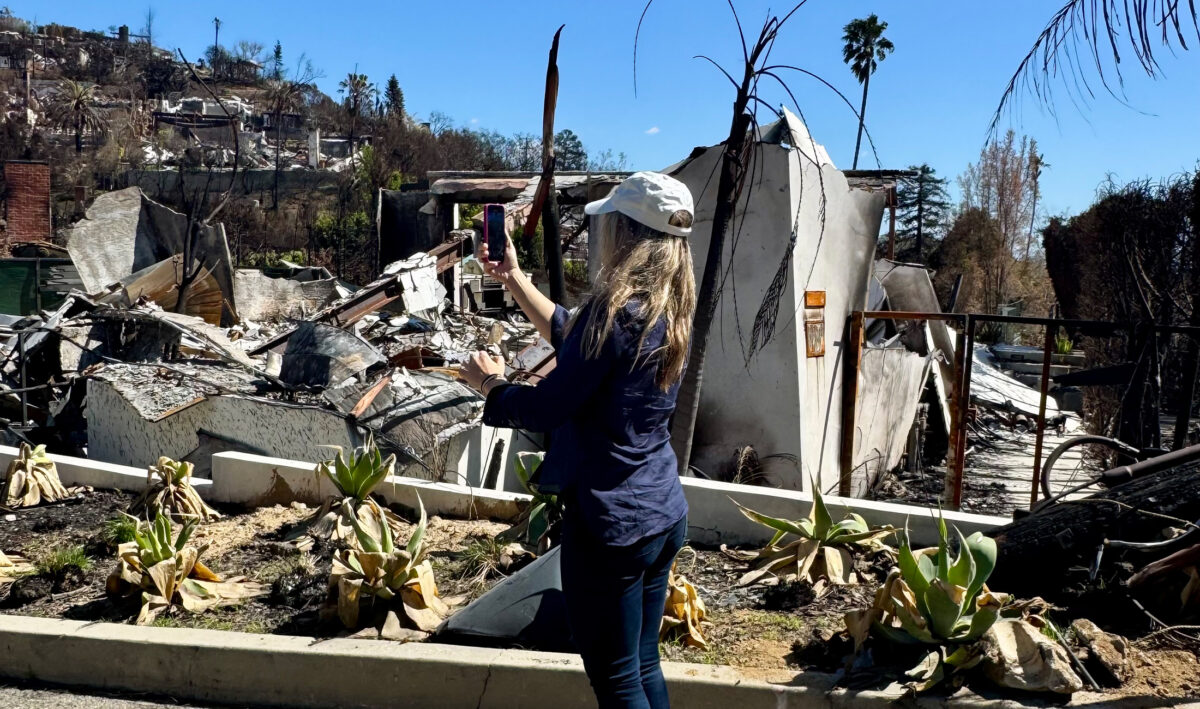
Fire. Fault lines. Freeways. Reinvention.
A year ago, I stood on my balcony and watched the city burn. Not metaphorically — literally. Wildfires moved across the hills with a terrifying calm, orange light replacing the familiar blues and greens of home. Sirens cut through the air. Ash fell like punctuation. The city paused — not because it wanted to, but because it had to.
Los Angeles is practiced at interruption. Earthquakes fracture mornings. Fires erase neighborhoods. Industries rise and collapse in decades, sometimes years. We rebuild not because we’re resilient by nature, but because there is no other option.
At the time, I thought I was watching a civic crisis. I didn’t know I was rehearsing for something far more intimate.
Months later, my own body staged an interruption. Surgery to remove a tumor imposed a quieter kind of stillness. No sirens, no smoke, but just as absolute. Time slowed. The narratives I had relied on — strength, productivity, momentum — stopped working. The body asserted limits that could not be negotiated.
What surprised me wasn’t the fear. It was the silence that followed.
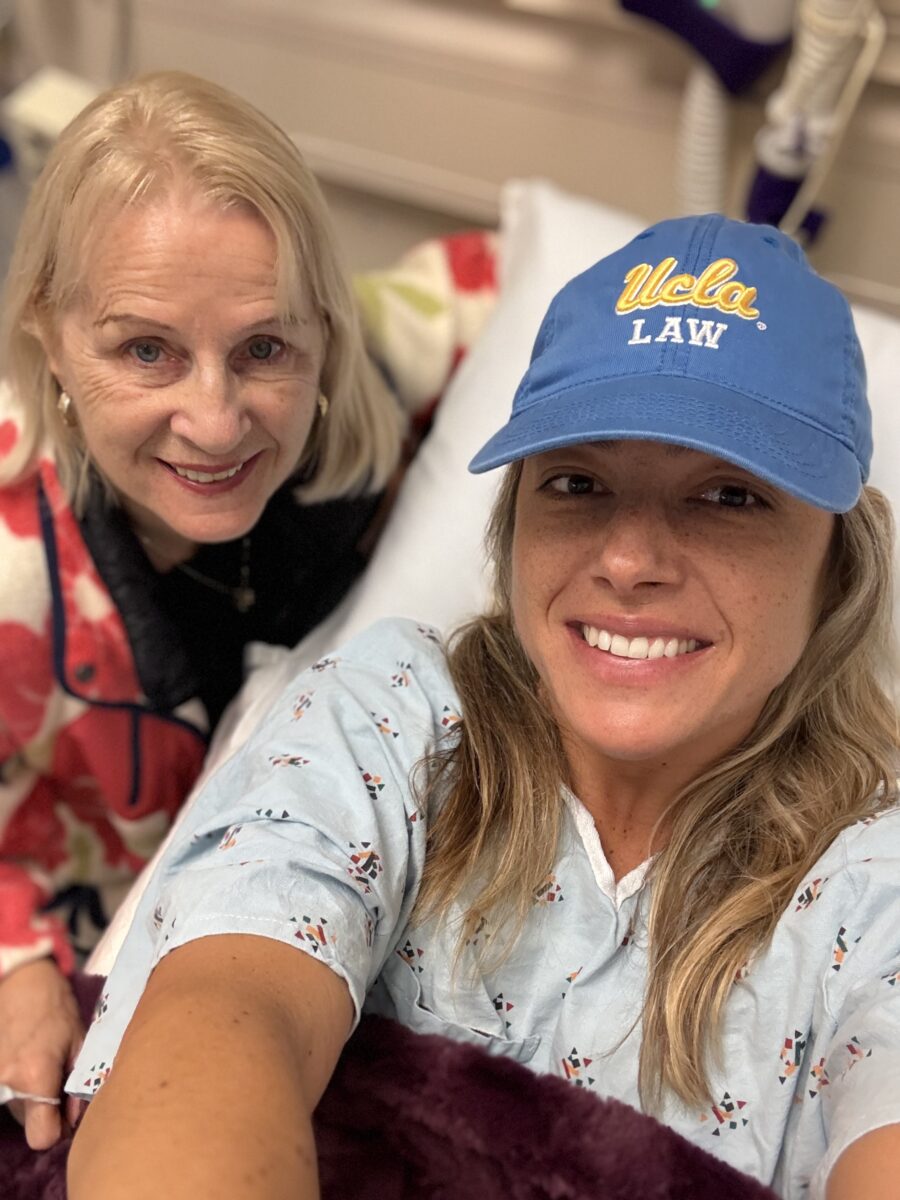 Author Michelle Edgar with her motherCredit: Michelle Edgar
We talk about resilience as if it’s a muscle you flex in public. But real resilience, the kind that lasts, is private. It happens when no one is watching. It happens when you are forced to stop.
Scroll to continue reading
Los Angeles understands this better than most places. After a disaster, there is a long middle that never makes the headlines: insurance claims filed and denied, routines reassembled, grief metabolized quietly. Rebuilding is not cinematic. It’s procedural. Psychological. Slow.
At the start of the new year, I resisted the reflex to “start over.” Instead, I gave myself something Los Angeles knows well: a container. Fifty days. Not to transform, optimize or heal on schedule, but to rewire.
The focus wasn’t on recovery as an achievement. It was recalibration from the inside out.
Attention became deliberate. Inputs narrowed. News, noise and unnecessary decisions fell away. Research shows that after prolonged stress — wildfire trauma, illness, uncertainty — the nervous system doesn’t respond to motivation; it responds to regulation. Stability first. Ambition later.
Restraint became a practice. Fewer commitments. Fewer explanations. More walking. More writing. More sleep. The work wasn’t dramatic, but it was structural, like reinforcing a foundation before rebuilding upward.
And then there was service.
For most of my life, “Live to Serve” meant contribution outward: community, work, impact. In Los Angeles, service often looks like showing up — after fires, after floods, after loss. But during those 50 days, service turned inward first.
Serving the body.
Serving clarity.
Serving the future self.
Only after that did the contribution begin to make sense again.
This is the part we rarely talk about. We celebrate bounce-backs and comebacks, but skip the invisible phase where people learn how to live differently so they don’t break the same way again.
Los Angeles offers a counter-narrative to the national obsession with reinvention. Here, rebuilding is not about erasing the past. It’s about accommodating reality, new fault lines, new limits, new truths. Homes are rebuilt with fire-resistant materials. Systems are redesigned. Lives adjust.
There is evidence behind this instinct. Behavioral science shows that lasting change doesn’t come from willpower spikes in January. It comes from constraint, consistency and environments that support regulation. Trauma research tells us that meaning-making, not motivation, is what allows people to move forward after disruption.
In Los Angeles, we practice meaning-making whether we call it that or not. We learn to live with what has changed.
The silver lining of interruption isn’t that it makes us stronger. It’s that it makes us honest. Honest about capacity. Honest about pace. Honest about what can no longer be sustained.
A year after watching the city burn, I understood something I hadn’t before: interruption isn’t the enemy of a good life. Avoiding its lessons is.
“Interruption isn’t the enemy of a good life. Avoiding its lessons is.”
Rewiring doesn’t announce itself. It doesn’t come with before-and-after photos. It happens quietly, beneath the surface, while the world urges you to move on.
But when you do re-emerge steadier, clearer and less performative, you realize something profound: you didn’t lose time. You gained alignment.
Los Angeles doesn’t rebuild to become what it was. It rebuilds to survive what comes next.
So do we.
“Live to Serve” is not a slogan. It’s an ethic that begins internally, especially after interruption. Service without self-stewardship collapses. Impact without regulation burns out.
This city knows that. Its people know that.
And maybe that’s the lesson worth carrying into a new year. Not how to start over, but how to rebuild with intention when life forces you to stop.
Michelle Edgar is a Los Angeles–based visionary executive, legal strategist and cultural architect currently serving as Strategy Lead at Venbrook Insurance and as an ambassador for Steadfast LA, supporting long-term recovery and rebuilding efforts across the region. A graduate of UCLA Law’s Master of Legal Studies program, she’s held leadership roles at ICM Partners, The SpringHill Company, Epic Records, Warner Bros. and Compton Unified School District. She’s the founder of Edgar Talent Agency, and her work centers on the philosophy “Live to Serve.” She’s also the founder and CEO of Community Collective, a next-generation business advocacy organization focused on connecting culture, commerce and civic impact to support inclusive economic growth across California.