
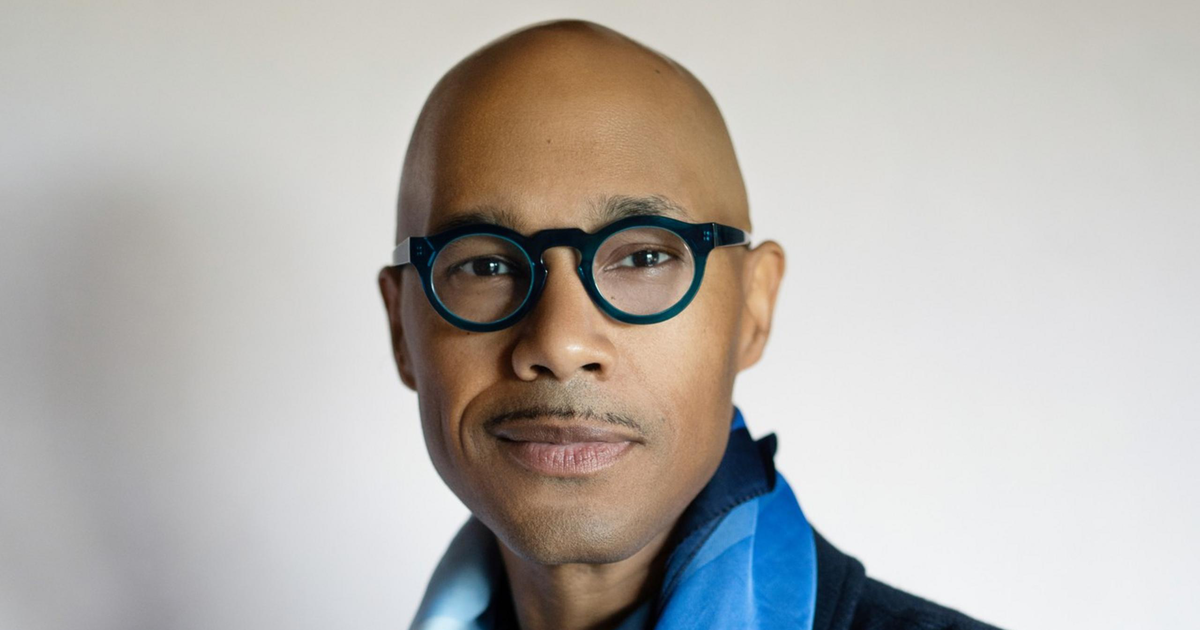
David Howse arrived at California College of the Arts in late 2023, a precarious moment. As the 10th president, he was inheriting a school with $15 million in institutional debt, declining enrollment, recent layoffs, and an arts community — and education system — still reeling from the pandemic. Despite these woes, the Oakland-based school was embarking on an ambitious gambit for relevancy: a new $123 million campus in San Francisco, paid for primarily by private donors.
On Tuesday, Howse announced that at the end of the 2026-27 school year, CCA will close after 119 years, handing the keys to its San Francisco campus and original Oakland property over to Vanderbilt University, the prestigious Nashville college.
Much is unknown about the future of CCA and its community of faculty, students, and alumni, but no current faculty members are guaranteed jobs under the new administration.
The Vanderbilt deal — the terms of which were not made public — was not without internal controversy. Although the board voted unanimously to move forward with the acquisition, Stanlee Gatti, the designer who founded the FOG Design+Art Fair and has been on CCA’s board since 2016, resigned in protest. Two other board members also resigned: Lorna Meyer, who served as chair of the executive committee, and Carina Wong. Meyer told The Standard she resigned for health reasons; Wong did not respond to requests for comment.
Howse has a buttoned-up demeanor, and his tone is earnest and academic, in contrast to the panache of many art-world leaders. In our 29-minute interview, he mentioned honoring CCA’s legacy eight times but was cagey on specifics, citing either the privacy of the acquisition’s terms or, it seemed, using the phrase as a crutch. Prior to joining CCA, he spent eight years in administration at Emerson College, where he rose through the ranks, in part due to his prolific fundraising efforts, to vice president of the office of the arts and executive director of ArtsEmerson.
The Standard spoke with Howse on Wednesday to understand what led to the acquisition, how it was brokered, and what lies ahead for the institution.
This conversation has been edited for length and clarity.
There’s been a lot of press over the last 24 hours. Is there anything you want to make clear right off the bat?
I recognize the weight of this moment and how it’s landing on us all. I’m very grateful that there’s a path forward to continue art and design education in San Francisco, and I’m super grateful that the CCA legacy will be upheld and honored in a meaningful way. I think the response we’re seeing from the community is because of people’s deep love for this institution and what it has represented for the city and beyond. As we’ve approached this difficult decision, it’s been with the spirit of honoring all those who’ve come through these doors and through these studios.
What can you tell me about the financial state of CCA when you came into your role?
When I arrived just two years ago, almost to the date, there were a lot of positive things happening. We were on the brink of opening [the San Francisco] building, and I learned soon after that that CCA had a bit of a structural deficit. There had been several years of declining enrollment. There had been layoffs prior to my arrival, so the college had gone through some financial challenges. Knowing all of that, I dug in to address those challenges head-on. It’s in that spirit that I took the mantle, working very diligently with the team under extraordinary circumstances to find the most viable pathway for the institution.
Last year, CCA received $22.5 million in private donations, which was matched by the Jen-Hsun and Lori Huang Foundation, owned by the Nvidia CEO, as well as a controversial $20 million grant from the state. This was billed as a lifeline. What happened?
At that point, we were laser-focused on independence and financial sustainability and began to pivot, looking at consolidation of programming and recovery strategies within the institution. But the world was happening at the time. International students were being impacted by the [Trump] administration’s decisions. We began to enter into late summer and early fall, seeing that our enrollment was continuing to decline. The board realized that in order to continue into that next academic year, we would need another influx of fundraising, and we had to make a difficult decision around the most viable path for continuity. What I would say is the funds that we raised in January and February were critical in allowing us to figure out if there was a pathway for independence. Once we got to the point where we couldn’t figure it out, it actually created time for us to help write our own future, versus our future happening to us.
What did the deficit look like at the time of those donations in February, and what was it set to look like this year?
At the time of those fundraising efforts, the budget deficit was $20 million to $25 million. This year, it was around the same. We would have needed to raise another significant amount of money to ensure that we could complete the next academic year.
After the Huang donation, CCA announced the CCA-NVIDIA Incubator for Creative Intelligence (opens in new tab). Is that going to move forward under Vanderbilt?
We will be meeting with Vanderbilt to talk about our programs, our faculty, our students, and our legacy. But once we close, it will be Vanderbilt’s decision. Our hope is that there will be continuity, but those decisions are solely theirs.
Is it the same for staff? Is anyone guaranteed a job moving forward?
There are no guarantees. There will be a process for our staff and faculty to apply to Vanderbilt, and we will be learning more about that in the coming weeks.
 California College of the Arts opened a $123 million campus in San Francisco in 2024. | Source: California College of the Arts
Is there a world in which this acquisition was avoidable?
The board explored every possible avenue. We went through very thoughtful deliberations. We had significant budget cuts, and we explored real estate sales. We looked at all kinds of partnerships. Had student enrollment turned around faster, there may have been a viable path. If we were able to raise another significant amount of money, there would have been a viable path. But again, our focus was trying to figure out the most sustainable way of ensuring that art and design education continued, and how to honor this legacy.
Multiple sources close to the deal told me it came down to three institutions: Vanderbilt, cloaked by the codename “Bluebird”; Arizona State University; and a third, unnamed institution. Walk me through the timeline of how and when Vanderbilt sealed the deal.
At the end of summer, it was clear to us that a standalone solution was no longer viable.
There were multiple institutions we were in conversation with across the country, trying to figure out what was the most suitable fit for what we were looking for: a continuation of art and design education, honoring our legacy, and creating possible pathways for our faculty and students. We entered an exclusive relationship with Vanderbilt in the fall. Vanderbilt emerged as a very likely partner because of their commitment to art and design education in the city of San Francisco, their understanding of the legacy of this institution, and their willingness to honor that in their new institution that they will bring in. It was through a pretty diligent process that they emerged as a very appropriate and very strong partner for us.
Have you been in contact with Jensen Huang or Gov. Gavin Newsom about the deal?
We have been in regular conversations with the [Huang] foundation and the Governor’s office, and they’ve been very critical thought partners with us as we’ve navigated this and have provided support in thinking through how this may play out. We have been in touch with the governor’s office, and we’ll continue to keep in conversation with him as we go through this transition.
But have you spoken directly with either since the announcement?
No.
Some fear the takeover could mimic what happened at Mills College, where the arts programs were gutted after a merger with Northeastern University, another prestigious, out-of-state school. What made you and the board confident that this wouldn’t be the case with Vanderbilt?
This is a slightly different story from Mills. What I can say is that Vanderbilt has agreed to the continuity of art and design education. We were looking for a partner who was not trying to abandon that commitment but really lean into it, so I feel strongly that will happen. Their interest is in sustaining the legacy of CCA through what will be called “the CCA Institute at Vanderbilt,” which will house our Wattis Institute and our archives and records, among other things.
According to sources close to the deal, Vanderbilt signed a 90-page letter of intent, a nonbinding document outlining its intentions to steward CCA’s legacy. Did the university sign binding stewardship agreements?
There’s a definitive agreement where these things are a bit more binding. I remind everyone that the announcement is an important milestone along this journey, but we’ve got a long way to go.
What can you tell us about these binding stewardship agreements?
I’m not at liberty to get into the details of the transaction.
Will they ever be available?
I’m not clear on that.
Is it solely up to Vanderbilt to check itself on promises of stewardship?
This is a partnership that we’re working through together, so there is a level of accountability that is embedded into the agreements. But there are other regulatory thresholds and accreditation thresholds that actually help us understand where those guardrails are to get to this end goal.
The CCA board voted unanimously last week to accept this acquisition. Was everyone eager about the decision?
I would say that the board was resolved. I think we explored every possibility, which is their fiduciary responsibility. This was the pathway that emerged as the most viable one. But this is not an easy decision, and there was thoughtful conversation, deliberation, and, not to speak for the board, there is gratitude that we were able to find a path forward for our design, education, and the legacy of the institution.
What will be your role at CCA at Vanderbilt?
My hands have been full on this transaction, but there are conversations around continuity to ensure the stewardship of the legacy. That is really secondary to the topic at hand, which is my goal to shepherd this transition through to the end. Nothing has been settled on what that actually looks like.