
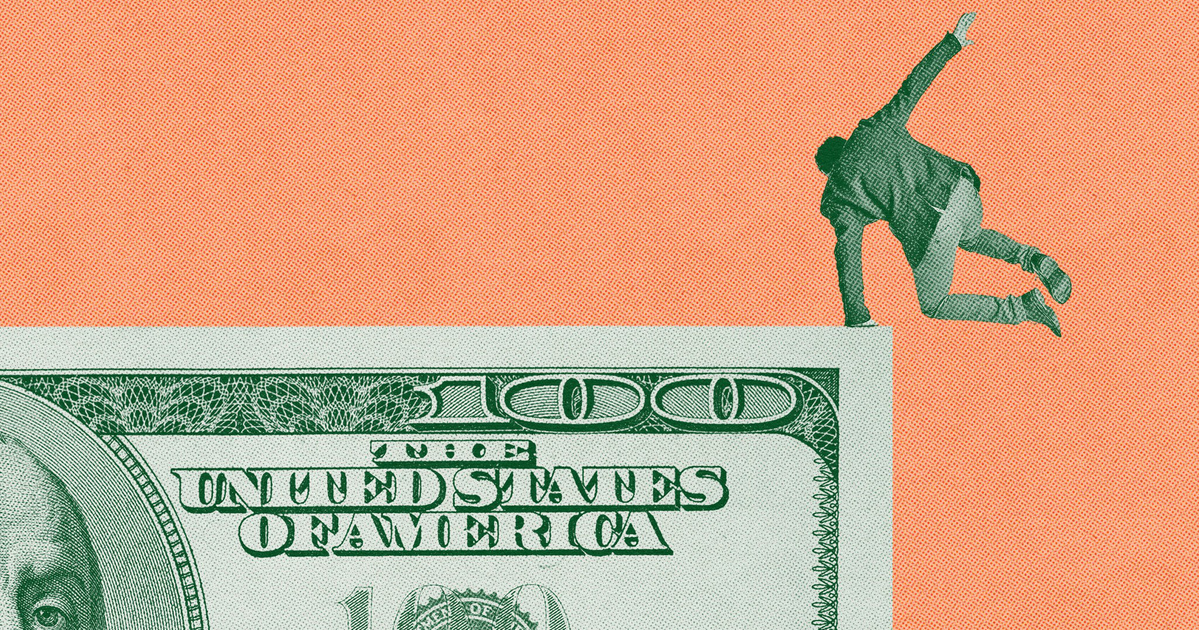
Billionaires aren’t the only people second-guessing their California loyalties over the proposed “billionaire tax.” Entrepreneurs with fewer commas in their net worth are also considering leaving the state, as the risks of the proposed ballot initiative start to come into focus. Should their contingency plans lead to moving vans, it could threaten Silicon Valley’s role as the epicenter of innovation.
“Everyone’s in a panic,” said Brianne Kimmel, founder of San Francisco-based Worklife Ventures. Kimmel, who has invested in nearly 80 startups, said the majority of her portfolio companies based in California have begun drafting contingency plans to leave the state in the event the ballot measure passes.
“This affects anyone who has taken a chance on an early-stage company in exchange for equity,” Kimmel said, adding that the tax “would be completely detrimental for San Francisco itself.”
In recent days, a new phrase has begun circulating in tech circles: “Leave before the B (opens in new tab).” The mantra suggests that startup founders decamp from California before their company raises a Series B funding round, a milestone that can give them an on-paper net worth of billions, even if that wealth remains locked in illiquid equity. It’s one of several signs that the backlash to the proposed tax has spilled over from the intended target of billionaires living in California to a whole sector of entrepreneurs and investors whose confidence in the state as the best place to build tech companies has come into question.
The proposal, sponsored by Service Employees International Union–United Healthcare Workers West, would impose a 5% tax on the net worth of California residents with at least $1 billion, including those whose wealth is largely tied up in private companies. Billionaires can also opt to pay about 1% annually over five years.
The tax is no sure thing. Organizers need to gather nearly 900,000 signatures to place the measure on the November ballot; then, it would need to be approved by 50% of California voters. If it’s approved (and overcomes the inevitable legal challenges), the assessment could raise about $100 billion for state-funded healthcare.
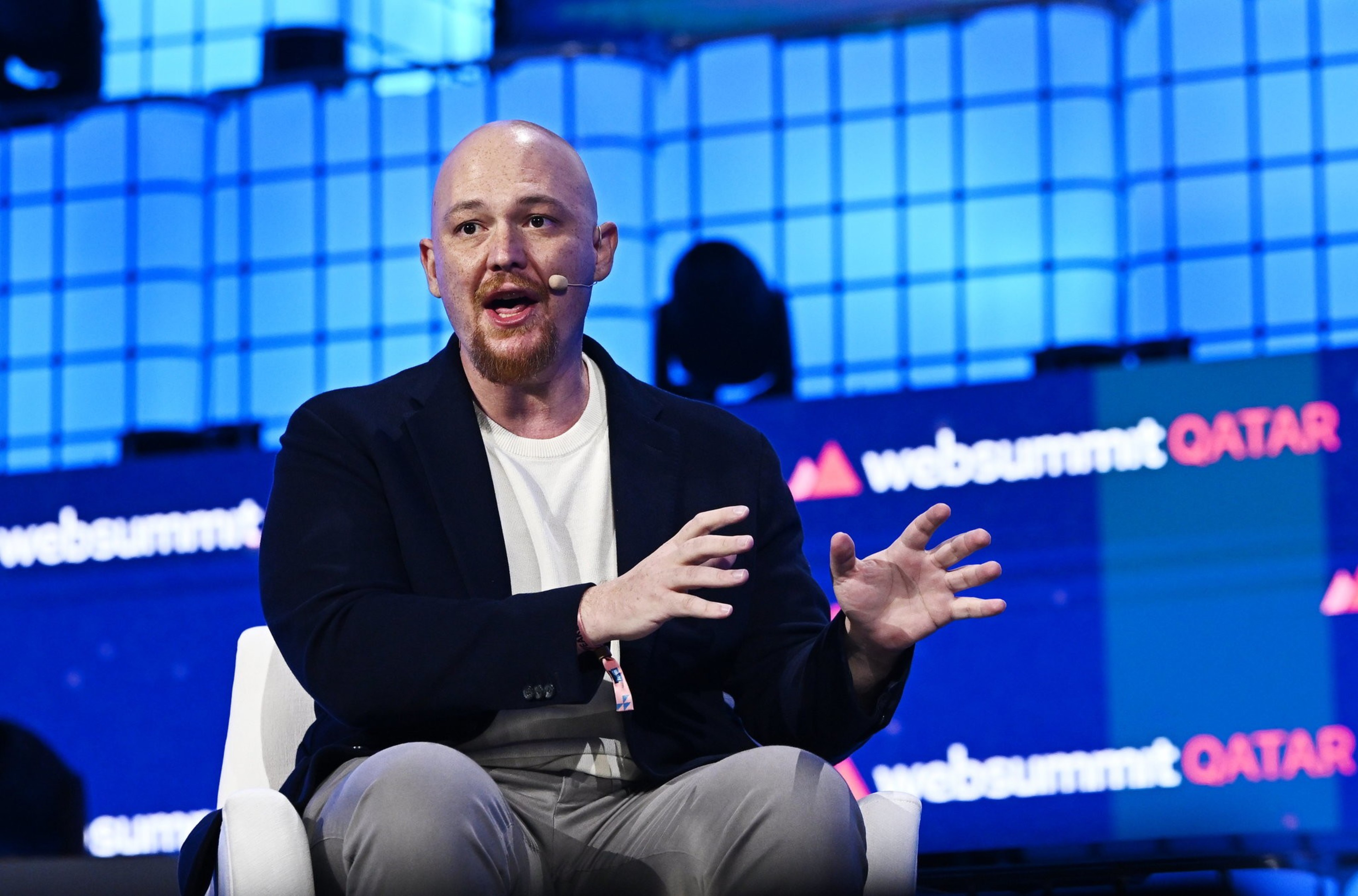 Replit founder Amjad Masad said the tax has prompted him and other founders to consider moving out of the state.
| Source: Stephen McCarthy/Sportsfile via Getty Images)
Even so, anxiety is growing among Silicon Valley’s rank and file, who cite two main concerns. First, there is fear that the initiative would ensnare not just today’s billionaires but founders who are — or could become — paper billionaires this year through illiquid startup equity. Second, many see the measure as a prelude to further wealth taxes in the state. Several founders who spoke to The Standard said the proposal could just be the opening move in a series of more aggressive “asset seizures.”
“Once you pass a wealth tax for billionaires and establish the legal precedent, it’s a classic slippery slope,” said John Loeber, a founder who published an essay this week (opens in new tab) warning that Silicon Valley is at risk of being destroyed by “political looters” and urging the tech community to become more involved in local and state politics.
Loeber, who moved back to San Francisco from New York just a year ago, said he is worried by what the proposal signals about the state’s future and is considering once again leaving California.
“Why would the cutoff remain at $1 billion? Why not $100 million or $10 million?” Loeber, who is not a billionaire, said, pointing to a failed attempt (opens in new tab) by state lawmakers in 2023 to introduce a wealth tax that gets scaled down over time. “It’s not crazy to assume that this is not going to be a one-time tax, and there will be a second and third time at lower and lower thresholds.”
Replit founder Amjad Masad, whose company was reportedly valued at $9 billion this week (opens in new tab) — likely placing him in billionaire-on-paper territory — called the initiative “poorly put together and poorly communicated.” The proposal, he said, has undermined his trust in the state and made him consider moving. “Honestly, it did cross my mind — like it has for a lot of founders — whether it even makes sense to stay.”
Paper billionaires in the crossfire
One concern is how the proposal treats voting power as a proxy for ownership, by default. For example, a founder who owns just 1% of a company but controls 50% of its voting rights might be taxed as if they owned at least 50%. “It makes founder-led companies practically illegal,” Anduril founder and billionaire Palmer Luckey wrote on X (opens in new tab).
Y Combinator CEO Garry Tan, who has railed against the proposal on X in recent days, echoed this concern. He noted that every year, Y Combinator produces several “paper billionaires” whose net worth is tied up in fickle startup shares. The tax, he wrote on X (opens in new tab), “will kill startups and innovation in California since a founder is illiquid while instantly on the hook for $100M.”
Tan suggested that the tax could spell the end of California’s domination of the startup economy. The uncertainty “will cause people to leave the state before their startup becomes successful,” he wrote (opens in new tab). “Many will choose not to start in California at all.”
Adding to the founders’ fears, it’s unclear how exactly the tax — should it pass — would be implemented. Enrico Moretti, an economics professor at UC Berkeley, says the state would have a lot of leeway in how strictly to impose the tax. If lawmakers choose “the most draconian way,” then founders will be forced to sell shares and give up control over their companies, or borrow against their shares. A private company worth billions today could be worth nothing tomorrow — yet the founder could theoretically be stuck paying about 1% of their 2026 net worth for years.
 The billionaire tax would “kill startups and innovation in California,” according to Y Combinator CEO Garry Tan. | Source: Noah Berger for The Standard
David Gamage, a law professor at the University of Missouri who was brought in by the union to help craft the proposal, insists founders will not be forced to sell their shares. Gamage, who has pushed for wealth taxes (opens in new tab) in other states, was “surprised” by Silicon Valley’s response. “I don’t understand why the billionaires just aren’t calling good tax lawyers,” he said.
Those with the vast majority of their net worth in private stocks, Gamage says, would have the option of opening a deferral account. There, they can put any assets they don’t want to be taxed on. But any time they sell the shares held in that account, he explained, the state would get 5% of the sale.
This way, he said, if your startup fails, you pay nothing. But if your startup is the next Google, “you’re giving California a share of your gamble.”
Gamage also said founders misunderstand how their shares would be valued. The proposal recommends a default valuation that treats control rights as equal to ownership. But in reality, he said, most founders would not be taxed according to that formula. Taxpayers could submit an alternative valuation, so long as it is prepared by a certified appraiser and reflects what the shares could actually sell for. These appraisals tend to be beneficial to the taxpayer, compared with the default formula.
“This is an area where, predictably, we’re going to under-tax, not over-tax,” he said. While the state can challenge an appraisal, it typically does so only when the valuation is “ridiculous.”
An ecosystem at risk
Silicon Valley has served as the gravitational center of U.S. technological innovation since the 1950s, when Fairchild Semiconductor started in Palo Alto. Fueled by Stanford University’s steady pipeline of talent and an ever-expanding venture capital ecosystem, the region has generated successive waves of breakthrough technologies — from personal computing to the internet — that reshaped both the national economy and daily life. That ecosystem draws in more talent, and more money, enhancing the region’s status as the global epicenter of innovation.
The AI boom is just the latest example, with startups in the Bay Area raising $122 billion last year, according to Crunchbase.
But the billionaire tax could jeopardize Silicon Valley’s flywheel effect. “This is initially great news for Texas and Florida, and it’s bad news for California,” said Moretti, who expects many founders to choose to start their companies in other states should the proposal pass.
“Other examples of wealth taxation tell us that in the end, people relocate,” he said. “I don’t expect that we will lose every single billionaire, but I think the losses will exceed the benefits.”
 Venture capitalist and Palantir chairman Peter Thiel donated $3 million late last year to a commitee opposing the billionaire tax. | Source: Rebecca Blackwell/AP
Some of Silicon Valley’s most influential voices aren’t waiting for tax lawyers or voters to suss out the details of the proposal. Instead, they urge founders to leave the state altogether.
“California has proven itself to be an unreliable business environment,” AI and crypto czar David Sacks said on X. “Founders, when a state shows you who they are, believe them. Opening a backup HQ in a red state should be part of every growth-stage plan.”
“If you aren’t yet worth $$ billions you can move this year,” chimed in Keith Rabois (opens in new tab), managing director of Khosla Ventures and a booster of the fledgling Miami tech scene since ditching California in 2020.
Divakar Vijayasarathy, a global tax adviser, said that, for his “future billionaire” clients, trust in the state has largely been broken. The proposed tax, he said, just adds fuel to the fire that has made entrepreneurs consider leaving California — even before the tax proposal. He pointed to a growing web of state regulations (opens in new tab), including rules around company formation, privacy, and data, and obligations around AI that impede startup growth.
The tax, he said, is just the latest signal “to the upcoming billionaires that there are much better places to focus their energies on.”