
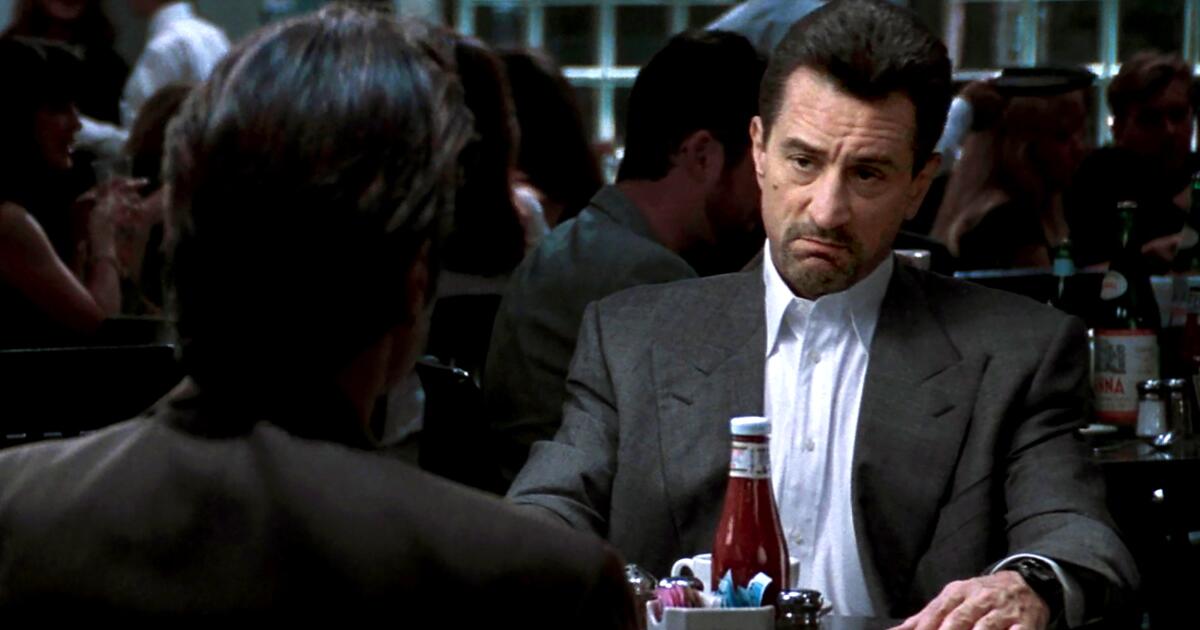
What comes to mind when you think of the best L.A. movies?
Long before I moved to Los Angeles, I fantasized about living in a midcentury modern house in View Park-Windsor Hills, much like Sanaa Lathan’s character in “Love & Basketball.” I also wanted to visit the South Central L.A. house and street from “Friday,” where Chris Tucker said this frequently quoted line to Ice Cube, “It’s Friday, you ain’t got no job, and you ain’t got s— to do.”
You’re reading the Essential California newsletter
For The Times’ film critic Amy Nicholson, “The Big Lebowski” inspired her to lease her first L.A. apartment in Little Armenia, two blocks away from the bowling alley in the film.
The most memorable and unique landmarks and neighborhoods in Los Angeles played starring roles in The Times’ 101 best L.A. movies list. Seventeen film writers, including Nicholson, ranked their top 20 movies set in L.A. using a balloting process that blended their choices to develop the entire list of 101 movies.
Let’s take a look at the top 5 movies that made the cut.
1. “Chinatown”
Layer exposes layer, mystery unveils mystery. Which is why “Chinatown” is the most emblematic Los Angeles movie of them all, in that it never stops revealing itself, eventually becoming resoundingly familiar and consistently fresh. (Even the fact that its director would become a convicted sex offender on the run from the law becomes another complication in the film’s knotty legacy.) The gold standard of conspiracy thrillers examines the city’s expansion through the 1930s via a foundational myth of how water came to flow to L.A. and who profited from bringing it here. Though there are locations from the movie that still exist — you can toodle around the lake at Echo Park or pop into the Prince bar — it’s the cynical spirit of the thing that hangs like a haze, an essential unknowability implied by its notorious final line: “Forget it Jake — it’s Chinatown.” As for the why behind it all, let’s leave that to John Huston’s rapacious Noah Cross. What exactly does he want? “The future, Mr. Gittes, the future.” That’s still something we hear every day. — Mark Olsen
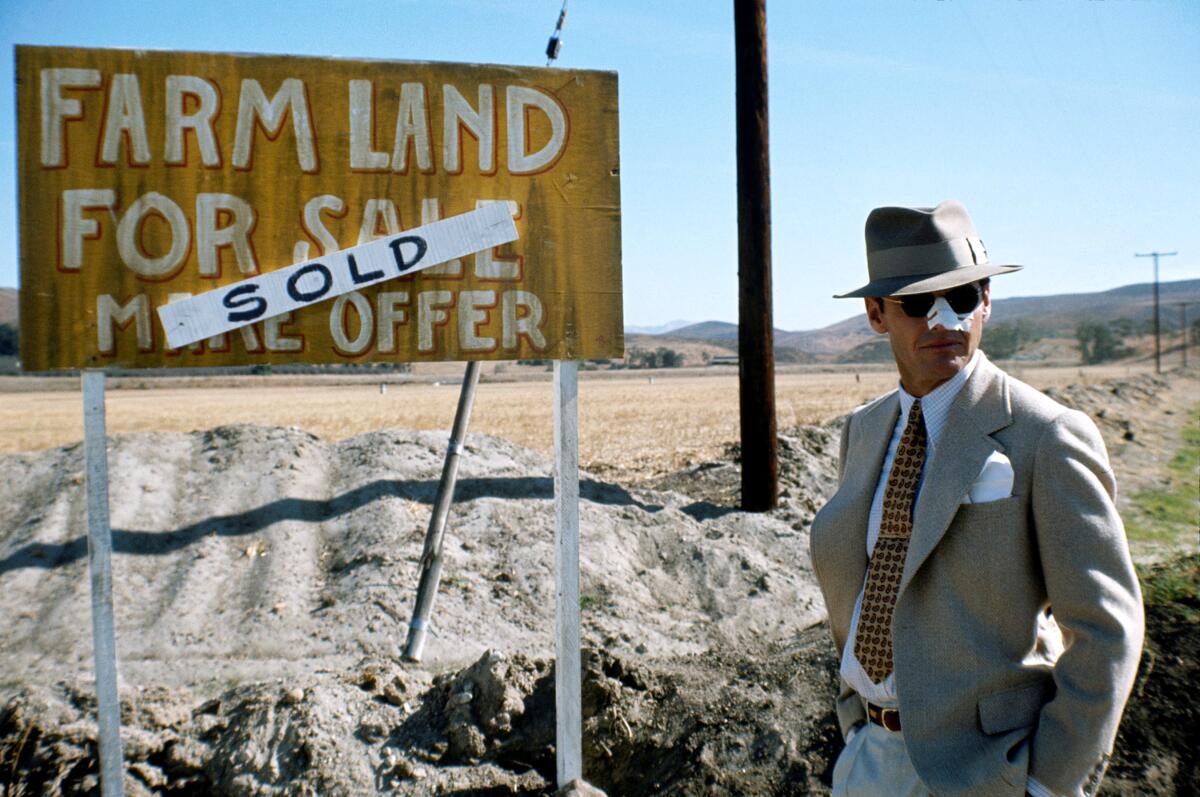
Jack Nicholson during a scene of the 1974 movie “Chinatown”.
(Paramount Pictures)
2. “Mulholland Drive”
Los Angeles is a city built on the fantasy of who you might become. “Mulholland Drive” asks what happens when that fantasy collapses. David Lynch had been thinking about the city for years after moving here in the early 1970s, drawn to L.A. while deeply suspicious of it. For a while, the movie plays like a warped Hollywood fable, built on killer auditions and the sense that everything might work out for Naomi Watts’ aspiring actor Betty, bright-eyed and believing. Elsewhere, though, it goes full Lynch and you know she’s fooling herself. A terrified man describes a vision of something waiting behind a diner and when that monster finally steps into view — filthy, silent, barely human — the film’s mood collapses. Using canyons, freeways, banal exteriors (the Sierra Bonita Apartments play a big part) and sound stages, Lynch captures a core truth about Los Angeles: It invites you to dream and doesn’t wait around when the dream falls apart. — Josh Rottenberg
3. “Sunset Boulevard”
A screenwriter floats face down in the pool of a crumbling estate located on L.A.’s most famous street, narrating his own demise. Has any opening scene captured the glamorous brutality of Hollywood better than Billy Wilder’s “Sunset Boulevard”? It’s the story of Norma Desmond (Gloria Swanson), who once made it big (“it’s the pictures that got small”) and refuses to accept that Tinseltown has moved on from her, and flailing hack Joe Gillis (William Holden), who finds himself Norma’s live-in himbo while evading the repo men. A host of luminaries play versions of themselves in this ironic meta-noir that remains as cutting today as it would in any era of Hollywood history. Joe thinks he’s just missed the golden age; Norma can’t stop reliving hers. Either way, no one’s happy in the present. Somehow, heartbreak feels awful in a town like this. — Katie Walsh
4. “Clueless”
A Beverly Hills teenager is behind the wheel of a BMW convertible, her boyfriend riding shotgun and her best friend, Cher, babbling in the backseat. The nervous driver needs to put on her blinker and glance at her blind spot. Instead, she flips on her windshield wipers and swerves into the next lane, and she’s soon hyperventilating on the 405. “Getting off the freeway makes you realize how important love is,” Cher exhales after the car exits to safety. Yes, and transplanting a Regency romance to L.A. makes you realize the city’s own silly social codes. Alicia Silverstone’s Cher would never confuse an Alaïa minidress with one by Calvin Klein, but she can’t understand why her Salvadoran housekeeper is offended to hear her huff that she doesn’t “speak Mexican.” Director Amy Heckerling steers us to root for Cher anyway. If this blond cupcake can wise up, there’s hope for us all. — Amy Nicholson
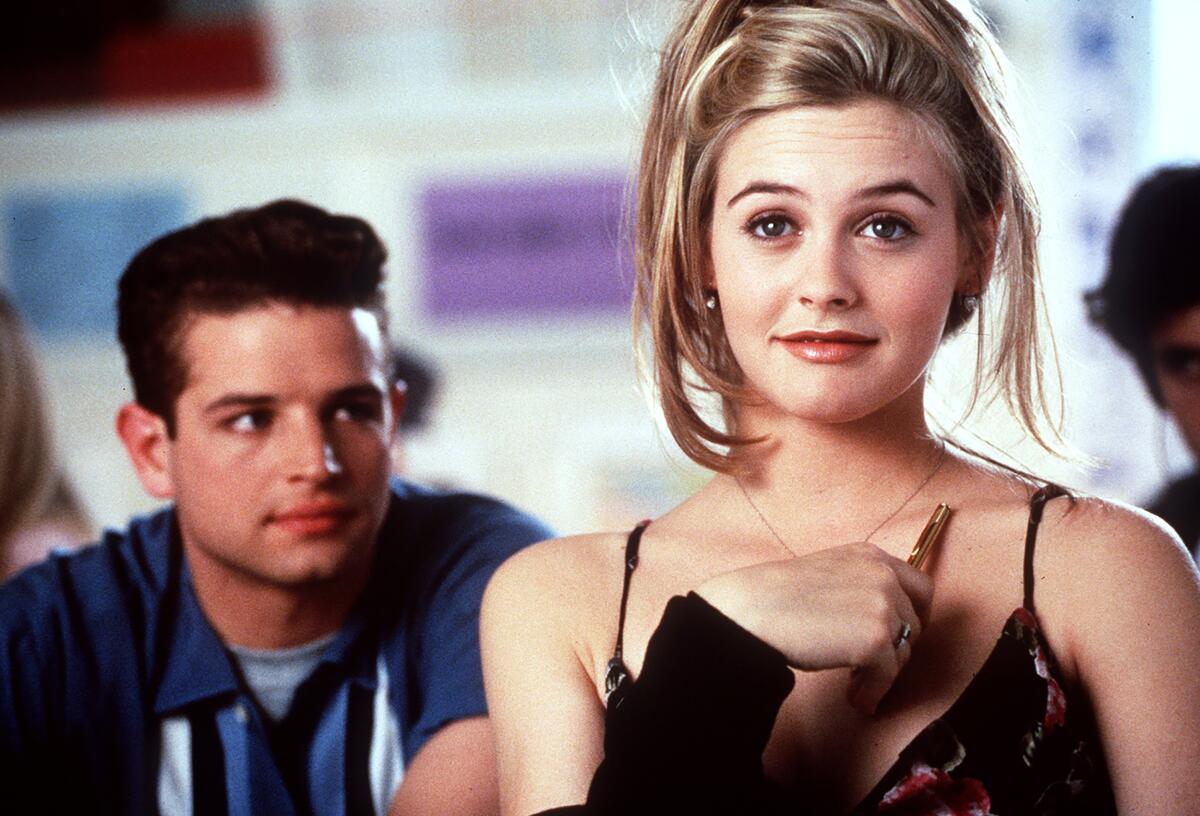
Alicia Silverstone and Justin Walker in “Clueless,” 1995.
(Paramount Pictures)
5. “Blade Runner”
Documentary filmmaker Thom Andersen describes Ridley Scott’s dystopian masterpiece as the “official nightmare of Los Angeles” in his comprehensive “Los Angeles Plays Itself.” We’re inclined to agree. Even though the movie’s temporal setting of 2019 is long in the rearview, “Blade Runner” remains a kind of shorthand for a late-capitalist endgame, endlessly influential on all neo-noirs that followed. Citizens are drenched with relentless acid rain, flying cars maneuver through the darkness and massive digital billboards dominate the landscape. Much of the action takes place in the iconic Bradbury Building in downtown L.A. “Blade Runner” fans regularly flock to the historic structure, which still operates as an office building, to admire the cage elevators, decorative marble stairs and distinctive atrium. The Million Dollar Theater across the street is also visible in the film. — Greg Braxton
Check out the full list here.
We also want to hear from you. Is there a movie we forgot? Is one ranked too high or too low? Tell us your favorites by Feb. 2 to be considered for an article sharing reader picks.
The week’s biggest stories 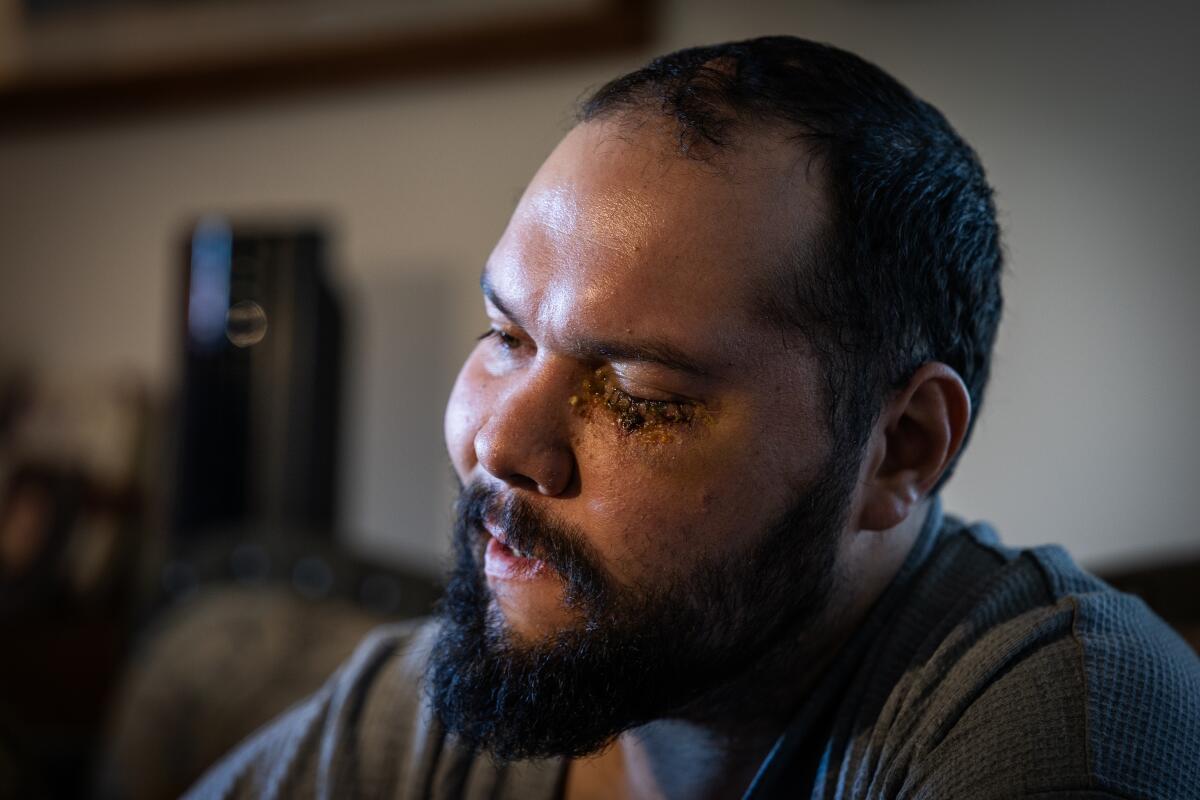
Britain Rodriguez says he was struck in the eye by a less-lethal round fired by Homeland Security officers at an anti-ICE protest in downtown Santa Ana last week. He was the second person shot in the face at the protest.
(Allen J. Schaben / Los Angeles Times)
Crime and courtsPoliticsClimate and environmentGolden Globes 2026What else is going onMust readsOther must readsFor your downtime 
(Patrick Hruby / For The Times)
Going outStaying inL.A. Affairs
Get wrapped up in tantalizing stories about dating, relationships and marriage.
Have a great day, from the Essential California team
Jim Rainey, staff reporter
Hugo Martín, assistant editor, fast break desk
Kevinisha Walker, multiplatform editor
Andrew J. Campa, weekend writer
Karim Doumar, head of newsletters
How can we make this newsletter more useful? Send comments to essentialcalifornia@latimes.com. Check our top stories, topics and the latest articles on latimes.com.