
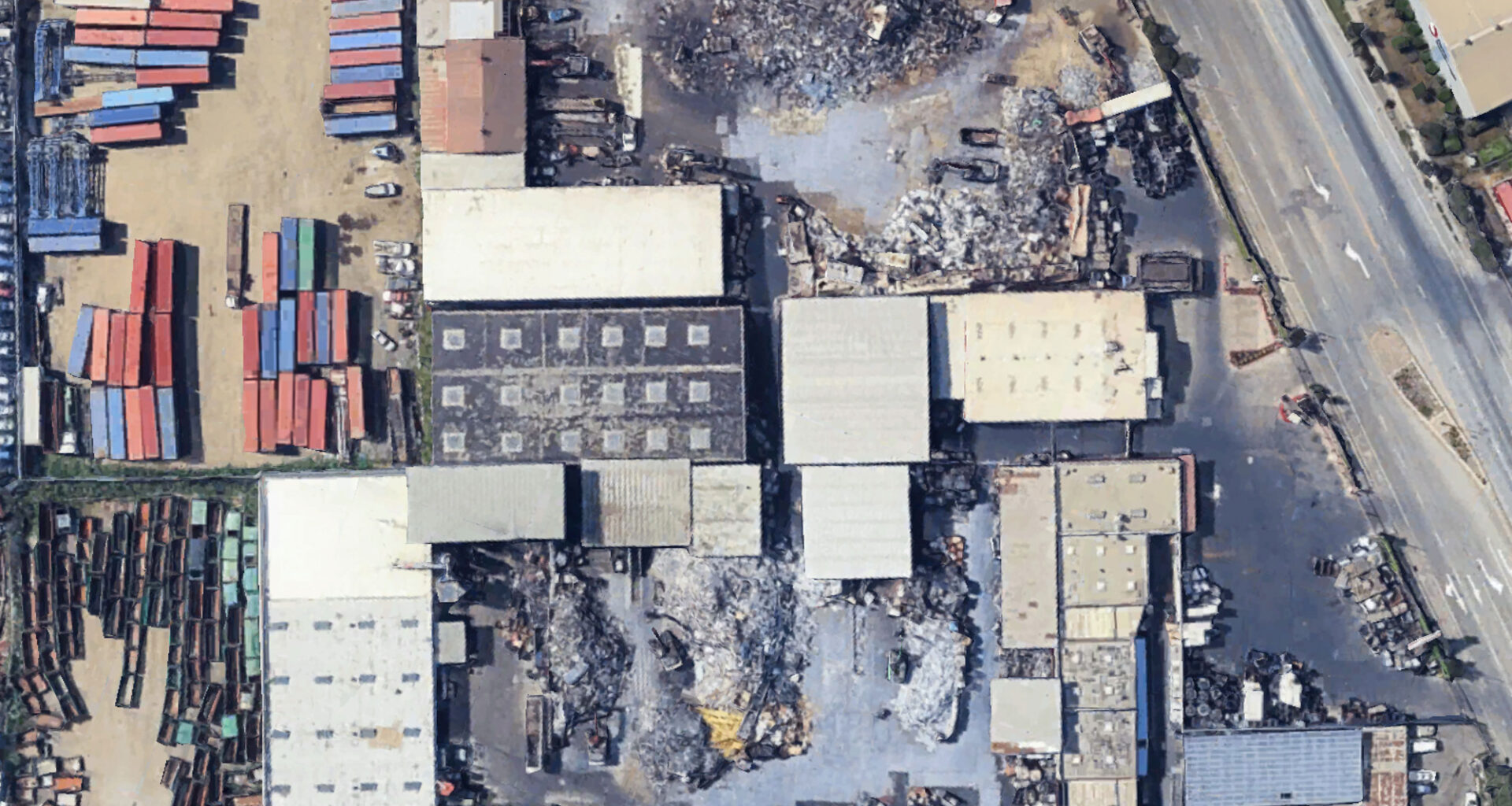
An environmental organization has filed suit in federal court in San Francisco asserting that polluted stormwater from a San Leandro scrapyard operation is draining into San Francisco Bay.
San Francisco Baykeeper, a nonprofit based in Oakland, alleges that Alco Iron & Metal Co., headquartered in San Leandro, has repeatedly violated the federal Clean Water Act by allowing stormwater runoff contaminated with metals from its recycling operations to be discharged into the Bay.
According to court records, Baykeeper has filed or joined more than 100 lawsuits in federal court in San Francisco since 2020, many of them involving stormwater runoff.
Baykeeper says that its mission is “to defend San Francisco Bay from the biggest threats and hold polluters and government agencies accountable.”
It has more than 3,500 members, according to its court filing, many of whom use the areas downstream from the Alco facility for recreation.
Baykeeper filed its suit Tuesday after federal and state agencies allegedly failed to take action, the organization said.
Plaintiffs particular about pollutants
Alco describes itself as a family business with roots in the metal recycling industry that go back to 1909 when Isador Lazar, an immigrant from Europe immigrated to Oakland and began working in the “junk” business. According to the company’s website, Lazar used his horse and wagon to collect, sort and resell metal, an early form of recycling.
Alco was incorporated in 1972 in San Leandro and the business has since grown to five locations in Northern California employing 200 people.
The lawsuit concerns storm runoff at Alco’s facility located on a 12-acre site at 1091 Doolittle Drive in San Leandro.
 A screenshot of the Alco Iron & Metal Co. website on Friday, Jan. 16, 2026. The company traces its roots to 1909, and it has been incorporated in San Leandro since 1972. (Screenshot via alcometals.com)
According to Baykeeper’s court filing, the scrap operations at the location generate particulates and debris that settle on the outdoor surfaces at the facility. In heavy rains, the stormwater carries the pollutants into the Bay “indirectly at Oyster Bay Regional Shoreline approximately .75 miles from the facility.”
Baykeeper alleges Alco’s discharge includes lead, oil and grease, aluminum, iron, zinc, copper, acidic fluids, and fuel.
The stormwater runoff has allegedly “been recognized as a leading cause of … harmful impacts to the water quality of San Francisco Bay,” according to the lawsuit.
“With every rainfall event, hundreds of millions of gallons of polluted rainwater flow from local industrial sites, such as (Alco’s) facility, and pour into storm drains, local waterways, wetlands and the Bay,” reads the suit.
Alco defends environmental commitment
Baykeeper says that environmental experts believe that “stormwater pollution accounts for more than half of the total pollution entering local creeks, rivers, and coastal waters each year.”
The suit says that Baykeeper conducted five stormwater sampling events of Alco’s discharges in the period from December 2022 to January 2024 and found aluminum, cooper, iron, lead, and zinc at levels that were consistently in excess of the federal benchmarks used to evaluate whether a company has complied with national standards.
“With every rainfall event, hundreds of millions of gallons of polluted rainwater flow from local industrial sites … and pour into storm drains, local waterways, wetlands and the Bay.”
San Francisco Baykeeper lawsuit
A request for comment on the lawsuit directed to Baykeeper’s counsel was not immediately returned.
Michael Bercovich, Alco’s chief operating officer, expressed disappointment with what he called Baykeeper’s “inaccurate and demagoguery characterizations” and said Alco would defend against the allegations in the complaint. He emphasized that Alco is a locally owned and controlled company and is “100% committed to protecting the environment.”
He added, “As a recycling company, we are always looking for ways to operate in environmentally friendly and responsible ways. … We hope to have a constructive and productive relationship with Baykeeper to resolve the matter.”