
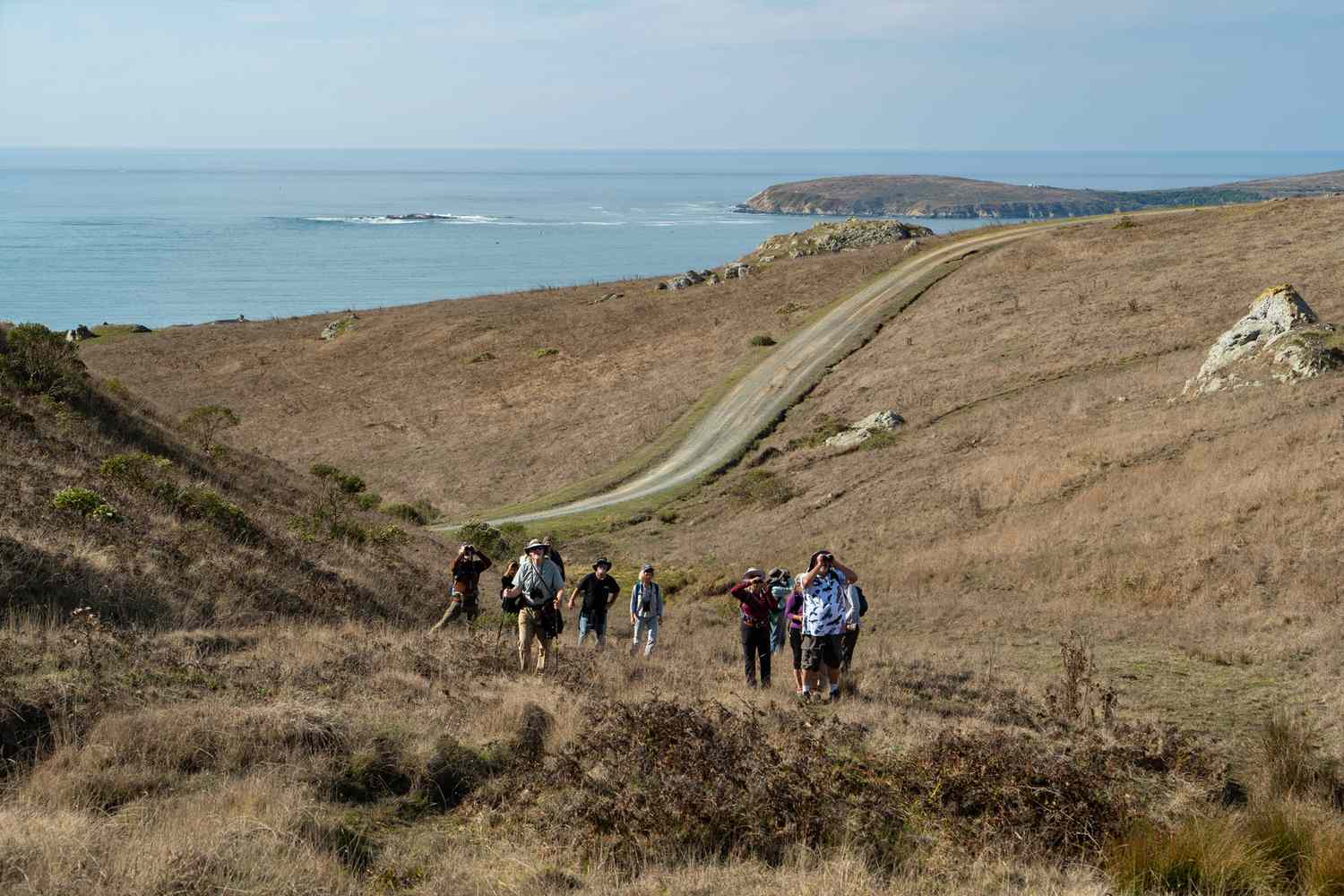
There’s an all-new place to explore on your trip to California.
In January, a massive stretch along the Sonoma Coast was once again opened for use after being closed off to the public for more than a century.
“This area has been completely inaccessible to the general public essentially for 100 years, so we’re really excited to be able to open it up and have people experience it,” Luke Farmer, Wildlands Conservancy’s Sonoma Coast regional director, shared with the San Francisco Chronicle.
According to Active NorCal, the Estero Americano Coast Preserve spans a massive 547 acres just south of Bodega Bay. The property was purchased from the private owner in 2015 by a coalition of conservation groups to ensure it remains rugged and wild forever.
“This ecologically rich landscape includes a one-mile stretch along the mouth of the Estero Americano Estuary, part of the Gulf of the Farallones National Marine Sanctuary. Tidal marshes, eelgrass beds, mudflats, and open waters provide essential habitat for Central California Coast steelhead, tidewater goby, and California red-legged frog, all within a dynamic mix of saltwater and freshwater,” the estuary’s website explains. In springtime, the estuary notes, the space is blanketed with irises, likely ensuring it soon becomes a popular wildflower viewing site, too.
The estuary is open every single day from sunrise to sunset and is free to access; however, there are a few key rules to know. While it is open to hikers (who will find about five miles of trails to explore), dogs on leashes, whale watchers, and those looking to picnic, bikers, and hunters are not permitted. There is also no camping at the estuary, and like all wildflower locations, picking the flowers is not allowed.
While the hiking sounds lovely, Active NorCal notes that the highlight here is the newly accessible beach, which sits tucked inside the coastal bluffs, providing a nice refuge from the wind.
Of course, while it’s free to visit the preserve, donations are always welcome and go a long way in ensuring this place stays open to all for years to come. As the conservancy explains on the site, $35 donations “Can help plant native species along the trail corridor,” while $100 “Can support the creation and installation of interpretive signage.” Higher-level donations can go toward assisting in erosion control and trail improvement, while anything over $1,000 can go to support “essential staffing and visitor services, ensuring the preserve is well-stewarded and welcoming to all.”
While you certainly should make time to visit the estuary, while in California, you should also make time to head to The Methuselah Trail, tucked inside the Inyo National Forest near Big Pine, California. In 2025, it was named one of AllTrails’ “25 Trails to Explore in 2025.” Of course, it doesn’t hurt that the trail is home to the oldest tree in the world, Methuselah, which you can visit on your hike, too.