
Drivers in Oakland were warned Friday to slow down or face the consequences as the city rolled out a network of new speed enforcement cameras in several neighborhoods.
The city’s Department of Transportation, along with its private-sector partner Verra Mobility, finished the installation last week of speed cameras at 18 high-risk locations around the city, Oakland officials announced at a news conference.
The cameras were approved by the City Council as part of a five-year, $5 million pilot project, with $2 million coming from an Alameda County Transportation Commission grant.
The idea is not to create a new revenue stream for the city, but instead to encourage people to slow down and save lives, according to Mayor Barbara Lee.
“We want to change behavior and not just issue tickets,” Lee said.
The hope is that if the program is successful, the number of citations will decline over time, as will the number of traffic deaths, which is about 33 per year in Oakland on average.
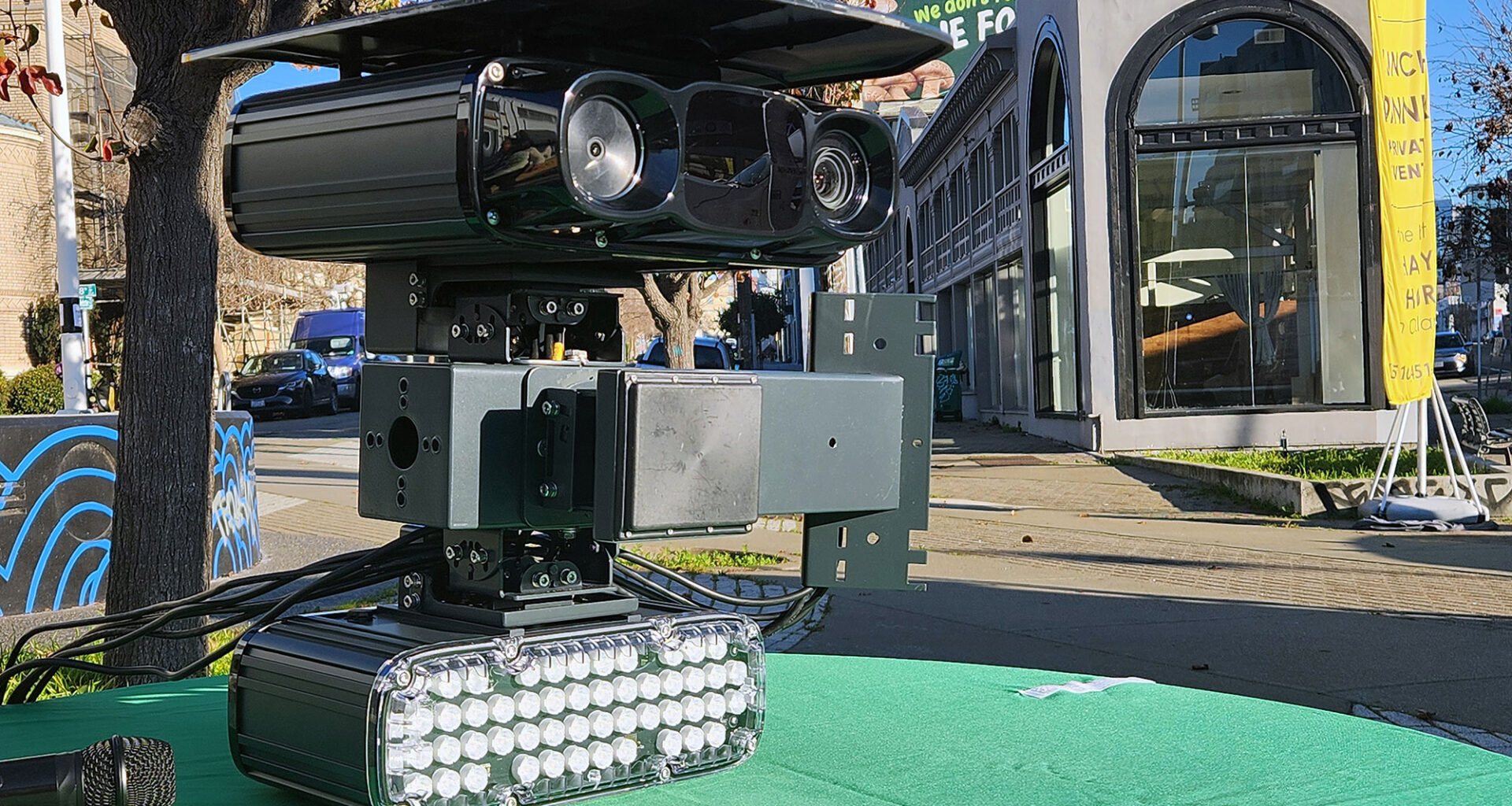
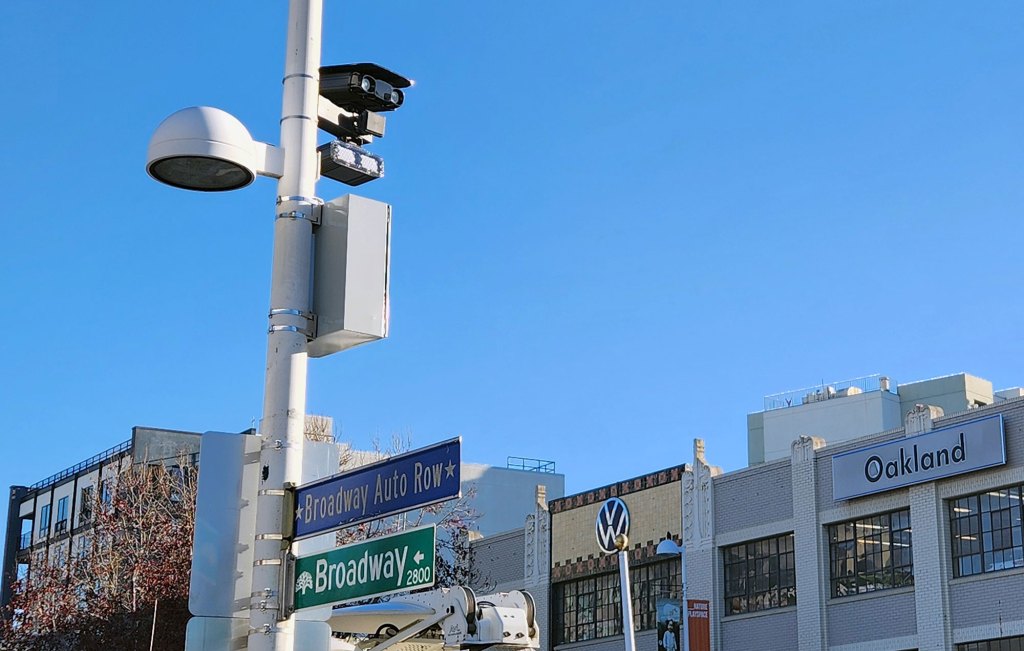 A newly installed speed enforcement camera was unveiled at a news conference on Friday, Jan. 16, 2026. The city rolled out a network of the cameras at 18 high-accident areas in several neighborhoods as part of a five-year pilot project. (Kiley Russell/Bay City News)
Cameras target high-injury network
The cameras were installed along busy corridors in Oakland’s “high-injury network,” which is composed of 8% of the city’s streets that account for 60% of its severe and fatal collisions, according to city officials.
Lee said racial equity considerations helped drive decisions about where the cameras would be placed, as many of the streets are in neighborhoods that have historically been left out of infrastructure investments, including traffic safety improvements, because of racist city policies.
“And let me be clear in terms of why equity matters here — traffic crashes disproportionately impact BIPOC communities, seniors, children, and people with disabilities,” Lee said.
She said Black Oaklanders, for example, are two times more likely to be killed or severely injured in a traffic crash than other residents.
“These discriminatory policies, they’re a thing of the past but we still feel the effects today and we are actively trying to correct that.”
Mayor Barbara Lee
“These discriminatory policies, they’re a thing of the past but we still feel the effects today and we are actively trying to correct that,” Lee said.
While the cameras are now installed and operational, people won’t face fines for the initial 60-day transition period, during which only warnings will be sent to speeding drivers captured by the system.
The cameras themselves will detect when a vehicle is traveling 11 mph or more over the speed limit, will take a photo of the license plate, and the citation will be processed by an Oakland Department of Transportation employee, according to city officials.
Grace period before fines go into effect
After the 60-day warning period is over, fines will start at $50 and increase to a maximum of $500. Low-income drivers can apply for a fine reduction, and information about how to do so will be included on the citations.
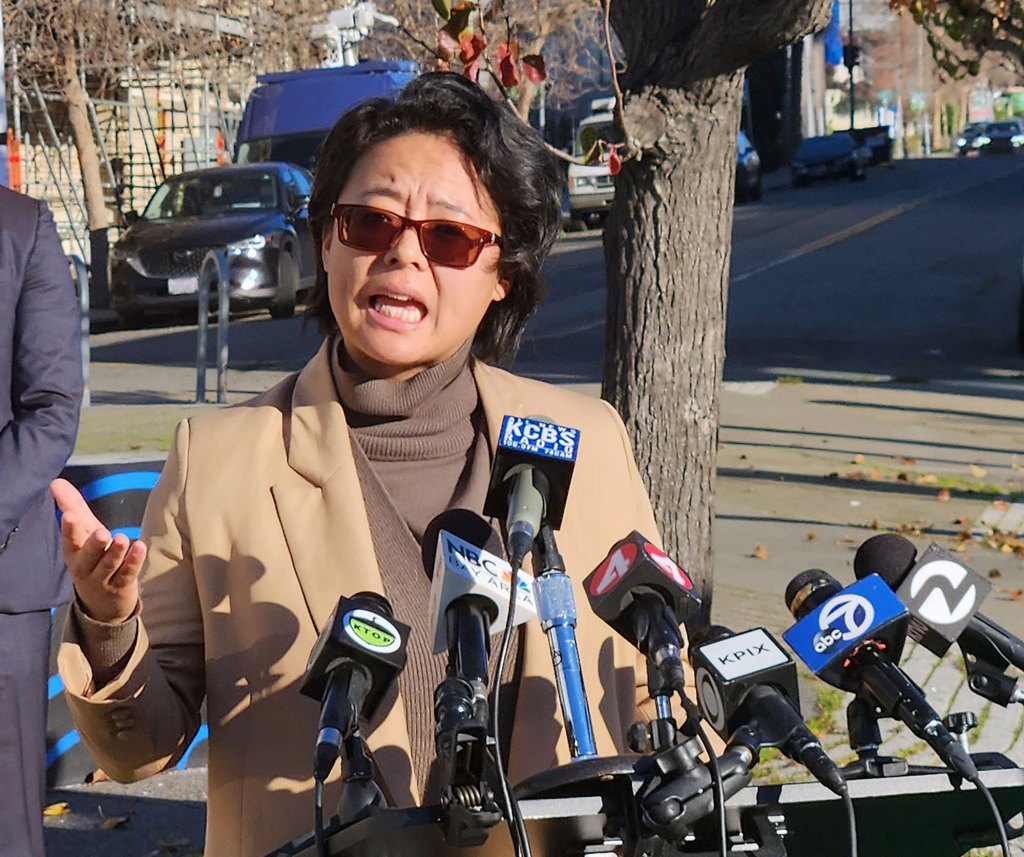 Oakland City Councilmember Charlene Wang addresses the media at a news conference in Oakland on Friday, Jan. 16, 2026. Wang, head of the city’s Public Safety Committee, welcomed the introduction of speed enforcement cameras said she’d like to see the program expanded. (Kiley Russell/Bay City News)
The information won’t be shared with law enforcement and license plate photos will be deleted 60 days after a citation is issued and five days if there is no citation, according to city documents posted online.
The pilot program was authorized in 2023 through Assembly Bill 645, which allows a handful of California cities to set up the cameras on a trial basis, including Oakland, San Jose and San Francisco.
City Councilmember Charlene Wang, head of the city’s Public Safety Committee, said she’d like to see the program expanded.
“I am just so glad that this is happening and I also actually want to call on our state legislators to allow us to install more cameras,” Wang said. “Eighteen across the city is not enough.”