
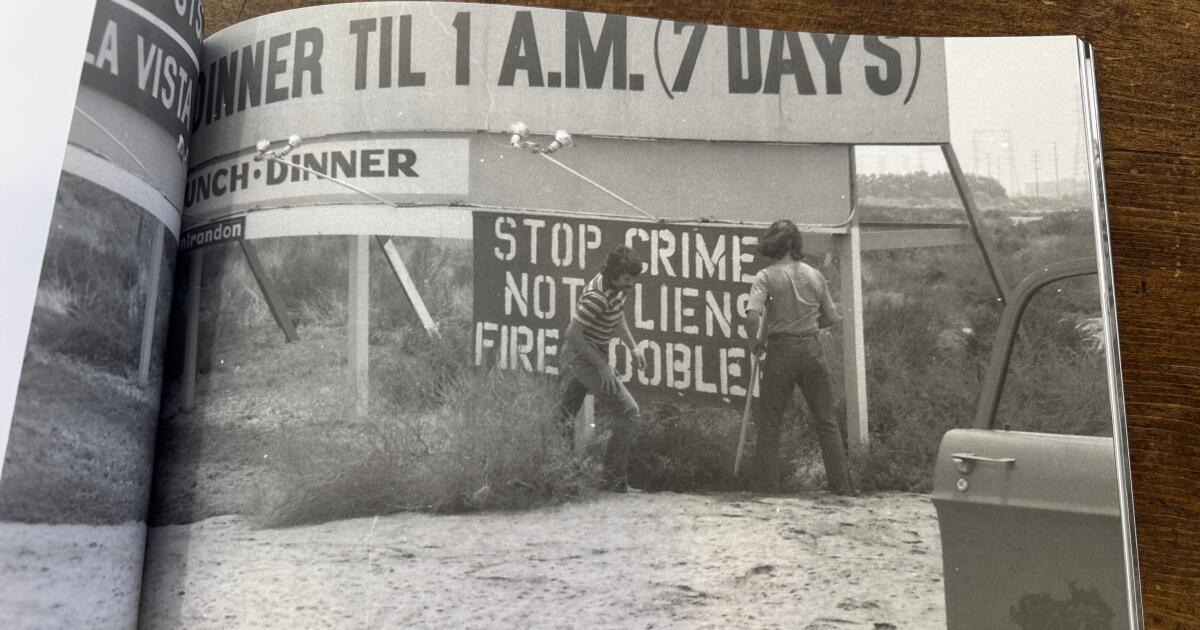
In San Diego County, the Inzunzas are the region’s Chicano Kennedys.
They’ve been beloved educators and doctors, prep athlete stars and authors, entrepreneurs and just plain ol’ good neighbors. But the true family business is politics, and since the 1970s, Inzunzas have served city councils in National City, San Diego and Chula Vista; school boards in San Ysidro and Imperial Beach, and even water districts.
You’re reading the Essential California newsletter
Dozens of them gathered Jan. 10 in Balboa Park at the Museum of Photographic Arts at the San Diego Museum of Art to celebrate the Inzunza clan’s latest contribution to America’s Finest City: a coffee table book of 200-plus pictures from the early 1970s taken by one of their own.
A crucial era in the Chicano movement
“Movimiento en la Sangre” (“Movement in the Blood”) is an extraordinary collection from the archives of Nick Inzunza, a Vietnam War veteran turned Chicano activist who worked as a school psychologist in National City and went on to become a school trustee. From 1971 to 1974 he took nearly 1,800 photos of a crucial era in the Chicano movement, when young activists realized they needed to run for political office to effect true change and also began to embrace the undocumented immigrants their elders once shunned.
There are shots of what would become Chicano Park, the world-famous collection of murals underneath the Coronado Bridge in Barrio Logan. Casual images show giants of the Chicano movement — Cesar Chavez, Bert Corona, Reies López Tijerina, José Angel Gutiérrez — behind podiums or chatting with admirers. The photos also depict protests and conferences not just in San Diego but also El Paso, San Bernardino and Los Angeles, plus local activists who never made it into the history books — until now.
Even better are snapshots of Chicano life in that time: the puffy haircuts and sharp outfits, after-school boxing programs to keep boys away from gangs and a Christmas toy giveaway by Santa Claus to barrio kids organizing against the Border Patrol. There’s even a baby-faced San Diego mayor Pete Wilson addressing a group of Chicanos at a banquet, back in the days when Wilson was somewhat sympathetic to undocumented immigrants and before he demonized them to win reelection as California governor in 1994.
“Movimiento en la Sangre” is a much-needed addition to Latino, San Diego, Southern California and civil rights histories that too often overlook the book’s subject matter. The self-taught Inzunza knew how to frame what was before him, so the photos are as aesthetically pleasing as they are important. Breaking up his ouvre are excerpts from college papers, musings and letters he sent in that era.
“The Mexican culture which is all around us can no longer be denied,” he wrote to a teacher who protested a Mexican Christmas event held at an elementary school. “We as human beings can no longer ignore a culture that is indigenous to this land and has been here for centuries.”
Redemption for the most famous Inzunza
What’s most amazing about “Movimiento en la Sangre” is that Inzunza’s book was 50 years in the making and comes more than a decade after he died.
Inzunza’s nephew Ralph Inzunza (one of the book’s two official authors, in addition to Nick’s son Nicólas Jorge Inzunza) told a rapturous hometown crowd about the book’s genesis at the launch event, which I helped moderate.
After Nick shot his movimiento photos, he kept rolls of undeveloped film in a box that stayed in the trunk of his yellow Ford Mustang for decades, then moved them into his house. When the family finally processed them a few years ago, the results were so impressive that San Diego State English and Comparative Literature professor William Nericcio suggested the Inzunzas publish the best shots for San Diego State University Press, which Nericcio runs.
Ralph is the most famous San Diego Inzunza, for better and worse. Elected to the San Diego city council in 2001, he soon became deputy mayor and was considered a rising star. But in 2005 a federal jury convicted him in San Diego’s so-called Strippergate scandal. Prosecutors alleged Ralph and two other council members took campaign contributions so they could try to change a law that barred dancers from touching their clients. He was the only one of the three council members who served time because one died and the other had his conviction overturned.
But Ralph’s reputation rebounded. He works as a political consultant and “Movimiento en la Sangre” is his third book, following a young adult novel about life on the U.S.-Mexico border and a fictionalized memoir of his prison years (start taking notes, José Huizar).
In his short speech Ralph shouted out the many activists in the book — young then, veteranos now — who were in the audience. Above all he praised the legacy of his uncle Nick, whose box of camera rolls, left untouched for decades, were also onstage.
“It is history, and it is not,” Ralph said of Nick Inzunza’s magnum opus, “because it’s alive.”
The week’s biggest stories 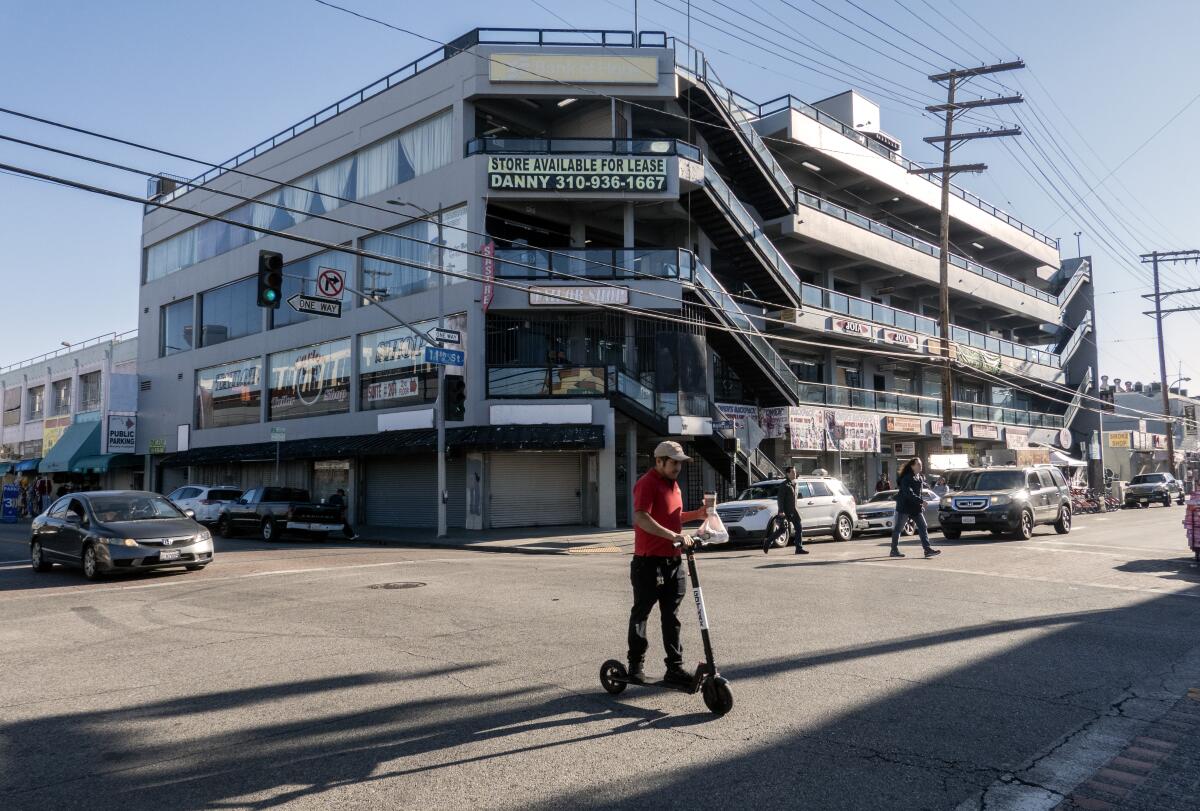
Immigration agents blocked Maple Avenue and 11th Street in the Fashion District on Thursday to allow a caravan to pass through, according to a witness.
(Myung J. Chun/Los Angeles Times)
Immigration sweepsCalifornia recyclingCalifornia politicsWhat else is going onMust readAnother must readFor your downtime 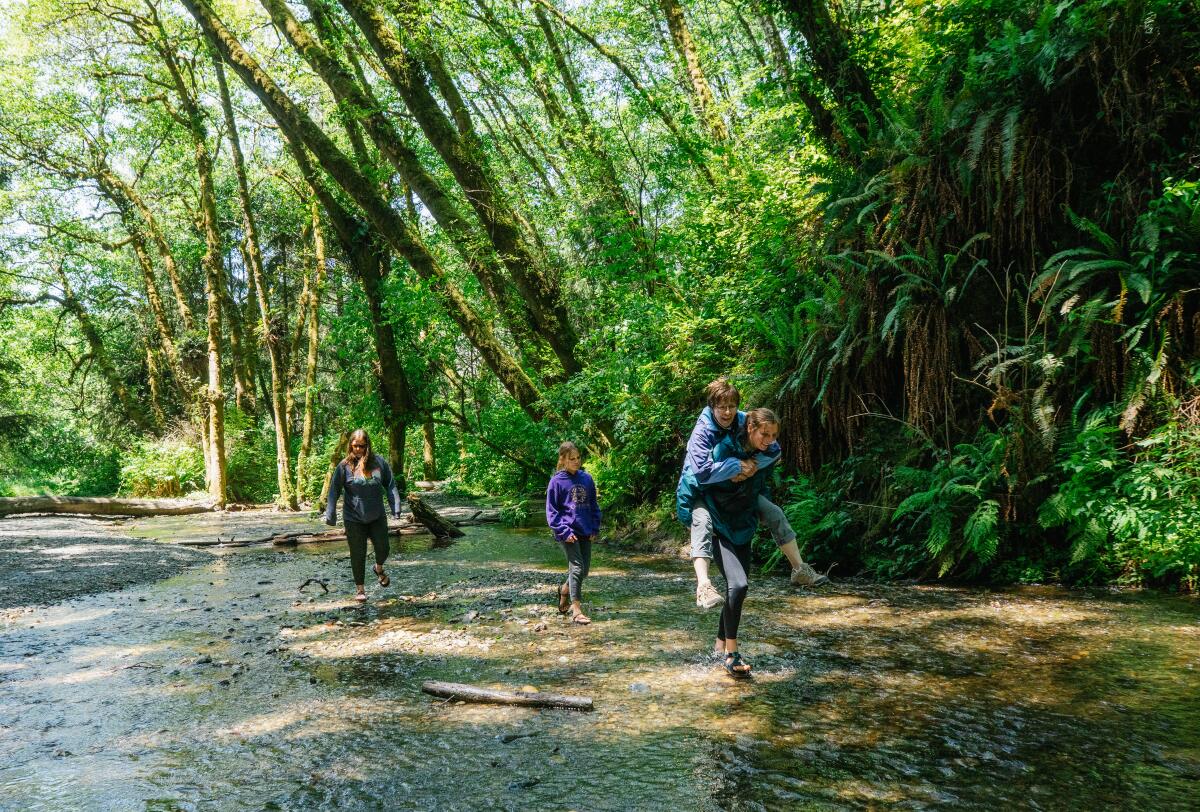
Campers at Prairie Creek Redwoods State Park can hike the lush Fern Canyon Trail.
(Myung J. Chun/Los Angeles Times)
Going outStaying inL.A. Timeless
A selection of the very best reads from The Times’ 143-year archive.
Have a great day, from the Essential California team
Jim Rainey, staff reporter
Hugo Martín, assistant editor, fast break desk
Kevinisha Walker, multiplatform editor
Andrew J. Campa, weekend writer
Karim Doumar, head of newsletters
How can we make this newsletter more useful? Send comments to essentialcalifornia@latimes.com. Check our top stories, topics and the latest articles on latimes.com.