
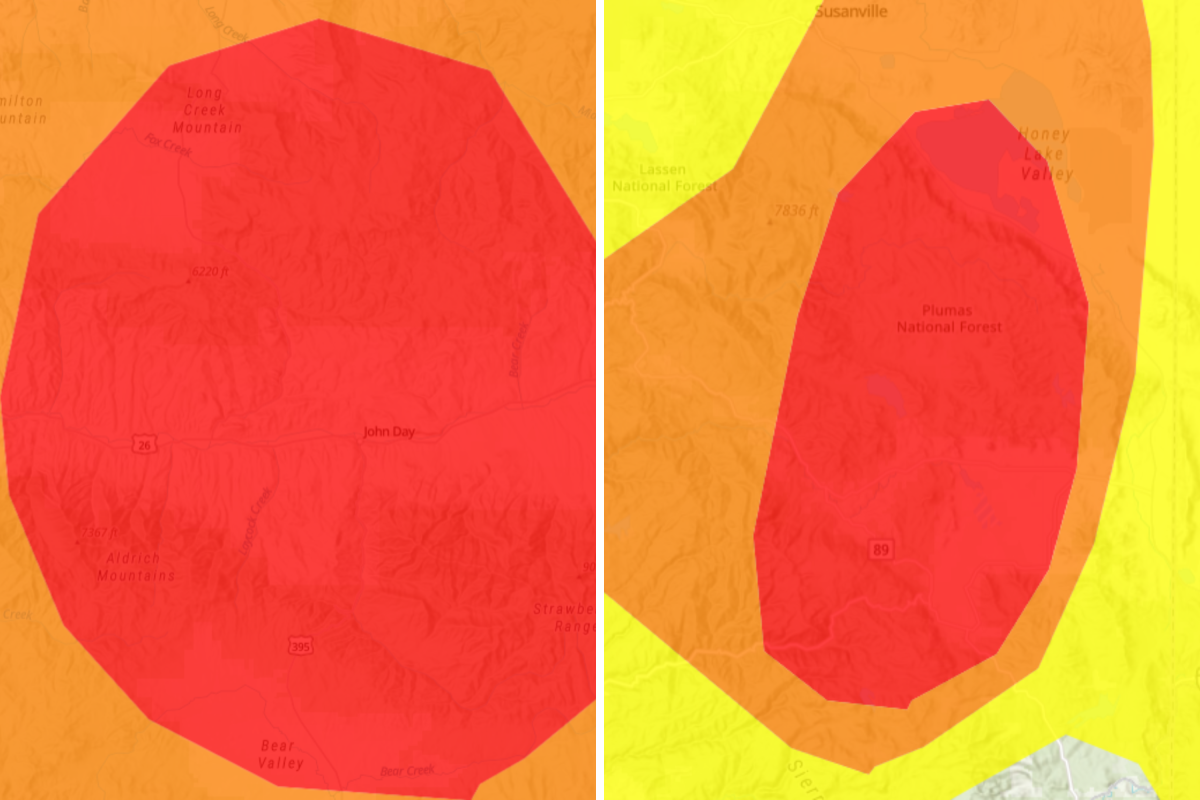
Thousands of residents have been advised to stay inside across parts of California—including Portola—and Oregon—including John Day—due to levels of fine particle pollution (PM2.5) reaching “unhealthy” levels, as of Sunday January 18 at 2.45 a.m. (ET), according to the AirNow Map, produced by the Environmental Protection Agency (EPA).
 Why It Matters
When the air quality reaches an “unhealthy” level in a particular region, the EPA urges people in sensitive groups—including the elderly, children, and individuals with existing heart or lung disease—to avoid long or intense outdoor activities.
The EPA recommends that everyone else reduce or shorten strenuous outdoor activities.
This is because PM2.5 is one of the most dangerous forms of air pollution. The particles are extremely fine—less than 2.5 micrometers in diameter—and can be unknowingly inhaled, penetrating deep into the lungs or even entering the bloodstream, according to the EPA. This can trigger or worsen conditions such as asthma and cause symptoms including coughing, eye, nose, and throat irritation, chest tightness, and shortness of breath. During long or intense outdoor activities, people can inhale more of these fine particles, increasing their exposure and the risk of related health effects.
What ‘Unhealthy’ Air Quality Means
The EPA uses the Air Quality Index (AQI) to monitor and communicate air quality across the United States. The AQI is a standardized system that assigns a numerical score and categorizes air quality into six groups based on health risk:
Good (0-50): The air quality is fine, and there is no or little risk of air pollution. Moderate (51-100): The air quality may pose a health risk to those who are unusually sensitive to air pollution. Unhealthy for Sensitive Groups (101-150): Those in sensitive groups could be affected by air pollution. Unhealthy (151-200): The quality of air means individuals in sensitive groups might experience more serious health effects, and members of the general public may also be affected by poor air quality. Very Unhealthy (201-300): The EPA will issue a health alert, which means the “risk of health effects is increased for everyone.”Hazardous (301-500): The EPA will issue a health warning of “emergency conditions” as all members of the public in the affected area are likely to be affected by polluted air.The Cause Of PM2.5
Although the EPA has not confirmed what’s causing the “unhealthy” levels of PM2.5 across parts of California and Oregon, PM2.5 can come from a variety of sources. These include smoke from wildfires or smokestacks, dust from construction sites or unpaved roads, or emissions released from vehicles or industrial or power plants.
Residents in affected areas should monitor the AirNow map for updates, as the quality of air has the potential to change rapidly.