
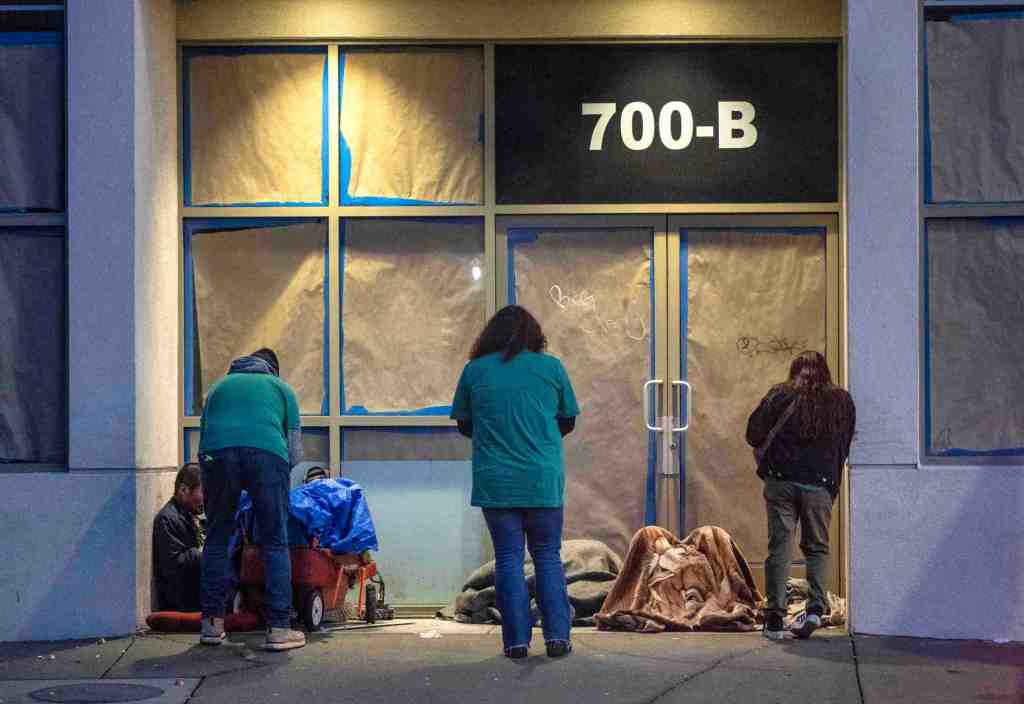
In the hustle and bustle of everyday life, most of us end the day with a warm meal and a secure roof over our heads. Even as affordability tightens, we stretch our budgets to make it work.
But there is a quieter, often invisible group of families, seniors, and veterans in Orange County who are barely hanging on – struggling to pay rent, buy groceries, afford medicine, and keep the lights on. They are one paycheck away from losing housing.
That’s housing insecurity. It’s one step away from homelessness – and it’s preventable.
Unfortunately, prevention is not how California has traditionally addressed homelessness. Instead, we have relied on a costly system of crisis response.
A 2015 study led by UC Irvine, in partnership with Jamboree Housing and United Way, found that Orange County spent nearly $299 million in a single year “managing” homelessness. For individuals experiencing chronic homelessness, the public costs – including law enforcement, emergency medical services, and hospital care – averaged $100,759 per person per year. Ten years later, that figure is undoubtedly higher.
By comparison, the average annual cost of permanent supportive housing – housing paired with professional services such as medical care, addiction treatment, and job training – was approximately $51,587 per person per year. It costs taxpayers nearly half as much to house someone than to leave them on the street.
A 2022 UC Irvine Livable Cities Lab study examined what happens when affordable housing is built locally. Crime does not increase, and nearby home values do not fall. In fact, the study found that affordable housing increased nearby property values by about $16,000 and reduced crime rates in surrounding areas.
Consider Irvine – Orange County’s jobs magnet and the city with the most affordable housing units – which consistently ranks among the safest cities in the nation. Well-designed affordable housing strengthens communities.
Equally important is the Housing First approach, which prioritizes moving people into permanent housing immediately – without preconditions – followed by voluntary supportive services once they are stable enough to benefit.
Jamboree Housing, Orange County’s largest developer of permanent supportive housing, operates more than 1,250 supportive housing units statewide. Once housed, formerly chronically homeless residents experience 78 percent fewer ambulance transports and no arrests, according to the UCI study, generating an estimated $42 million in annual taxpayer savings.
These residents live in thoughtfully designed communities that complement existing neighborhoods. They are stabilized and reintegrated.
A strong example of public-private collaboration is Buena Esperanza in Anaheim. In 2019, with leadership from the Orange County Business Council and the Orange County Housing Trust – and a $5 million kick-start from Disneyland Resort – the city converted a former motel into permanent supportive housing for veterans and essential workers.
These are proven solutions funded through collaboration among nonprofits, businesses, local governments, and taxpayers.
As California enters a new year of housing and budget decisions, progress is now at risk.
In late 2025, the U.S. Department of Housing and Urban Development issued new guidance shifting away from its long-standing Housing First framework. Under the new rules, no more than 30 percent of federal Continuum of Care funds may be used for permanent supportive housing – resulting in a 60 percent cut to these programs in California.
Programs have limited time to secure replacement funding, creating service gaps that could place 26,000 Californians at risk of losing stable housing and treatment. When homelessness rises, the costs do not disappear – they shift back to emergency rooms, jails, and law enforcement, where taxpayers pay more for worse outcomes.
Housing with supportive services is sound fiscal policy. Orange County has made real progress, and we cannot afford to reverse course.
Residents can help by encouraging cities to streamline housing developments that meet local rules, supporting solution-oriented developments, staying informed through trusted sources such as OC United Way’s United to End Homelessness, and urging congressional representatives to protect Housing First strategies and retain federal funding that have proven effective.
Orange County has already learned what works on homelessness – the real question is whether we can afford to ignore it.
Lucy Dunn is CEO Emeritus of the Orange County Business Council and former CA Director of Housing and Community Development under Governor Schwarzenegger. She serves as an advisory board member to both Jamboree Housing and United Way of Orange County.