
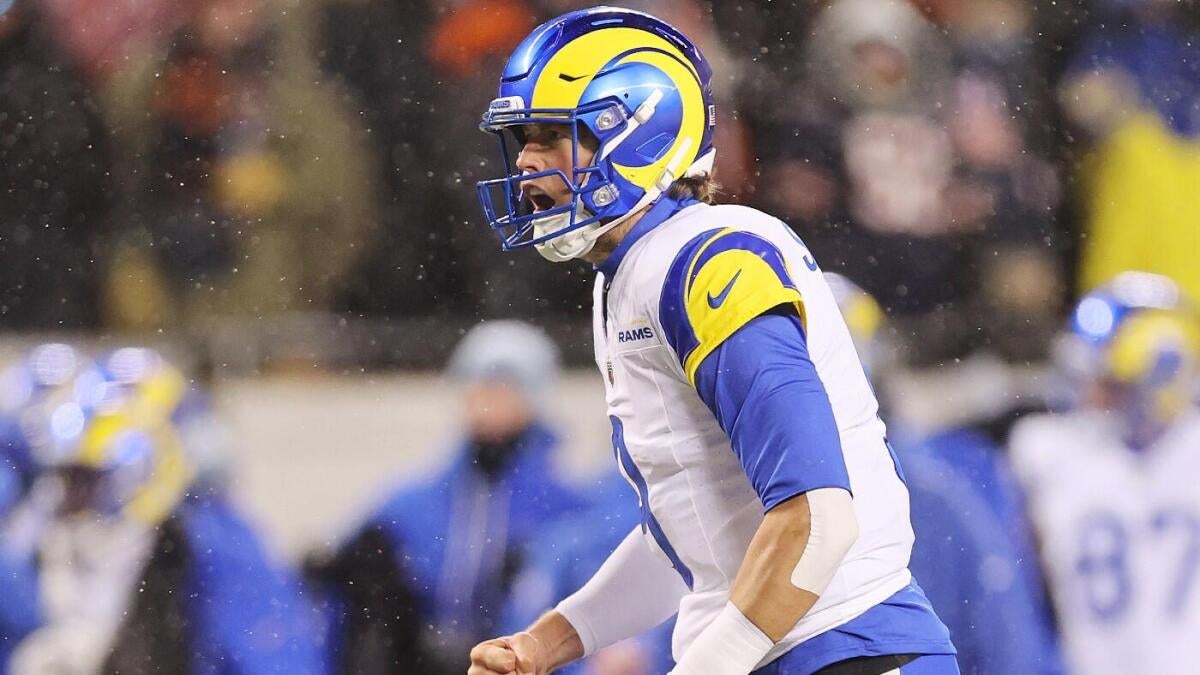
The Los Angeles Rams punched their ticket to the NFC Championship on Sunday, outlasting the Chicago Bears in an overtime thriller at Soldier Field. After the L.A. defense forced Caleb Williams into his third interception of the game on Chicago’s opening possession of overtime, Matthew Stafford and the Rams marched down the field to set up Harrison Mevis’ 42-yard walk-off field goal in a 20-17 victory.
For much of the afternoon, the NFC foes were locked in a stalemate. The game was tied 10-10 at halftime, both teams went scoreless in the third quarter, and each found the end zone once in the fourth to force overtime.
It initially appeared the Rams would close things out in regulation, but the Bears had one last answer. With fewer than 20 seconds remaining, Williams threw a remarkable fadeaway touchdown to Cole Kmet while being driven well behind the line of scrimmage, somehow connecting to force overtime.
In overtime, Williams briefly appeared ready to keep the superhero act going, leading the Bears down the field after Chicago’s defense forced a three-and-out to open the extra period. That momentum was short-lived, however. The second-year quarterback tried to connect with DJ Moore deep down the right sideline, but the two were out of sync, allowing Kam Curl to come away with the game-altering interception.
The Rams needed 10 plays to march 54 yards down the field before Mevis split the uprights with the game-winning field goal, sending Los Angeles to the NFC Championship.
Stafford finished 20 of 42 for 258 yards, while Kyren Williams carried the ball 21 times for 87 yards and two touchdowns. Caleb Williams completed 23 of 42 passes for 257 yards with two touchdowns and three interceptions in the loss.
For more on how this game unfolded, check out our takeaways below.
Bears couldn’t take advantage of defensive stops
One of the biggest concerns entering this game for Chicago was whether its defense could hold up after allowing Jordan Love to throw four touchdowns on Wild Card Weekend — and now facing MVP frontrunner Matthew Stafford. Even Ben Johnson seemed unsure early, aggressively pushing the envelope on fourth downs. But the Bears defense largely answered the call.
After allowing an opening-drive touchdown, here’s how the Rams’ next seven possessions unfolded before the fourth quarter:
Punt (three-and-out)PuntPuntField goalPuntPunt (three-and-out)Punt (three-and-out)
You’d take that stretch every day of the week if you’re Chicago. The problem? The Bears offense was nearly as quiet. During that span, Chicago managed just one field goal to keep the game tied at 10-10, while turning the ball over on downs once, throwing an interception and punting twice.
Jaquan Brisker and the rest of the Bears defense were flying around and consistently getting after Stafford, sacking him four times on the night. But without complementary scoring from the offense, those stops weren’t enough.
Sean McVay has a shaky game coaching
McVay won’t be adding this game to his highlight tape of coaching. The Rams head coach delivered an uncharacteristically poor performance despite coming away with a victory.
For the first chunk of the game, McVay was very unbalanced offensively and did not attack what is known to be a poor Bears run defense. That contributed to the offense going silent. In the first half, the Rams logged just seven rushing attempts against a Chicago run defense that allowed 134.5 yards per game during the regular season, the sixth-highest mark in the NFL. McVay came to his senses in the second half and overtime, totaling 24 rushing attempts. While the efficiency (3.6 yards per carry) wasn’t there over that stretch, it did give the Rams a boost.
McVay also had some questionable play calling late. With 2:07 remaining in the fourth quarter and facing a third-and-10 from his own 14-yard line, McVay called a run for Kyren Williams that gained just three yards. While you could say McVay was merely trying to keep the clock running and not give the Bears more time, the clock was already going to stop at the two-minute warning. With that in mind, he would have been better served putting the ball in Stafford’s hands to see if he could convert on third-and-long and help clinch the game.
Speaking of not putting the ball in Stafford’s hands, McVay then ran the ball three straight times on the opening possession of overtime. Had Chicago not thrown an interception on its next possession and instead managed a game-winning field goal, the Rams would have lost a game in which Stafford, the MVP front-runner, did not attempt a single pass in overtime.
All in all, it was a wonky effort from McVay, who essentially ran it too little out of the gate and then leaned too heavily on it at key moments late. He will need to reset before the NFC Championship Game.
Matthew Stafford showed up when it counted
It wasn’t an MVP game from Matthew Stafford wire to wire, but he did show up when it counted. On the game-winning drive in overtime, Stafford made one of his best throws of the season, finding Davante Adams for a 12-yard gain that moved the Rams into Bears territory. Stafford somehow fit the sideline throw into the tiniest of windows, inching them that much closer to the game-winning kick.
He also had a quick throw to Puka Nacua off of his back foot on third-and-6 to keep the drive moving.
As we said, it wasn’t a vintage Stafford aerial assault in the divisional round, but he answered the bell when the moment called for it.
What’s next
The Rams will travel to Seattle to take on the Seahawks in the NFC Championship. This will be the third matchup of the season between the NFC West rivals. They split the regular-season series at a game apiece, with the most recent meeting coming in Week 16. In that game, Seattle rallied from a 16-point deficit to defeat the Rams in overtime. If this latest chapter is anything like that matchup, it will be quite the showdown, with the winner heading to Super Bowl LX.