
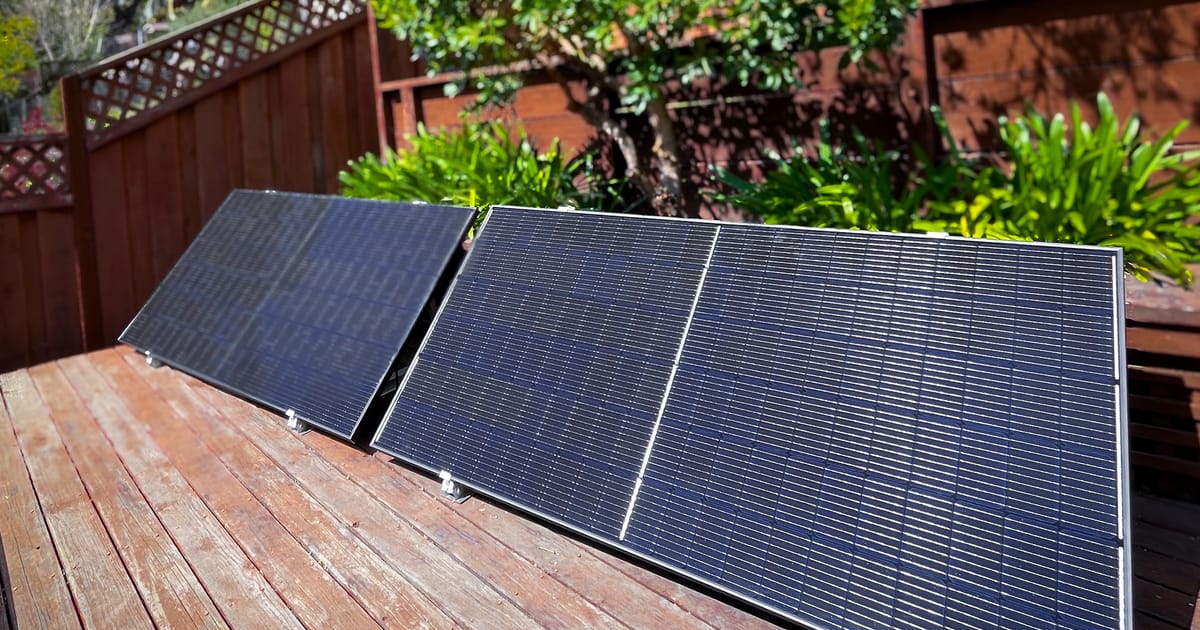
Lawmakers elsewhere are now stampeding to make plug-in solar available to their constituents.
Besides Utah and now California, legislatures in more than a dozen states want to unleash the tech: Hawaii, Illinois, Indiana, Maine, Maryland, Missouri, New Hampshire, New Jersey, New York, Pennsylvania, South Carolina, Vermont, Virginia, and Washington have all introduced bills, according to Cora Stryker, co-founder of plug-in solar nonprofit Bright Saver, which has been advising some states on their proposals. Based on conversations the organization has had with state representatives, Stryker said she expects a whopping half of U.S. states to introduce bills this year.
“We should empower people to use this technology,” Wiener said. “And right now, it’s too hard. The idea that you have to get an interconnection agreement with the utility to put … plug-in solar on your balcony — it makes no sense.”
“The current permitting process is difficult,” Aaron Gianni, president of Larratt Brothers Plumbing in San Francisco, told state policymakers on Jan. 6. “As a contractor dealing with more than 109 different building departments in the Bay Area, we must navigate the nuances of each: different inspectors, changing paperwork requirements, high fees, and strict setbacks [that] sometimes make installation impossible.”
The situation can be even worse when a customer lives in a unit governed by a homeowners association, Gianni said. “Many HOAs have outright prevented new electric equipment from being installed.”
Wiener, who’s running for U.S. Rep. Nancy Pelosi’s seat and boasts a tongue-in-cheek MAGA fan club, put it bluntly. Permitting in some cities “is way too lengthy and onerous and expensive.”
“The [heat-pump] bill creates a streamlined path to be able to get a quick, automatic permit,” he explained. It would also loosen restrictions on equipment placement, cap permit fees at $200, and make it illegal to ban heat pumps.
The plug-in solar bill has yet to come up for any votes. Still, with energy affordability shaping up to be a decisive issue in the 2026 midterm elections, both proposals “have, I think, a real possibility of passing,” Wiener said.
“These technologies are a win-win-win, and enabling access to them is simply good government.”
{
if ($event.target.classList.contains(‘hs-richtext’)) {
if ($event.target.textContent === ‘+ more options’) {
$event.target.remove();
open = true;
}
}
}”
>