
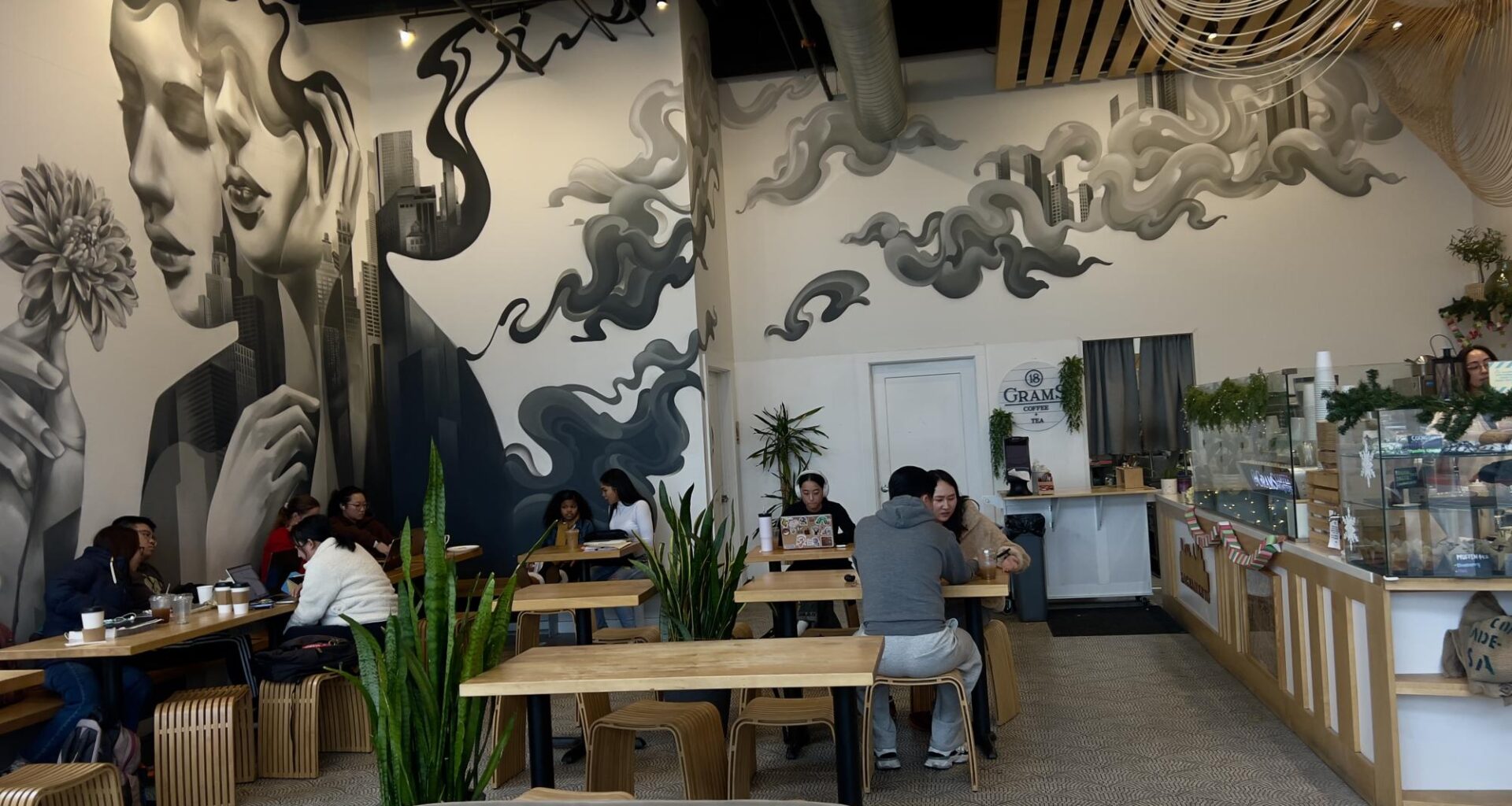
There has been a rise in loneliness among young adults nationwide, with one of the main reasons being the lack of “third spaces,” according to the women-run online publication Empoword Journalism.
A third space is a location other than someone’s home or workplace and gives space for relaxation or recreation.
These places can range from cafés and gyms to libraries and community centers. They provide opportunities for social connection and friendship beyond work or home, according to WBUR.
Cost and convenience remain significant barriers to third-space access, according to Empoword Journalism.
Nataliya Kolesnik, a Cosumnes River College student support assistant, said third spaces hold value because they allow people to be themselves.
“At home, you express only one side of yourself, and at school or work, you can’t fully be who you are,” Kolesnik said. “A third place is somewhere you can be free and meet people who share your interests.”
Kolesnik said in her home country of Ukraine, people meet each other everywhere, while waiting for public transport or walking through town. Here, making friends requires effort, as if it were a job, she added.
Kaiya Kanemoto, a 20-year-old business major, said students often underestimate how hard it is to build meaningful friendships.
The social support in third spaces can be protective of health and well-being across the life course, according to the National Library of Medicine.
Jayla Adams, a 19-year-old marketing major, said her go-to third spaces are her grandma’s and her best friend’s homes because she feels relaxed and comforted there.
“When I want to get away, I go there because I know I’m always welcome,” Adams said.
Other CRC students said their third spaces are public spaces.
“I liked to go to coffee shops,” Kanemoto said. “I really like a coffee shop called Rescate Coffee – it’s good, and the owners are really nice.”
Third spaces do more than help with loneliness – they help build community, improve mental health and create bonds across diverse groups, according to WBUR.
“I like to go to the mall and just walk around – it kind of helps me destress,” said Yesnia Lopez, an 18-year-old pre-health occupation major. “It gives me happiness, and when I want to hang out with people, I just go there with them.”
Sabrina Melo Chew, student support specialist for the Pride Center, said the farmers market is also a good third space because it provides a way to be in touch with the community and local businesses.
Some students’ third spaces focused on being outdoors as a way to reset.
“I don’t do a lot outside of school and home, but when I do, I golf at Emerald Lake,” said Caleb Baker, a 29-year-old chemistry major. “It gets me out in nature and a little bit of exercise while spending time with my friends.”
William Okafo, a 17-year-old computer engineering major, said he likes to go to the park near Roman Rice because the outdoors always helps clear his mind.
Students who use campus club centers as their third space look for places to gather when the center is closed, said Melo Chew.
Melo Chew said that many students go to the Elk Grove bookstore A Seat at the Table.
A local street soccer community, Futsi, gives people who are interested in soccer a place to find and play with like-minded peers for free. Sacramento has a range of free options for third spaces here.
“If young people had more spaces like that, we would have a stronger community and even a stronger country,” Kolesnik said.