
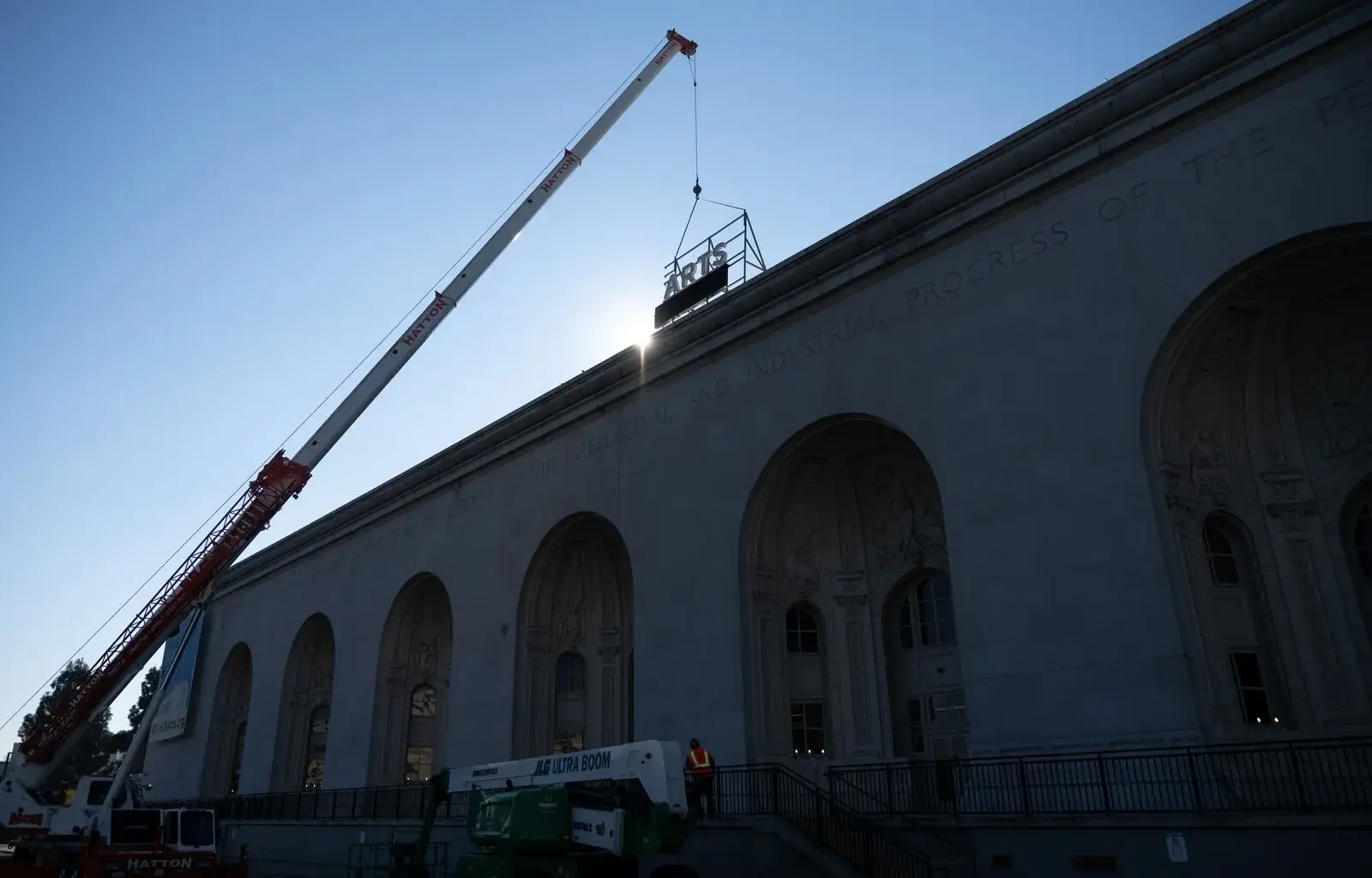
On Thursday, a crane hoisted two new marquees to the top of one of Oakland’s iconic buildings, the newly renamed Henry J. Kaiser Center for the Arts. The signs — one visible from Lake Merritt Boulevard, and the other from East 10th Street — signal a new era for the century-old structure.
The marquees are among the final touches to a yearslong renovation being wrapped just in time for a grand opening on Saturday, Jan. 24. The center on the south shore of Lake Merritt, which was shuttered for the better part of two decades, will host a robust series of free and ticketed events starting on Friday.
Events on the calendar include a Man dy Patinkin’s concert in February, a public conversation in March with Vice President Kamala Harris as part of her “107 Days” book tour, and the “Sherri Shepherd: Make It Make Sense Tour” in May.
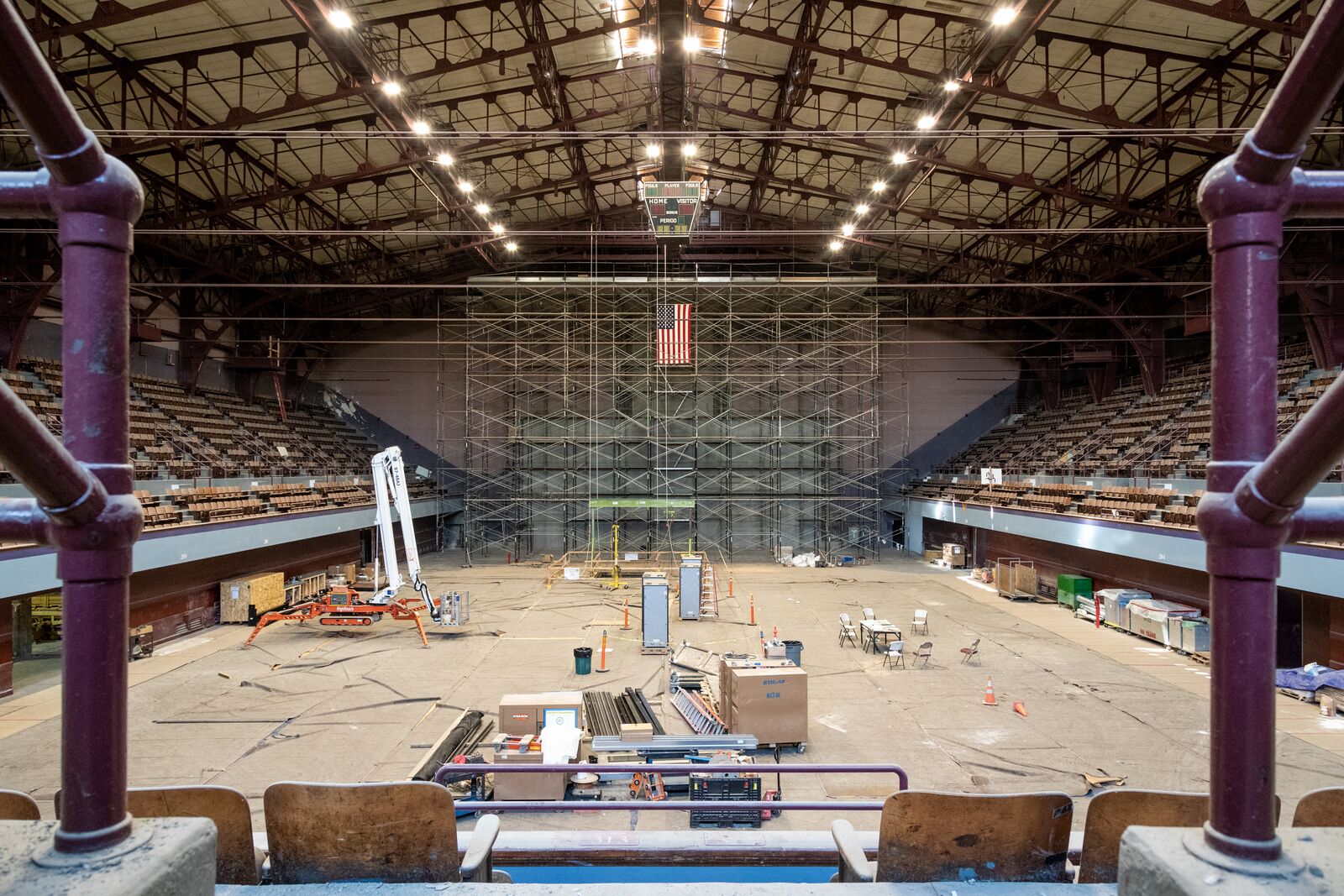
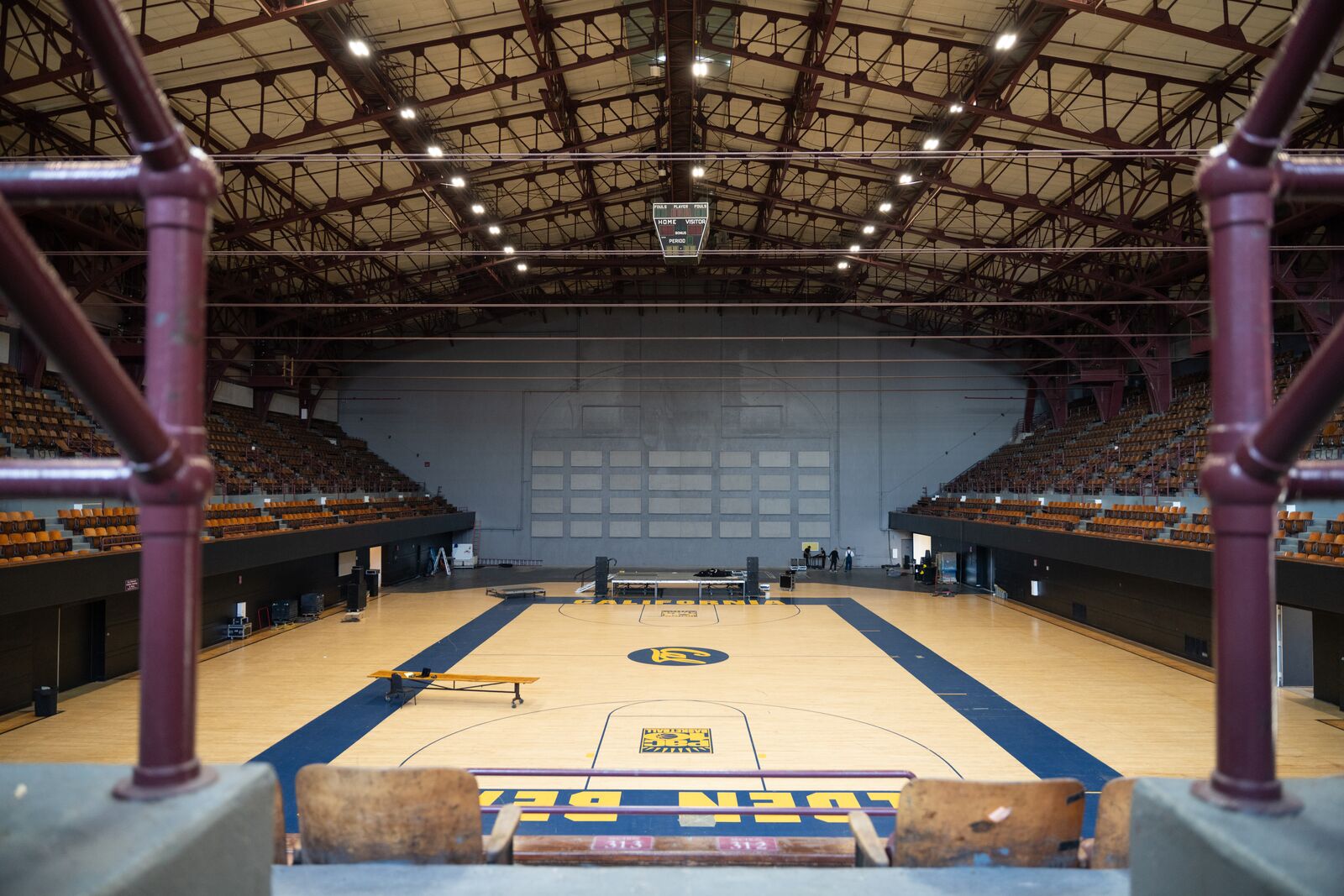 On the left, the arena side of the building during renovations in 2022. On the right is what the space looks like ahead of the reopening. Credit: left by Amir Aziz/The Oaklandside, right by Florence Middleton for The Oaklandside
The city-owned center — a 1915 Beaux-Arts-style building — is a city-designated Historic Landmark that is also on the National Register of Historic Places. Originally known as the Oakland Municipal Auditorium and later renamed the Henry J. Kaiser Convention Center in 1984, the three-story, 215,000-square-foot building is home to a 7,000-person auditorium, the 1,500-seat Calvin Simmons Theatre, two large ballrooms, and a smaller ballroom with views of the lake.
The building’s performing arts theater was named for Oakland Symphony conductor Calvin Simmons who died that same year at the age of 32. Calvin Simmons was the first African American conductor of a major orchestra.
The reopening was originally scheduled for the spring of 2023. That timeline changed after Orton Development, the firm behind the building’s rehabilitation, revised its plans to remodel the Oakland Municipal Auditorium into office spaces and instead decided to retain its original use as a venue.
An 111-year-old building with a storied and controversial past
Over the years, the space has been host to a wide range of activities.
In 1918, the auditorium served as a makeshift hospital during the Spanish flu pandemic. Starting in 1919 , the arena was home for decades to a yearly Christmas pageant. A less honorable use of the auditorium took place in 1924, when over 800 Ku Klux Klan members rallied inside the arena for a cross-burning ceremony.
The historical building has hosted music luminaries from multiple eras, from Elvis Presley to Jimi Hendrix, James Brown, Bob Marley, the Grateful Dead, Cindi Lauper, Salt-N-Pepa, and Enrique Iglesias. It has also been home to speeches by prominent political figures such as Martin Luther King, Jr., President Bill Clinton, and the Dalai Lama,.
The center has also hosted boxing matches, basketball games, and community events such as commencement ceremonies.
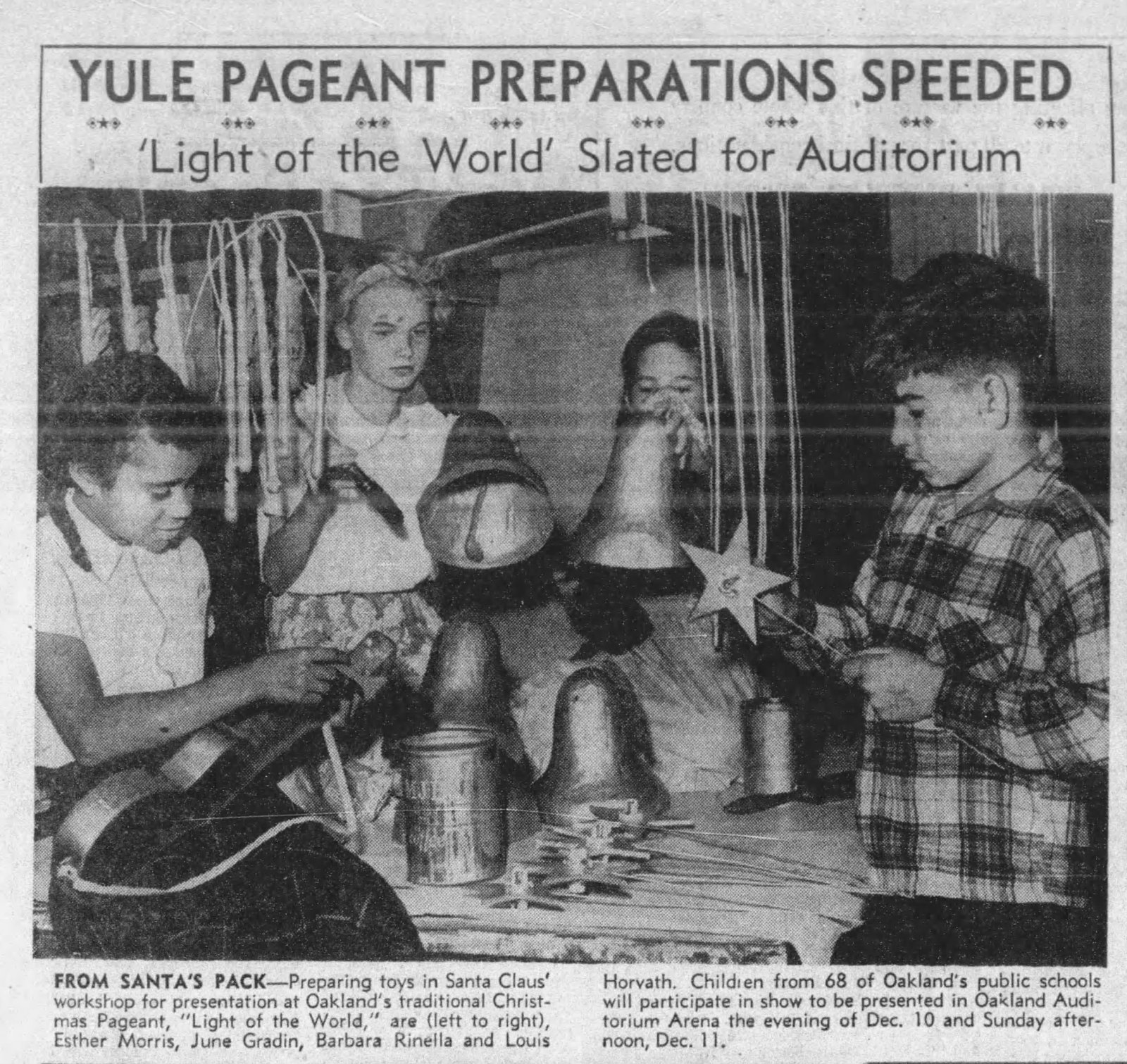 A 1949 Christmas pageant at what was then called the Oakland Auditorium. Credit: Oakland Post Enquirer via newspapers.com
 A 1965 boxing match at the then Oakland Auditorium. Credit: Oakland Tribune via newspapers.com
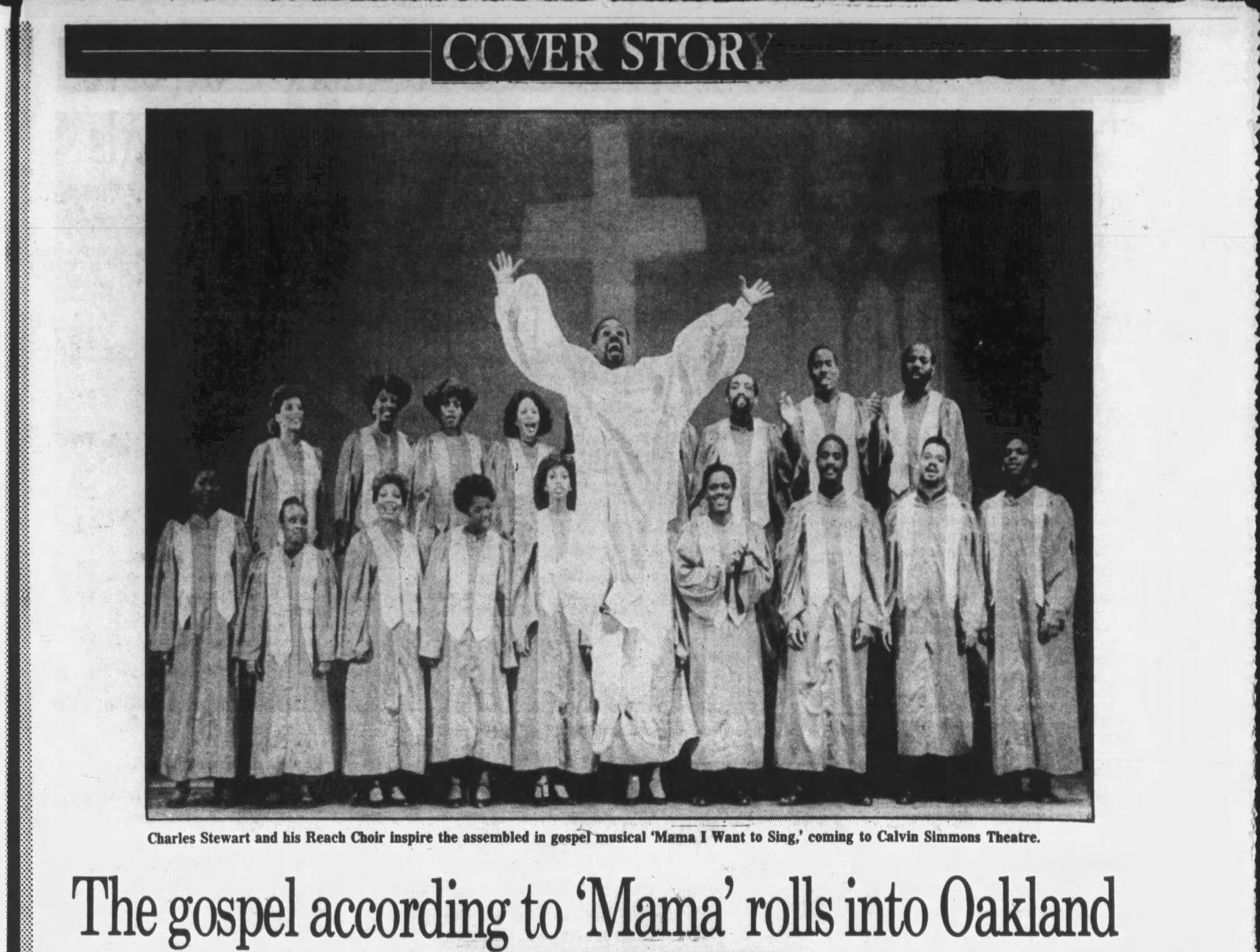 In 1986, the Calvin Simmons Theatre was home to the gospel musical “Mama I Want to Sing.” Credit: Oakland Tribune via newspapers.com
Even after its closure in 2005 due to budget constraints, the building made news.
In 2012, Occupy Oakland protesters attempted to take over the building as part of their movement to put vacant buildings in the service of the community. One violent clash with police resulted in the arrest of over 400 people.
In March 2022, a demolition crew discovered a mummified body inside one of the walls.
Since its gradual reopening in 2023, the center for the arts has hosted a couple of dozen events, starting with a rollerskating series in the arena that launched in October 2023.
More recently, in March 2024, Robert F. Kennedy Jr., then an independent candidate for president, hosted a rally at the auditorium to announce tech entrepreneur Nicole Shanahan as his running mate. His uncle, President John F. Kennedy, had held a rally at the auditorium more than 60 years earlier.
The center hasn’t yet hosted many events by Oakland artists or arts organizations. One notable exception: Last December, the avant-garde drag show “The Last 7 Days of Obsidienne Obsurd,” led by the artist-in-residence at Oaklash, ran for a one-night show at the Calvin Simmons Theatre.
Oakland arts organizations have pushed for equitable access
The renovation project hasn’t been without controversy, with leaders of local arts organizations expressing frustration about their lengthy struggles to access the space for cultural and community events.
As part of a 99-year lease agreement that an Orton Development subsidiary, Oakland Civic, LLC, signed with the City of Oakland in December 2020, the affiliate entered into a community benefits agreement with several local arts organizations led by the Black Arts Movement Business District. Orton Development remains the primary leaseholder, but the building is being operated under a nonprofit with the same name as the building. Terri Trotter is currently the CEO of that nonprofit, overseeing all day-to-day operations.
J.K. Fowler, founder of Nomadic Press and the Nomadic Bookshop, is part of a collective called Voices of Calvin Simmons (VOICES), as is Dr. Ayodele Nzinga of the Black Arts Movement established in 2016. Both are also part of the Black Arts Movement Business District Community Development Corporation (BAMBDCDC). Nzinga was an influential figure in the negotiations with Orton Development to sign a community benefits agreement in 2020.
Back in 2022, Nick Orton, a partner at Orton Development, told the Oaklandside that as part of this agreement, it had arranged with the BAMDCDC to provide 5,000 square feet of main level space and 5,000 square feet of basement space to “arts organizations serving communities of color” at a discounted rate of $2.80 and $2 per square foot, respectively. Once Orton Development scrapped its office space plans, the LLC had to renegotiate the terms of that agreement.
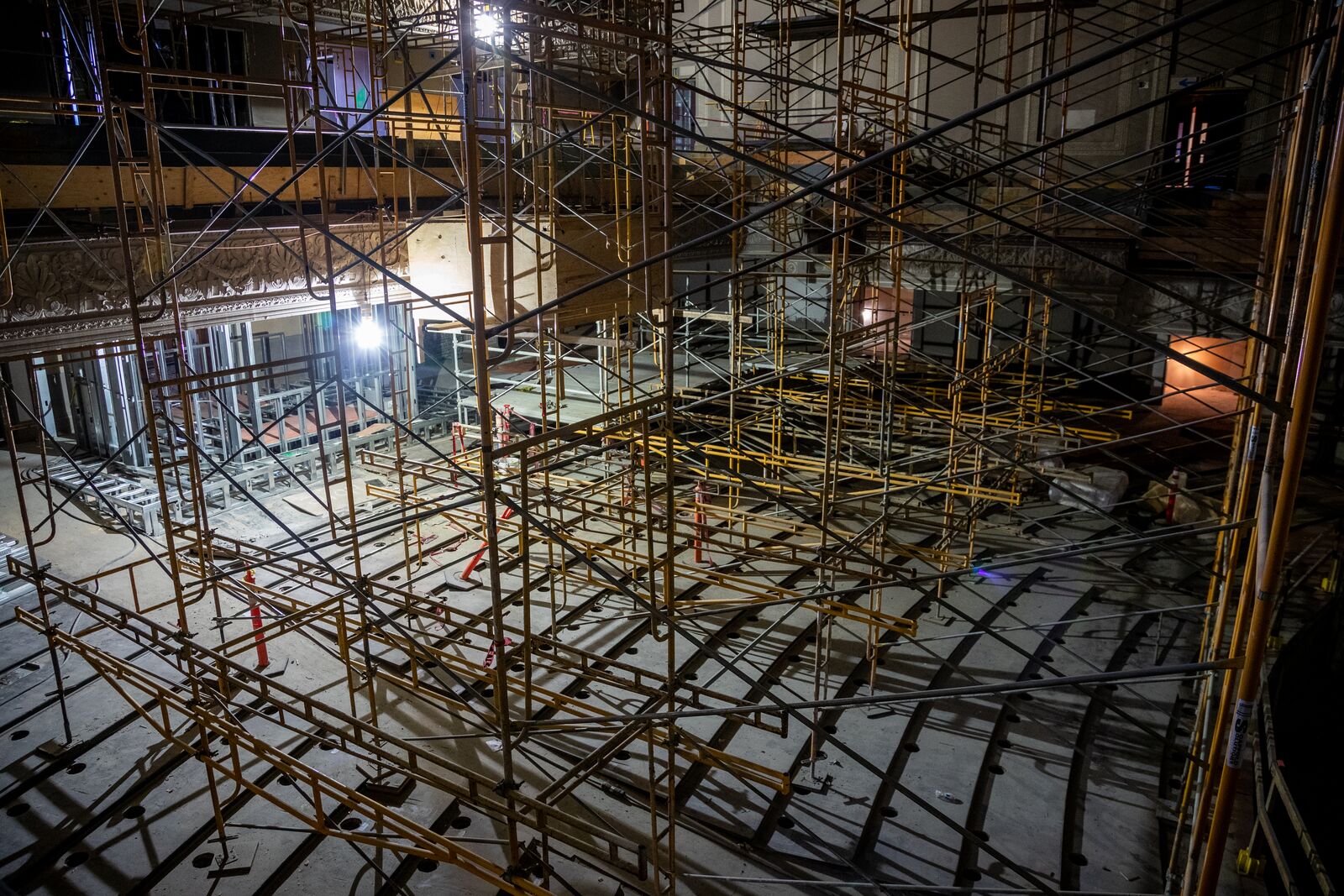
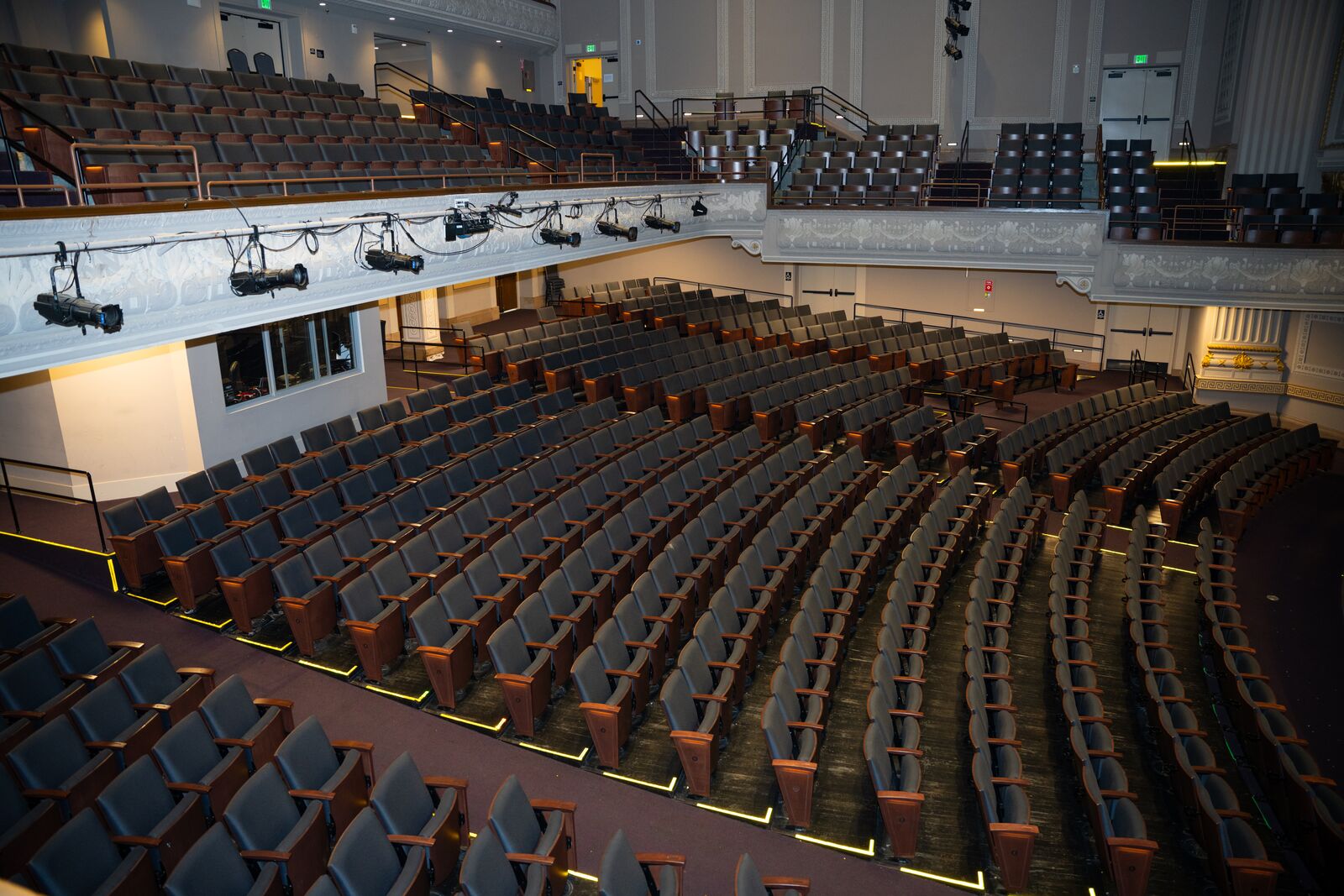 On the left, the 1,500-seat Calvin Simmons Theatre undergoing a remodel in 2022, and after the renovation was completed. Credit: left by Amir Aziz/The Oaklandside, right by Florence Middleton for The Oaklandside
Other larger Oakland arts organizations were also trying to get into the building at affordable rates.
Graham Lustig, artistic director of the Oakland Ballet, said he had been in conversation with Orton since 2015 when the developer won the rights to the project, including exploring whether the ballet company could become a resident tenant of the building with access to one of the ballrooms as studio space.
In 2023, Lustig told The Oaklandside that conversations with J.R. Orton III, president of Orton Development, stalled after the developer rejected various proposals to adapt a ballroom as a rehearsal space, which would have required specialized flooring for the dancers — a cost, Lustig said, the ballet would have fundraised to cover.
“I was shocked. I put so much in and wanted the ballet to have a home, and it seemed like a golden opportunity,” Lustig said. “I tried my hardest to give us a secure home base.”
Lustig recently told the Oaklandside that the ballet has not resumed conversations about use of the space.
‘It’s the people’s building’
Nzinga and Fowler both said they have spent years in negotiations with the developer to push for Oakland arts organizations to have fair access to the building to serve their communities.
“When we began the conversations about the agreement, we understood that the last large venue in Oakland was about to be turned over to a private developer for 99 years,” Nzinga said. “It seemed a good time to hold the city to its talk that if what we need is more art space, then it is unconscionable to give away the people’s art space to a private developer for all of that time.”
The VOICES collective is still seeking equity rates for small or people of color-run arts organizations interested in using the venues for rehearsals, events, or performances.
Trotter told The Oaklandside that the center offers both “standard rates” and “nonprofit discounted rates.”
“In addition,” she said, “we offer special rates as well as customized partnership opportunities to equity targets based on what the group needs or what they are trying to accomplish.”
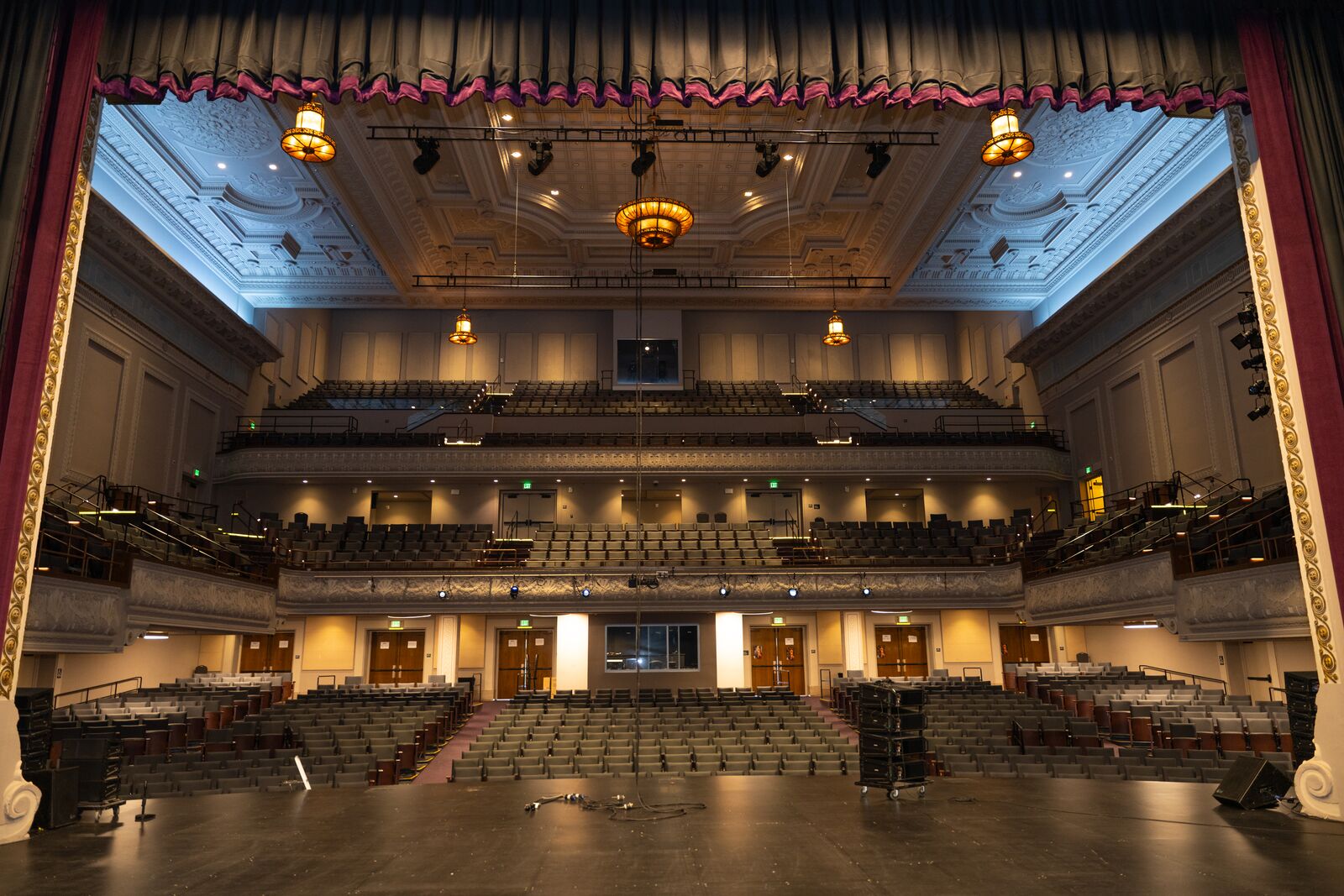 The Calvin Simmons Theatre opened in 1915. Credit: Florence Middleton for The Oaklandside
Nzinga and Fowler said that most arts organizations cannot afford the venue’s standard rates.
“For the amount it would cost me to produce a show for a weekend at Bam House, it’s the same price as one day at the Henry J.,” Nzinga said.
Trotter emailed a copy of the standard venue pricing schedule that sets out fees for renting the various spaces for events, rehearsals and load-ins, as well as the cost of mandatory on-site roles such as an event manager, janitorial, box office, and security. Altogether, a single weekend night performance at the Calvin Simms Theater would cost more than $25,000.
In an ideal world, Fowler said, he would love to see resident theater troupes use the space for rehearsal and production. More importantly, he said, he’d like the developers to offer access to smaller arts organizations that would benefit from a high visibility space but simply can’t afford it.
“It is the people’s building,” Fowler said. “They are merely the stewards.”
“*” indicates required fields