
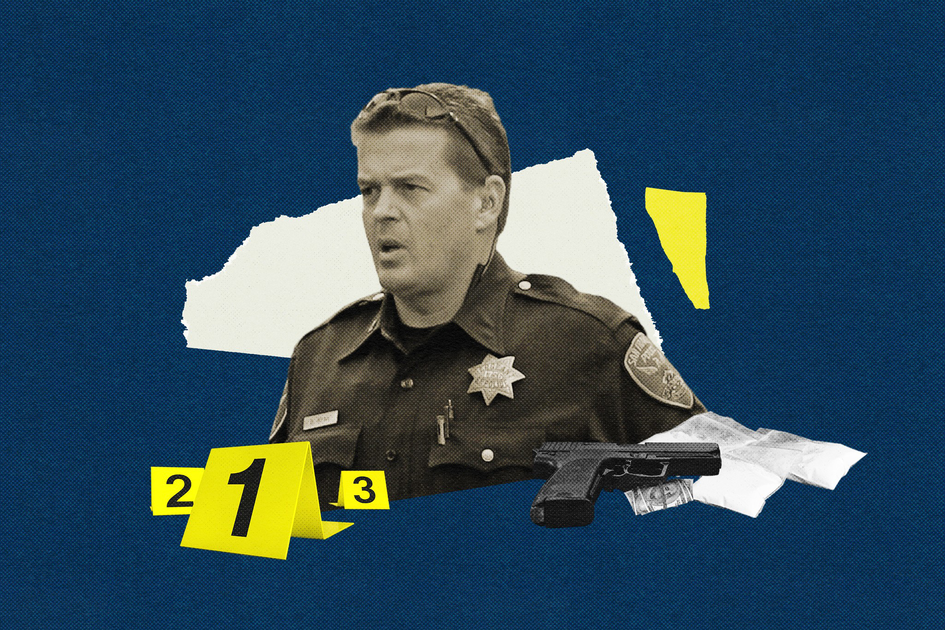
When retired San Francisco Police Department Sgt. Shaughn Ryan (opens in new tab) took the stand Nov. 18 in a quadruple murder case, he was in rough shape. The former cop, whom prosecutors had flown in from his home in Australia, was found drunk and bloodied on an Embarcadero sidewalk just four days prior, according to police documents and a witness.
Ryan’s sworn testimony before Judge Brendan Conroy centered on Sauntek Harris, who prosecutors say committed one murder in 2019 and three in 2002. One of the murder victims had seen Harris kill a man, prosecutors allege.
Ryan was set to testify that Harris, a former gang leader, had admitted guilt for one of the killings in 2002. However, his testimony about his relationship with Harris could jeopardize a case that investigators have been building for decades. It also calls into question District Attorney Brooke Jenkins’ decision to bring the quadruple murder case against Harris, which relies upon police work from a rogue officer who many police experts believe was acting recklessly.
On the stand during the preliminary hearing, Ryan said he played the role of a dirty cop, sharing information about forthcoming drug raids and gang rivals with Harris. He said he faked drug busts to prove loyalty to Harris and offered to arrest rivals so the alleged gang leader wouldn’t have to kill them.
“In order to continue and to gain his trust, I would formulate situations where I would provide him information about a drug bust that was going to happen,” Ryan testified. “I would engineer a raid so that I was providing him with information in order to make him believe that I was somehow on the team.”
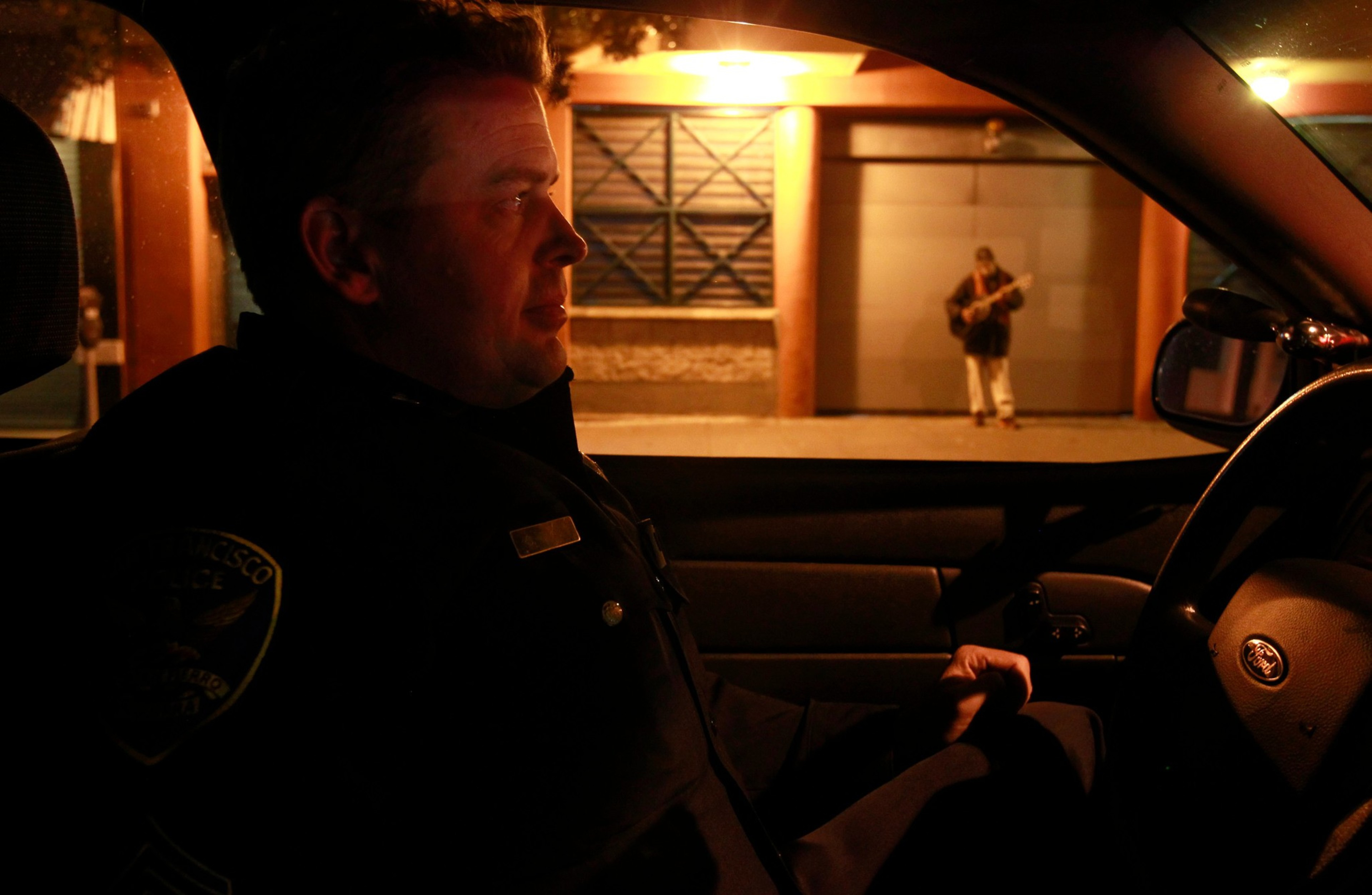 Sergeant Shaughn Ryan on patrol in the Tenderloin. | Source: SF Chronicle/Getty
In his testimony, Ryan swore that he wasn’t acting on his own, but was secretly aiding homicide inspector Mike Johnson, who was investigating Harris. But Ryan may have admitted to violating SFPD rules around informants, according to former cops, who said his testimony portrayed him as an outlaw with no guardrails (opens in new tab).
“This guy has delusions of grandeur,” said a former department leader. “It’s rogue behavior.”
The most damning impacts of Ryan’s testimony may not be to his reputation, which was already tainted by years of accusations over the officer’s conduct, which include claims of racial discrimination, sexual harassment, and threatening suspects. The more grievous harm could be on the prosecution’s case against Harris, who has been in SFPD’s crosshairs for nearly a quarter-century.
The claims Ryan made about his own actions during the investigation into Harris raise major credibility issues for the officer, said Lexa Grayner, a former San Francisco prosecutor.
“The alleged confession is only as credible as the officer testifying to it,” said Grayner. “When an officer reveals confidential law enforcement information to a suspect without authorization, that demonstrates a lack of credibility, which tends to cast doubt on the confession if that officer is the only witness who heard it.”
The prosecution centers on three killings dating back decades and one in 2019 that Harris’ attorney, Deputy Public Defender Landon Davis, says was committed in self-defense. After prosecutors dropped one murder case against Harris in 2024, police and the district attorney regrouped and enlisted several retired officers — including a former interim police chief and the onetime head of the gang task force — to revive the stalled effort to convict him.
 Lorenzo Richards was allegedly killed by Sauntek Harris in 2002. | Source: Courtesy SFPD
The SFPD and the DA declined to comment, citing an open case. The defense team decried Ryan’s testimony as part of a prolonged pattern of corruption by an officer with a checkered past.
“What was revealed at the preliminary hearing is what we already knew — that the prosecution is relying on corrupt officers like Shaughn Ryan and Michael Johnson to try to convict an innocent man (opens in new tab),” Davis said. “These are officers who between them have a documented history of misconduct, fabricating evidence, lying, violating individuals’ civil rights, and violating their own department’s standards for policing.”
Ryan did not respond to a request for comment; Johnson could not be reached for comment.
Decades between cases
In 2002, then-District Attorney Terence Hallinan called a grand jury in an attempt to indict Harris and his associate Shaun Britton — who is his codefendant in the current case — for killing a rival drug dealer in a carjacking.
Prosecutors alleged that Britton and Harris killed a gang rival, Perry Bradstreet, and Harris then killed Lorenzo Richards and Gerald White, who had witnessed the killing of Bradstreet. Harris and Britton were not prosecuted for the 2002 slayings, in part because a key witness had been killed.
In 2019, Harris, then working as a community activist and life coach (opens in new tab), was charged with the unrelated killing of 34-year-old Dietrich Whitley (opens in new tab). While the case went to a preliminary hearing and a judge in 2024 ruled there was enough evidence to proceed to trial, Jenkins’ office decided to dismiss it (opens in new tab).
 Sauntek Harris. | Source: Courtesy SFPD
When the case was dropped, Harris sent roses to the prosecutor, Charly Weissenbach, (opens in new tab)who, in an affidavit, characterized the gesture as Harris gloating at her failure. Harris was barred from entering the district attorney’s office.
But the decision to dismiss was part of a larger strategy to build a case against Harris that also included the three murders he allegedly committed in 2002, according to a source with knowledge of the investigation. Over the ensuing months, stretching into spring 2025, police tapped Harris’ cellphone, tailed his car, and sent a retired officer wearing a wire to meet him for lunch and reminisce about the old days, according to police testimony.
In May, Harris and Britton were charged (opens in new tab) with four murders between them.
Plainclothes cops in the Bayview
Ryan, who entered the force in 1996, was assigned to a plainclothes unit in the Bayview in 2002, investigating everything from gun violence to drug sales. The unit included officer Leonard Broberg (opens in new tab), who later headed the gang task force, and officer Luis DeJesus (opens in new tab).
While working in the neighborhood, Ryan met Harris, who prosecutors say was a leader of the Oakdale Mob (opens in new tab), a gang that sold drugs and committed violent crimes to earn money around the housing project with the same name.
Ryan testified at the November hearing that he started sharing information on competing drug dealers, rival gang members, and weapons with Harris, an arrangement that started in early 2002, after Harris returned a lost police radio to Ryan. For much of the year, the pair were in contact weekly, either in person or by phone. Ryan testified that Harris was never officially logged with the department as an informant.
“He would fill in gaps and provide information,” Ryan testified. “However, I can’t recall him ever providing any direct information that actually led immediately to … myself or my team being able to make an arrest.”
Ryan testified that he was trying to build trust with Harris to help the homicide unit in its effort to build a case against the suspect. To that end, Ryan said, he would manufacture drug raids and warn Harris ahead of time so he could make sure members of his gang weren’t arrested.
“I would tell him that we were going to be doing this bust in a day or two and to tell this person that it was going to, that this bust was going to happen, this raid was going to happen,” Ryan said.
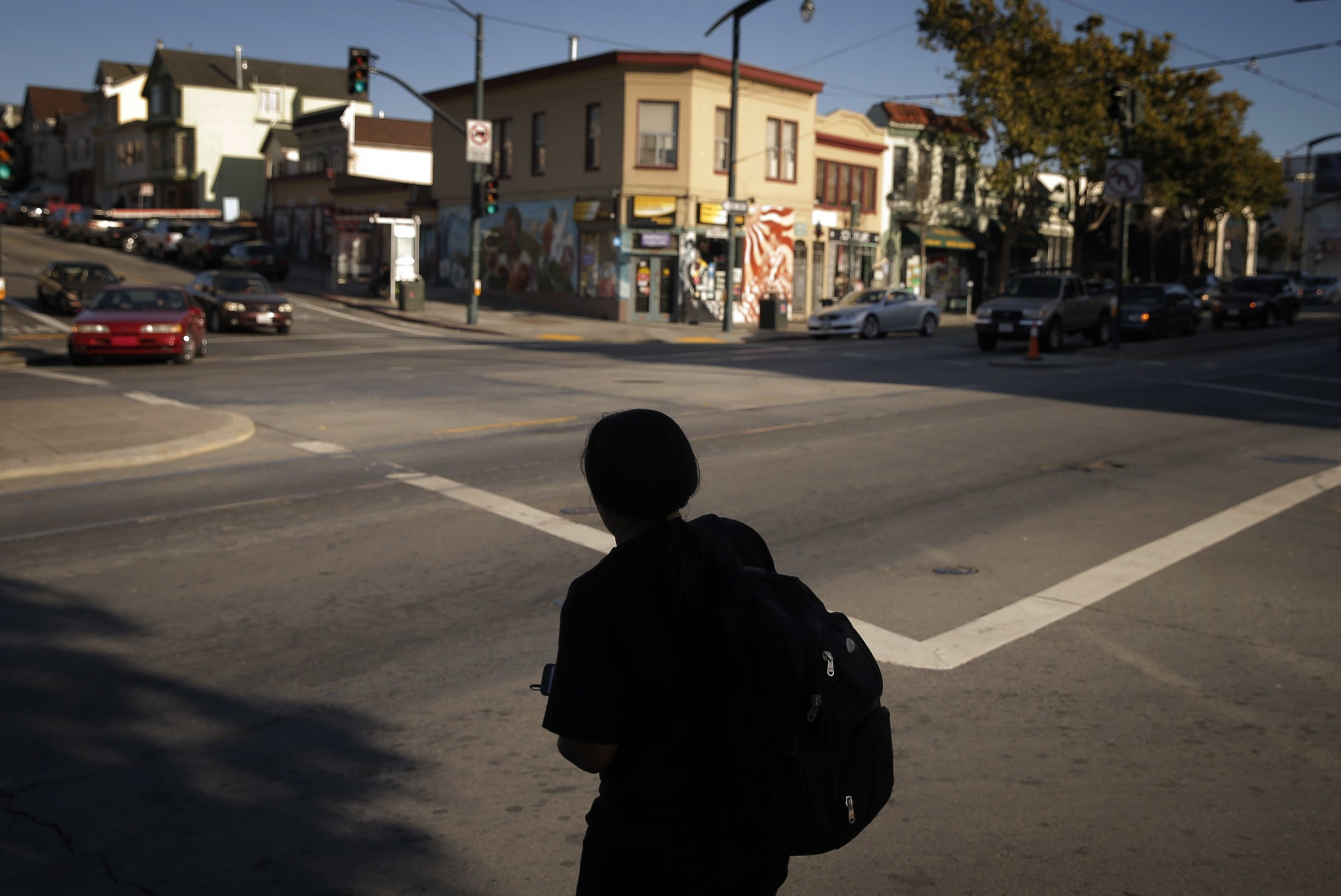 Ryan was assigned to a plainclothes unit in the Bayview in 2002. | Source: Carlos Avila Gonzalez/SF Chronicle/Getty Images
 A housing project in the Baview where an alleged leader of the Oakdale Mob is suspected of murdering four. | Source: Christina Koci Hernandez/SF Chronicle/Getty Images
In a meeting in 2002, on the day a grand jury was convened to indict Harris at the Hall of Justice, the former cop detailed how their alliance was supposed to work.
“Ι explained that the reason we had the relationship that we did was that if he provided the information, then myself and my coworkers could make an arrest, presumably get a conviction, and eliminate that competition, and he would not have to involve themselves in, taking out or otherwise killing competition,” Ryan said.
At that meeting, Harris offered to pay “rent” to Ryan and his partner DeJesus for the information they were sharing. Ryan said all he wanted was information, according to Ryan.
Ryan testified that, during that same conversation, Harris admitted to killing Richards and implied that Bradstreet was killed because he was a rival.
Ryan said he did not memorialize most meetings with Harris but instead told the homicide inspector leading the investigation, Johnson (opens in new tab), about their contents. Ryan claimed that he was secretly assigned to help with the investigation because of concerns about internal leaks.
Another member of Ryan’s unit, retired officer Broberg, testified in November that he had no knowledge of Ryan’s actions or secret assignment with Johnson.
 A transcript from a preliminary hearing in the murder trial, in which Ryan describes his 2002 interactions with Harris.
But the time the SFPD arrested Harris later in 2002 for a different crime, the murder case had crumbled, in part due to the death of White, a key witness in the Bradstreet murder. According to a memo written by Ryan that year, Harris allegedly taunted law enforcement about the dead witness when they entered his home with a search warrant.
“I guess you guys are pretty pissed the main witness against me turned up dead,” Harris is alleged to have said to the cops.
Department rules about Informants
According to a police manual and former officers, Ryan’s interactions with Harris either skirted rules around how to handle criminal informants or crossed them outright. Those rules exist to prevent exactly the kind of credibility crisis now facing prosecutors, who must prove to a jury that evidence obtained via secretive, off-books relationships between cops and suspects are within the bounds of the law.
The SFPD bars officers from meeting with informants alone, which Ryan did repeatedly. The rule is clear in the Informant Management Manual: “Unless there are exigent circumstances, informant managers are prohibited from physically contacting informants alone. On all physical informant contacts, at least two officers will present.”
While Ryan testified that Harris was never officially an informant, department rules state that officers should record in writing all interactions with informants or people who share information. By notifying Harris of coming raids, Ryan appears to have also violated rules barring officers from facilitating illegal actions by their informants.
“They [informants] shall not violate criminal law in furtherance of gathering information, and/or providing services while assisting the San Francisco Police Department,” the manual states. “Any evidence of such a violation will be reported to the appropriate law enforcement agency and may hinder further use of this individual as an informant.”
‘It looked like he’d been drinking all day. He definitely looked intoxicated. He kept saying that he was a cop.’
Witness testimony about Ryan
Five former officers interviewed about Ryan’s testimony said that, at best, his account was hard to believe or reckless. Four agreed that little of what Ryan described reflected how such cases are normally handled or how informants are managed.
One former command staffer said any cases that a plainclothes officer works on with another unit must be approved and monitored. The former command staff member said Ryan crossed major red lines.
“You can’t tip off drug dealers or arrest their competition,” they said.
Down Under
Four days before his testimony in the case against Harris, Nov. 14, Ryan was found bloody on the ground along the Embarcadero, according to a passerby, David Lee
“It looked like he’d been drinking all day. He definitely looked intoxicated,” said Lee, who called 911. “He kept saying that he was a cop.”
Ryan was not arrested, and no case came from the incident. He testified four days later, then returned to Australia.
The parties are set to return to court to complete the preliminary hearing in early February. If the case goes to trial, Ryan may be ordered to take the stand again. Jurors will then be asked to decide what they think of his testimony — and to weigh prosecutors’ decision to rest the city’s case on such shaky ground.