
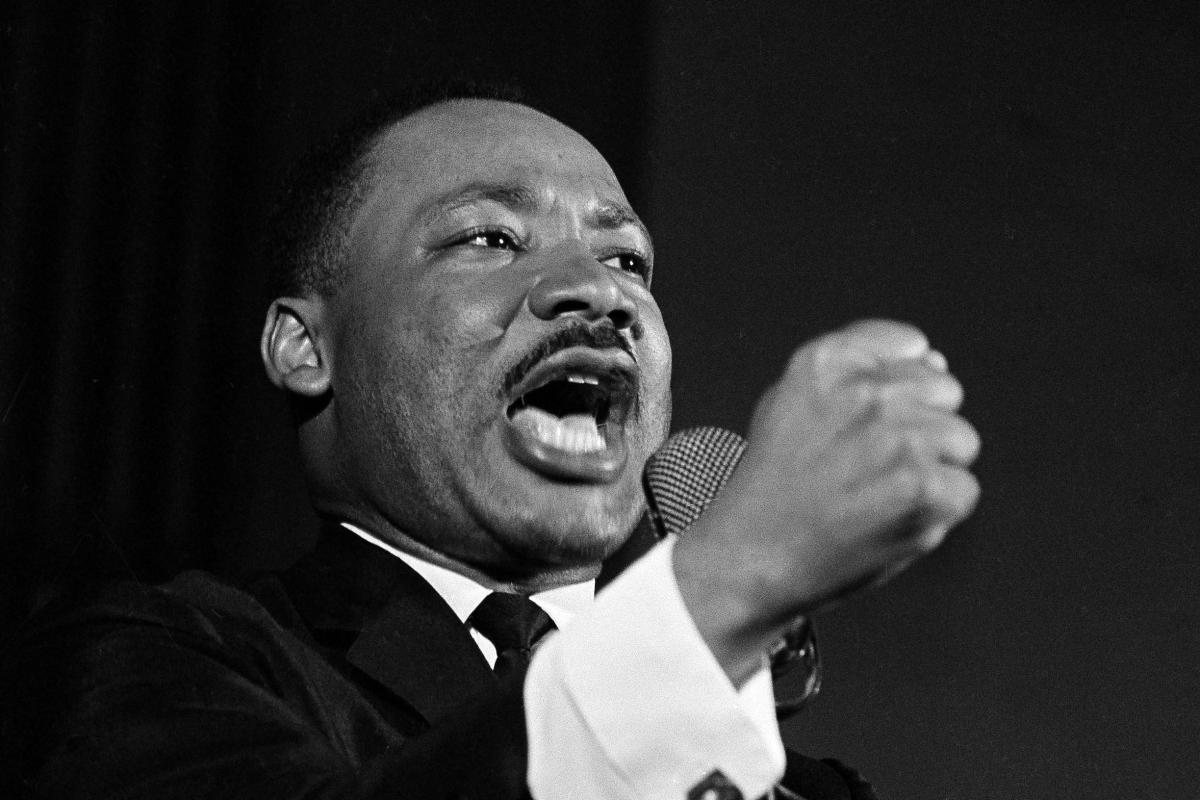
This year, the annual “All Peoples Celebration” run by Alliance San Diego (ASD) had a glaring omission: A Jewish religious leader was disinvited, due to his support for Zionism.
ASD decided that Rabbi Hanan Leberman was unfit for participation among “people of all faiths and traditions,” and that to exclude him was the best way to “embody and practice the teachings of Dr. Martin Luther King Jr.”
Dr. King must be rotating in his grave: If MLK celebrations become spaces where Jews must hide their connection to Israel in order to belong, then his legacy has been lost.
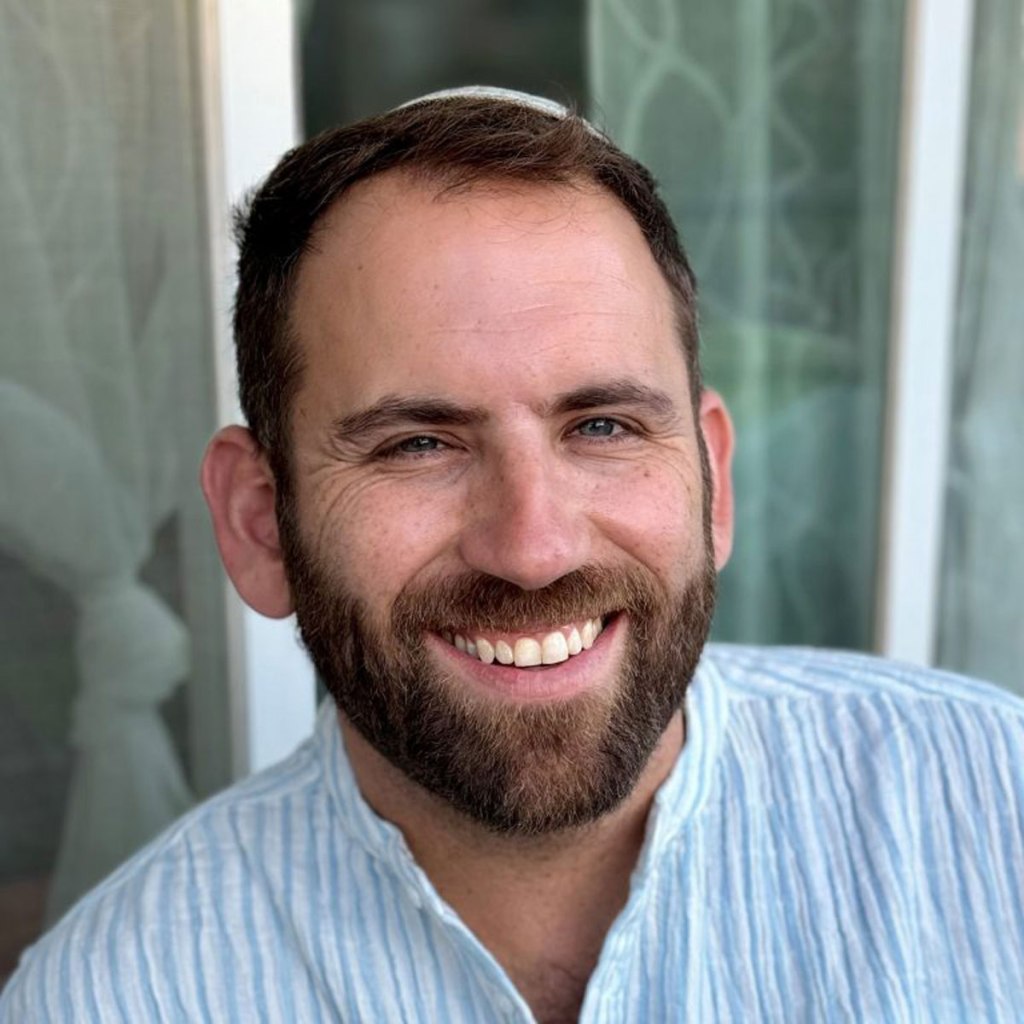 Alliance San Diego decided that Zionist Rabbi Hanan Leberman was unfit for participation in Martin Luther King Jr. celebration, although MLK himself was a Zionist. Tifereth Israel Synagogue
For at least the last 75 years, Zionism has been neither a dream nor a political movement. It has, rather, represented support for Jewish life in the Jewish indigenous homeland.
It is not an ideology expressed in the speeches of Theodor Herzl or the essays of Ze’ev (Vladimir) Jabotinsky; rather, it reflects the fervent prayers of Jews for nearly two millennia: “May our eyes behold Your [God’s] return to Zion.”
There are two primary reasons that Jews move to Israel today: To escape bigotry and persecution elsewhere, and as an expression of Jewish belief. Demanding that Jews reject that belief in order to be welcome at a civil rights celebration is thus not neutrality. It is deliberate exclusion of Jews.
This is something Dr. King knew well; he was not neutral on Zionism. He viewed it as a natural expression of civil and human rights for all.
He spoke warmly of Israel, affirmed its right to exist in peace, and rejected efforts to single out the Jewish state for condemnation. When confronted by a young black student who condemned Zionism, King responded sharply: “When people criticize Zionists, they mean Jews. You’re talking about antisemitism.”
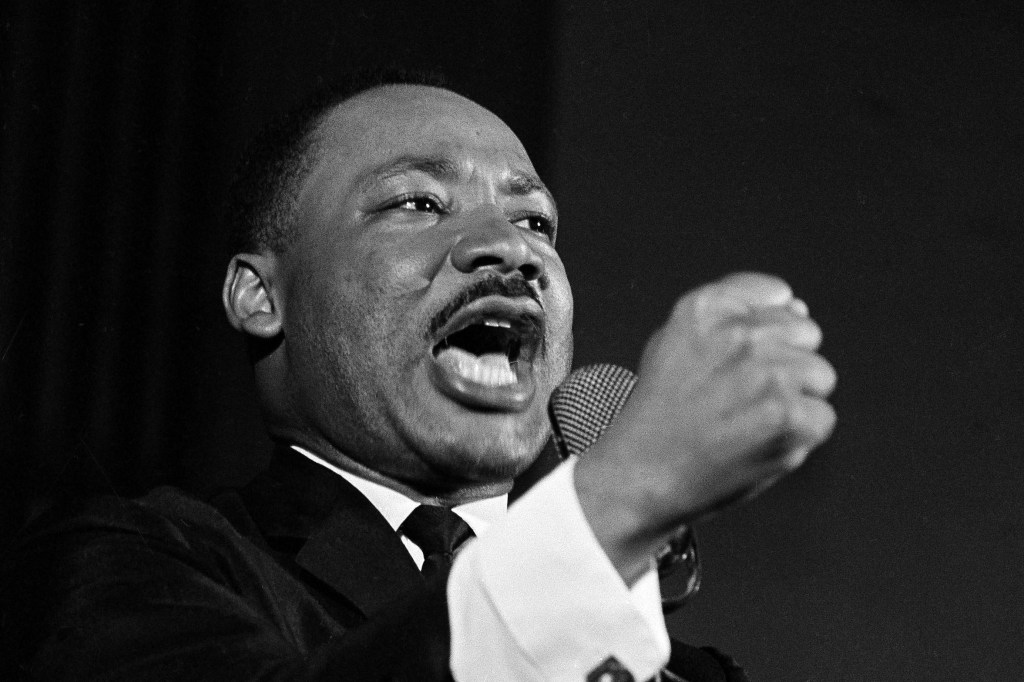 Martin Luther King Jr. once said, “When people criticize Zionists, they mean Jews. You’re talking about antisemitism.” AP
For King, Zionism was a moral cause rooted in history, survival, and dignity. He understood the Jewish longing for a homeland through the same moral lens that shaped his own struggle: A people’s right to live freely and securely.
Excluding a Jewish leader because he supports Zionism is therefore not a minor scheduling decision. It is abandonment of King’s own moral compass.
Dr. King did not build coalitions by demanding that partners abandon their deepest convictions. He built them by insisting on mutual recognition and moral consistency. His vision of solidarity was expansive. It did not flatten differences. It honored them.
King’s bond with the Jewish community was a true partnership. Jewish leaders marched beside him, and supported the civil rights movement at real personal risk. King drew inspiration from the Hebrew prophets, and saw the Jewish story as intertwined with America’s moral journey.
That history matters.
The “All Peoples Celebration” was organized to involve all and promote unity. Its language is inclusive. Most people involved, we can presume, genuinely want to build bridges. But “unity” that requires that a community reject core elements of its identity is not unity. It is exclusion.
When organizations invoke King’s name while sidelining Jews for holding views King himself affirmed, “inclusion” becomes selective. Belonging becomes conditional. Some are welcome only if they reject fundamental parts of their identity.
At the very least, organizers chose to bow to those who demanded the exclusion of a Jew who affirmed a core Jewish belief. But as Dr. King himself taught, real unity requires courage. It requires the willingness to affirm that different histories, traumas, and hopes can coexist in the same civic space.
The California Post is coming soon. Sign up for updates.
Get in early. Be the first to know about launch and home delivery.
Thanks for signing up!
King did not ask America to erase differences. He asked it to elevate character, dignity and justice above fear. He believed truth, even when uncomfortable, was the only path to reconciliation.
MLK Day remembrances should embody that principle.
The civil rights movement was never about enforcing a new orthodoxy, much less rejecting one form of bigotry in favor of another. It was about expanding the circle of moral concern to encompass all.
Honoring King in today’s world means resisting the temptation to narrow that circle.
It means remembering that he stood with Jews when it was easier not to. It means acknowledging that Zionism, at its core, is an expression of human dignity. It means recognizing that inclusion is not real if it is conditional.
Dr. King dreamed of a nation where no one would be asked to apologize for their identity in order to belong. The most fitting way to honor him is to ensure that his legacy remains broad enough to include everyone he stood for, including the Jewish people and their right to a home.
Rabbi Yaakov Menken is the Executive Vice President of the Coalition for Jewish Values.