
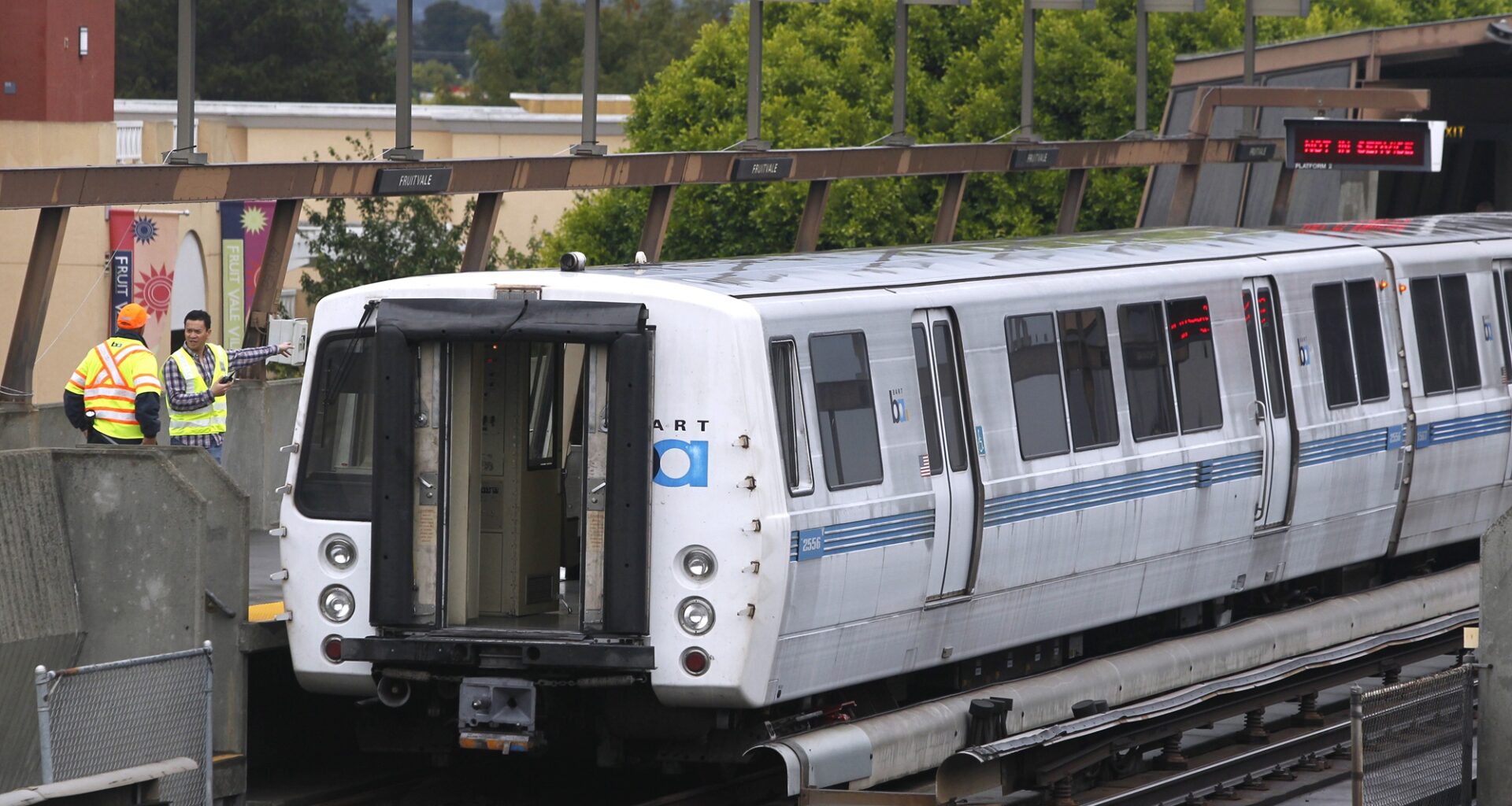
The report excluded two systemwide incidents on May 9 and Sept. 5. It focused instead on nine problems that all caused partial interruptions between Aug. 29 and Dec. 8.
During that period, transbay travel was paused for hours multiple times, including in late August after an insulator exploded and sent smoke into a train. In December, BART’s Green and Red Lines, which run from Berryessa to Daly City and Richmond to San Francisco International Airport, respectively, came to a halt after another insulator issue.
While the report didn’t issue conclusive causes for many of the incidents, one of the most common hypotheses was that on multiple occasions, power issues caused momentary fluctuations in the voltage flowing from power substations.
Another suggestion pointed to environmental factors, like dust collecting on surfaces inside tunnels, moisture from elevated humidity in underground stations or puddling on trackways.
Officials on Thursday shared a number of improvements they plan to make based on the report, and ones that have already been addressed. Those changes have included cleaning and replacing a number of insulators between Embarcadero and Civic Center stations in San Francisco, clearing debris from the tunnel and station platforms, and restoring crossbonds, cables that help return current flow back to substations across two tracks that were removed from the Transbay Tube in 2020 during a retrofitting project and never restored.
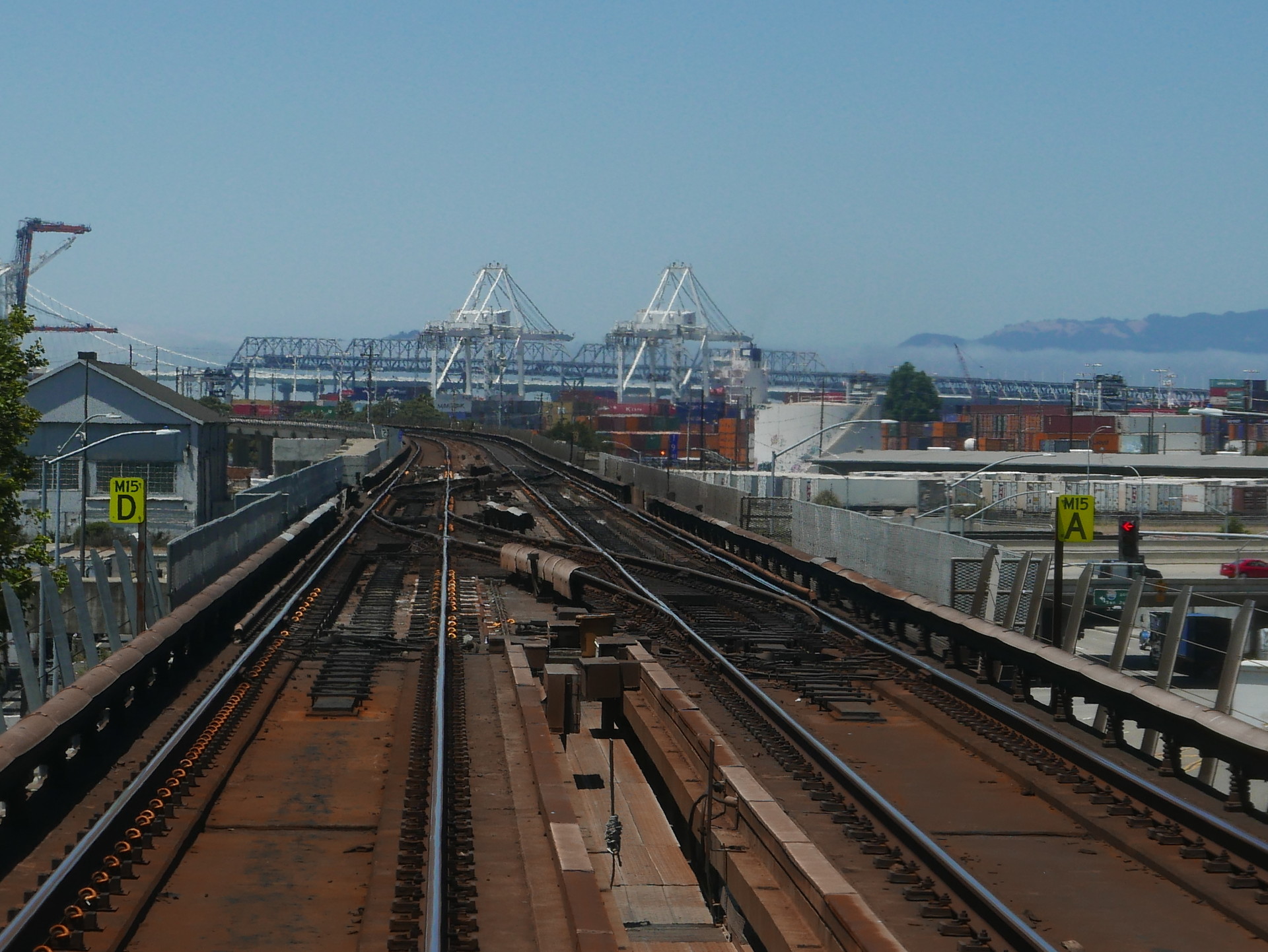 An interlocking mechanism near West Oakland Station that allows BART trains to switch tracks before entering and after emerging from the Transbay Tube. (Courtesy of BART)
“This allows me a degree of optimism that we’re doing our best to protect our passengers from harm or delay,” BART Director Robert Raburn said during Thursday’s meeting.
Adina Levin, with the advocacy group Transbay Coalition, said the report shows that BART is taking system issues seriously and said it speaks to the money — and maintenance — needed to maintain the agency’s aging infrastructure.
“BART is complicated, and it’s got a lot of pieces that are old,” she said. “That is something we can’t afford not to maintain.”
Finding the funding to do that maintenance is an ongoing challenge, though.
Since the pandemic, BART has said revenue has dropped significantly, in large part due to the rise in remote work. While passenger fares and parking fees covered 70% of its operating costs prior to the pandemic, it’s now down to 25%.
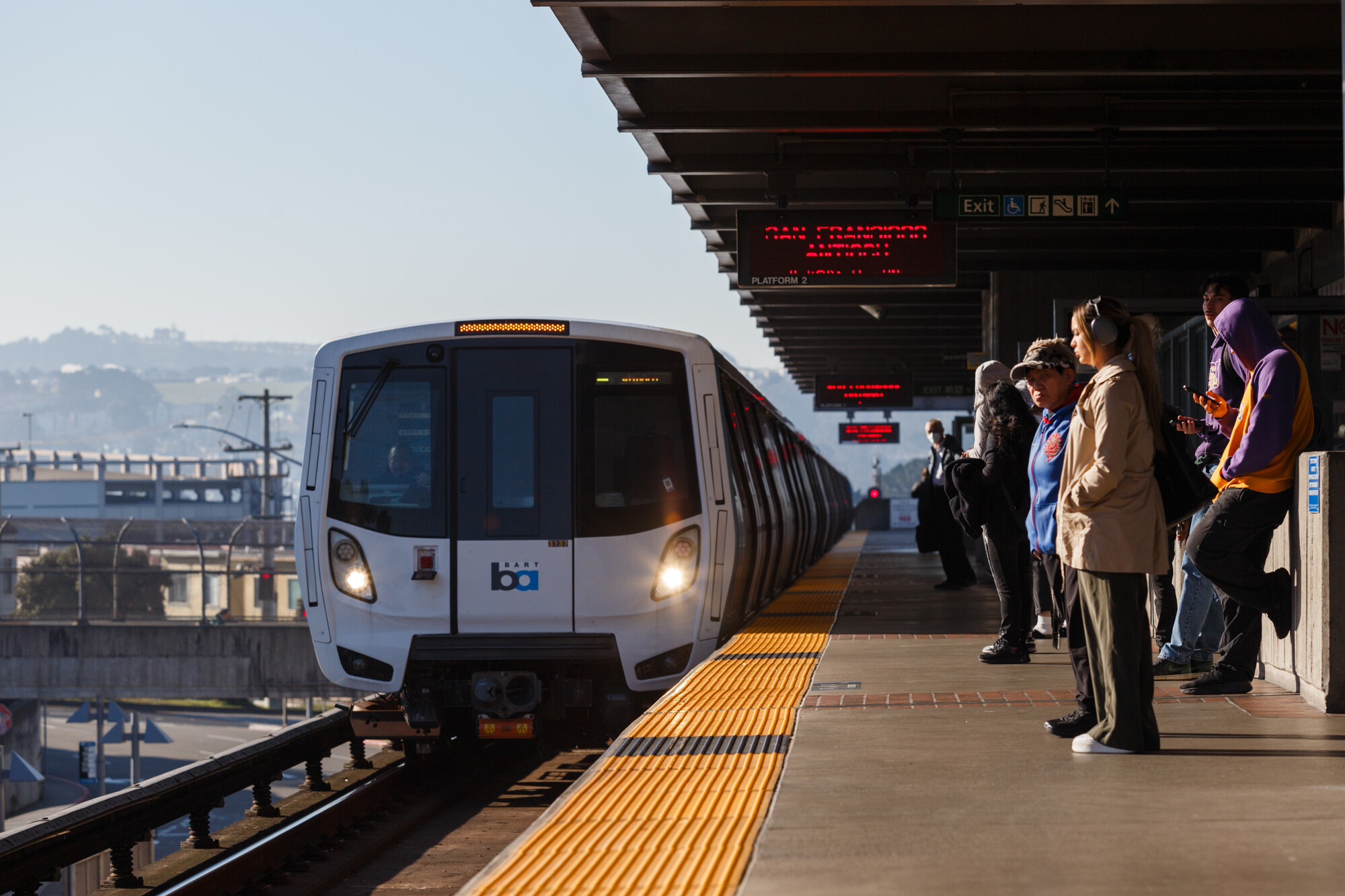 A BART car approaches the platform at Daly City Station in Daly City, on Dec. 4, 2024. (Juliana Yamada/KQED)
The agency said without new ways to bring in cash, it could have to cut weekend service, close stations, shut down lines or reduce the number of trains it runs per hour.
One new funding source could be a sales tax measure that’s hoping to qualify for the November ballot, which would generate up to $980 million a year for transit agencies around the Bay Area. But continued service meltdowns and a lack of answers might make it difficult for BART to convince voters to direct substantial new funding its way.
To Levin, though, smaller service meltdowns are proof of how integral BART’s services are.
“This is a very small taste of a dire future, and a reminder of how important it is to provide the funding to make sure that BART and other transit systems keep running,” she said.